Etiquette


DP Etiquette

First rule: Don't be a jackass. Most people are good.

Other rules: Do not attack or insult people you disagree with. Engage with facts, logic and beliefs. Out of respect for others, please provide some sources for the facts and truths you rely on if you are asked for that. If emotion is getting out of hand, get it back in hand. To limit dehumanizing people, don't call people or whole groups of people disrespectful names, e.g., stupid, dumb or liar. Insulting people is counterproductive to rational discussion. Insult makes people angry and defensive. All points of view are welcome, right, center, left and elsewhere. Just disagree, but don't be belligerent or reject inconvenient facts, truths or defensible reasoning.

Sunday, February 9, 2025

Masha Gessen's opinion

 Gessen sees what I see. It deserves a stand-alone post. Masha Gessen opines in the NYT (not paywalled): 

In 1978, my parents went to Poland, the first foreign trip in each of their lives. When they returned to our home in Moscow, my mother couldn’t stop talking about what they’d seen — not a place but a movie, Bob Fosse’s “Cabaret.” One scene in particular stayed with her. Three friends are returning from a weekend trip. Sleep-deprived, hung over and preoccupied with their sexual and romantic entanglements, they pull over at a roadside cafe. There, a teenager wearing a Hitler Youth uniform starts singing. He is both earnest and, in his brown pants tucked into white knee-high socks, puerile. But after a minute, other young people in uniform join in, and soon all but one customer are standing and singing. The protagonists duck out. They have been pushing Nazism out of their minds, but at this moment they realize that they are in the minority, that life as they’ve been living it is over. The song everyone around them is singing is “Tomorrow Belongs to Me.”

I was 11 when my mother couldn’t stop talking about “Cabaret,” and I was confused. I thought my parents had gone to an actual cabaret and somehow gained an insight into the nature of the Soviet regime. A few years later, after I’d seen the movie myself, I realized my mother was right: That scene is the single most vivid portrayal of what it feels like to live in a society that is falling in line before a totalitarian leader. I experienced this in real life as an adult, when Vladimir Putin came to power in Russia and my world suddenly felt like a chessboard from which an invisible hand was picking off pieces faster than I had thought was possible.

Now, in Donald Trump’s America, I am living through something similar, and it is moving at a faster rate still. For me, it began before the election, when the owners of The Los Angeles Times and The Washington Post decided to pull their papers’ endorsements of Kamala Harris for president.*** It continued with Mark Zuckerberg remaking Meta to reflect what he called the “cultural tipping point” that was the presidential election; with ABC News handing over millions of dollars in response to one of Trump’s frivolous lawsuits and CBS considering doing the same; and most recently, with the great erasure: of records of trans care for minors provided by hospitals and of diversity-and-inclusion policies at many universities and corporations. Now some universities are quietly retooling their programming in hopes of conforming with expectations that have not yet been clearly laid out. 
*** For me, it began in August or Sept. of 2016 if I recall right. Gessen also saw it early and said so publicly in the New York Review on Nov. 10, 2016. So, what she really means is that we're once more living through the rise of a corrupt, cruel, bigoted dictatorship and other forms of corrupt authoritarianism. I never saw an end of the rotting process since 2016. Biden was a flicker of hope for a while, but it was clear to me early on that he was probably going to fail.
I am talking not about deletions of pages from government websites, such as those of the White House and the Centers for Disease Control and Prevention, presumably mandated by newly installed officials; I am talking about actions that individual people or private institutions took pre-emptively, with some measure of free will.

The Yale historian Timothy Snyder has called this “anticipatory obedience.” In his 2017 book “On Tyranny: Twenty Lessons from the Twentieth Century,” lesson No. 1 was “Do not obey in advance.” Those who anticipate the demands of a repressive government and submit to these demands before they are made, Snyder wrote, are “teaching power what it can do.”  
.... 
....
Next comes the pragmatic argument. Rational people do not stand on principle for the sake of principle. They pick their battles. Or so this argument goes. Perhaps this was the logic that led the country’s largest private funder of biomedical research to halt a $60 million diversity program, Target to scrap its D.E.I. goals or ABC News to settle Trump’s libel suit. As cynical as this argument sounds, it too is rooted in values and obligations to others — shareholders, business partners, clients.  
Last, we have the zeitgeist argument. “We are in a new era now,” Zuckerberg observed when he announced that Meta would end its fact-checking program. Companies should have more “masculine energy” and have “a culture that celebrates the aggression” more, he added a few days later, speaking on the Joe Rogan podcast. This kind of argument is the very definition of rational. Societies define sanity as conforming to dominant beliefs and culture. In totalitarian societies, cultural and intellectual rebels are often confined to psychiatric institutions. In the Soviet Union, dissidents were often diagnosed as insane — and by the standards of that society, they were.
Gessen goes on at length. Having had first hand experience and a reasonably rational mind, she really understands cruel, corrupt, vindictive tyrants.
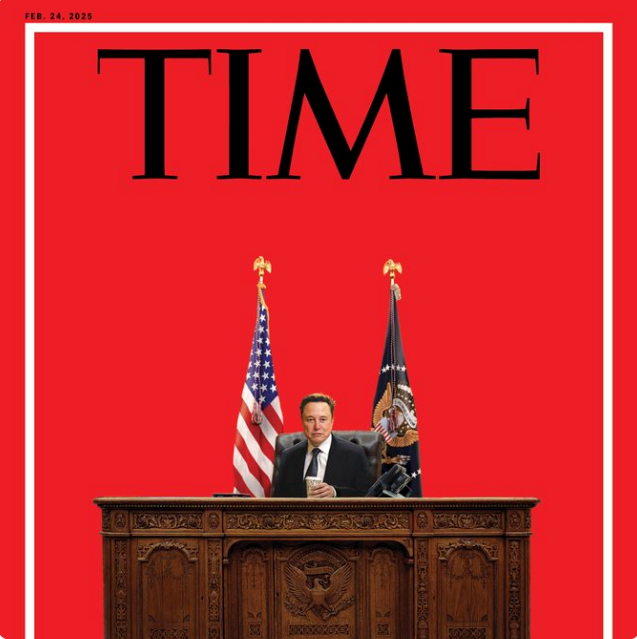
Saturday, February 8, 2025

Constitutional Crises…


We hear pundits talk about potential “Constitutional Crises.” Some say, “If [x] happens, we will be in a Constitutional Crisis.”  There’s a lot of that kind of talk these days, especially with Trump, et al. again in charge.  It’s basically coming from the politically-left-leaners.


I decided to see what exactly a “constitutional crisis” means. There are several different takes, but here’s one I found, when researching it:

Link.

FiveThirtyEight says that there are 4 types of constitutional crises:


1. The Constitution doesn’t say what to do.

2. The Constitution’s meaning is in question.

3. The Constitution tells us what to do, but it’s not politically feasible.

4. Institutions themselves fail.

You can read about the details of each of these 4 if you go into the link above.


  • Q1: What are your thoughts about us, the U.S., already experiencing a Constitutional Crisis under this second Trump term?  Are we? If so, which type(s) above applies?


  • Q2: Who decides if we are in one?  

    • How is that determined?  

    • What can be done about it?


(by PrimalSoup)


MAGA updates: Lies, revenge, dictatorship, bigotry

NYTFalsehoods Fuel the Right-Wing Crusade Against U.S.A.I.D. -- As the Trump administration works to dismantle the aid agency, right-wing influencers have flooded the internet with falsehoods about its work. The video falsely claiming that the United States Agency for International Development paid Ben Stiller, Angelina Jolie and other actors millions of dollars to travel to Ukraine appeared to be a clip from E!News, though it never appeared on the entertainment channel. In fact, the video first surfaced on X in a post from an account that researchers have said spreads Russian disinformation. Within hours it drew the attention of Elon Musk, who reposted it. So did President Trump’s son Donald Trump Jr.

Unfortunately and frighteningly, this is normal for American MAGA politics. 

Times of IndiaRussia welcomes USAID cuts, calls body 'machine for interfering' in global affairs  
_______________________________________________________________________
_______________________________________________________________________

NYTIn revoking Biden’s security clearance, Trump makes clear his motivation is payback -- President Trump said he was revoking Biden’s security clearances on Friday as retribution for Mr. Biden having rescinded his four years ago in response to what Mr. Biden called Mr. Trump’s “erratic behavior” around the Jan. 6 Capitol riot. DJT made no effort to disguise his reasoning. He did not accuse Mr. Biden of any security breaches. Instead, he wrote on social media that there was “no need” for Mr. Biden to continue having access to classified information, exactly parroting the justification Mr. Biden offered in 2021 for denying briefings to Mr. Trump. “Joe, you’re fired. Make America Great Again!” Mr. Trump wrote in his signature all-caps style.
_______________________________________________________________________
_______________________________________________________________________

In 1978, my parents went to Poland, the first foreign trip in each of their lives. When they returned to our home in Moscow, my mother couldn’t stop talking about what they’d seen — not a place but a movie, Bob Fosse’s “Cabaret.” One scene in particular stayed with her. Three friends are returning from a weekend trip. Sleep-deprived, hung over and preoccupied with their sexual and romantic entanglements, they pull over at a roadside cafe. There, a teenager wearing a Hitler Youth uniform starts singing. He is both earnest and, in his brown pants tucked into white knee-high socks, puerile. But after a minute, other young people in uniform join in, and soon all but one customer are standing and singing. The protagonists duck out. They have been pushing Nazism out of their minds, but at this moment they realize that they are in the minority, that life as they’ve been living it is over. The song everyone around them is singing is “Tomorrow Belongs to Me.”

I was 11 when my mother couldn’t stop talking about “Cabaret,” and I was confused. I thought my parents had gone to an actual cabaret and somehow gained an insight into the nature of the Soviet regime. A few years later, after I’d seen the movie myself, I realized my mother was right: That scene is the single most vivid portrayal of what it feels like to live in a society that is falling in line before a totalitarian leader. I experienced this in real life as an adult, when Vladimir Putin came to power in Russia and my world suddenly felt like a chessboard from which an invisible hand was picking off pieces faster than I had thought was possible.

Now, in Donald Trump’s America, I am living through something similar, and it is moving at a faster rate still. For me, it began before the election, when the owners of The Los Angeles Times and The Washington Post decided to pull their papers’ endorsements of Kamala Harris for president.*** It continued with Mark Zuckerberg remaking Meta to reflect what he called the “cultural tipping point” that was the presidential election; with ABC News handing over millions of dollars in response to one of Trump’s frivolous lawsuits and CBS considering doing the same; and most recently, with the great erasure: of records of trans care for minors provided by hospitals and of diversity-and-inclusion policies at many universities and corporations. Now some universities are quietly retooling their programming in hopes of conforming with expectations that have not yet been clearly laid out. 
*** For me, it began in August or Sept. of 2016 if I recall right. Gessen also saw it early and said so publicly in the New York Review on Nov. 10, 2016. So, what she really means is that we're once more living through the rise of a corrupt, cruel, bigoted dictatorship and other forms of corrupt authoritarianism. I never saw an end of the rotting process since 2016. Biden was a flicker of hope for a while, but it was clear to me early on that he was probably going to fail.
I am talking not about deletions of pages from government websites, such as those of the White House and the Centers for Disease Control and Prevention, presumably mandated by newly installed officials; I am talking about actions that individual people or private institutions took pre-emptively, with some measure of free will.

The Yale historian Timothy Snyder has called this “anticipatory obedience.” In his 2017 book “On Tyranny: Twenty Lessons from the Twentieth Century,” lesson No. 1 was “Do not obey in advance.” Those who anticipate the demands of a repressive government and submit to these demands before they are made, Snyder wrote, are “teaching power what it can do.”  
.... 
....
Next comes the pragmatic argument. Rational people do not stand on principle for the sake of principle. They pick their battles. Or so this argument goes. Perhaps this was the logic that led the country’s largest private funder of biomedical research to halt a $60 million diversity program, Target to scrap its D.E.I. goals or ABC News to settle Trump’s libel suit. As cynical as this argument sounds, it too is rooted in values and obligations to others — shareholders, business partners, clients.  
Last, we have the zeitgeist argument. “We are in a new era now,” Zuckerberg observed when he announced that Meta would end its fact-checking program. Companies should have more “masculine energy” and have “a culture that celebrates the aggression” more, he added a few days later, speaking on the Joe Rogan podcast. This kind of argument is the very definition of rational. Societies define sanity as conforming to dominant beliefs and culture. In totalitarian societies, cultural and intellectual rebels are often confined to psychiatric institutions. In the Soviet Union, dissidents were often diagnosed as insane — and by the standards of that society, they were.
Gessen goes on at length. Having had first hand experience and a reasonably rational mind, she really understands corrupt tyrants.
_______________________________________________________________________
_______________________________________________________________________

NYTTrump’s New Line of Attack Against the Media Gains Momentum -- First Amendment experts say Mr. Trump’s lawsuits, based on an unproven legal theory, lack merit. Media lawyers scoffed last year when President Trump sued two news organizations for producing journalism that, he claimed, violated laws meant to protect consumers from things like deceptive advertising. They’re not laughing anymore. First Amendment experts still believe that Mr. Trump’s cases, against CBS News and The Des Moines Register, lack legal merit. But they now also realize that the lawsuits are proving effective at harassing the press — and that more of them are probably on the way.

It amazes me that many people far for intelligent and informed than me are so astoundingly slow to see what is obvious right in front of them. That includes most professional journalists and commentators. It's not stupidity. It's the human condition needing to see comforting reality to avoid an overload of cognitive dissonance. To this day, the most of MSM still usually refers to DJT, MAGA elites and Project 2025 as conservative and conservatism, not as bigoted, kleptocratic authoritarian. Un-fracking-believable! 
_______________________________________________________________________
_______________________________________________________________________

NYTTrump Joins a Global War on ‘Gender Ideology’ -- He’s allying with a movement that stretches to Hungary and Poland — one that looks with skepticism not just on trans rights but on feminism itself. Rhetorical and institutional brawls over “gender ideology” are, at this point, an international phenomenon, a feature of current and former anti-liberal regimes across the world from Moscow to Budapest to Warsaw to Rome — and now in Washington, D.C. The phrase “gender ideology” is often a shorthand for transgender and nonbinary people but also serves as a kind of catchall for anything associated with the idea that gender is a social construct and therefore malleable.

Bigotry, eh?

Friday, February 7, 2025

Wikipedia, Israel and Palestine: Collapsing rationality and civility

CONTEXT
Slate writes about a topic that's been on my mind at least since 2006 or thereabouts. That was the time when old-fashioned conservative politics websites converted to aggressive, insulting slash and burn rhetoric, while inconvenient fact, true truth and sound reasoning faded away. That was the time I see the GOP as rapidly degenerating from old-fashioned conservative, pro-democracy politics to modern MAGA authoritarianism and kleptocracy. The issue is this: Polarized people on clashing sides of a political issue can rarely maintain rational, civil discourse. In the end, nothing but disagreement, bad feelings, broken democracy and a lot of false beliefs are left. 

By Jan. 2009, MAGA elites began their final push to displace the old GOP establishment and replace it with MAGA extremism. Investigative journalist Jane Mayer wrote about the Jan. 2009 meeting of clashing elites in her 2017 book, Dark Money: The Hidden History of the Billionaires Behind the Rise of the Radical Right. It was in that meeting that MAGA declared compromise with Democrats and Obama to be surrender. Compromise had to be replaced with "massive resistance and obstruction."


Project 2025’s Creators Want to Dox Wikipedia Editors. 
The Tool They’re Using Is Horrifying.
The Heritage Foundation plans to “identify and target” Wikipedia editors it accuses of antisemitism

Last month, the Jewish-American news site Forward reported a shocking scoop: The Heritage Foundation, the conservative think tank behind Project 2025, is planning to “identify and target” Wikipedia editors. Through analyzing text patterns, usernames, and technical data and employing social-engineering tactics, Heritage aimed to reveal the identities of anonymous Wikipedia editors it believes are “abusing their position” on the platform.

In the culture of Wikipedia editing, it is common for individuals to use pseudonyms to protect their privacy and avoid personal threats. Revealing an editor’s personal information without their consent, a practice known as doxing, is a form of harassment that can result in a user’s being permanently banned from the site. Although this behavior is strictly prohibited by Wikipedia’s rules, Heritage has endorsed these scorched-earth tactics in response to what it perceives as antisemitism among certain editors covering the Israeli–Palestinian conflict on Wikipedia.

Let’s be clear: Wikipedia’s handling of this topic area is incredibly contentious. Many Wikipedians deliberately avoid pages like “Gaza War,” “Zionism,” and even the meta-entry on Wikipedia’s own coverage of the Israeli–Palestinian conflict. These pages are under extended confirmed protection, meaning that only experienced editors—those who have been on Wikipedia for at least 30 days and have made at least 500 edits—can make changes to them.

But even with these restrictions in place, tensions continue to run high. One side accuses the Tech for Palestine coalition of trying to hijack Wikipedia with Palestinian propaganda, while the other points out that Israel’s government seems to be mobilizing its own citizens to write about the conflict from their perspective. Although founder Jimmy Wales insists the Wikipedia community aims for neutrality, the editors don’t always succeed.

The Heritage Foundation’s threats recall the methods used by pro–Chinese Communist Party editors in 2021, when a group called Wikimedians of Mainland China specifically targeted Hong Kong’s pro-democracy activists. These Chinese nationalist editors were displeased with the way the Hong Kong editors were documenting the protests against Beijing’s rule. Rather than continuing the discussion on Wikipedia’s talk pages (places for editors to chat with one another and debate proposed changes), the pro-CCP editors resorted to doxing and reporting their opponents’ real-life identities to the state police, leading some Hong Kong editors to be physically harmed. It seems that both the CCP and Heritage believe that if you can’t win an argument in the digital space of Wikipedia, it’s fair game to destroy that person’s life offline.
In the documents obtained by Forward, Heritage employees announced plans to use advanced data sources and tools from companies like Moody’s and Thomson Reuters to unmask Wikipedia editors. These powerful applications provide a virtual fire hose of real-time information, including location and address history, cross-referencing usernames, and fingerprinting a user based on writing style.
Regardless of its effectiveness, Wikipedia’s latest decision aligns with its quasi-democratic principles. It reflects a commitment to online debate rather than the authoritarian tactics proposed by Heritage. But if the think tank succeeds in its effort to identify and target editors, the consequences could be profound. Faced with the risk of harassment or real-world retaliation, many volunteer editors—especially those covering politically sensitive topics—may simply stop contributing. Those who remain are likely to be the most ideologically driven voices, further eroding Wikipedia’s stated goal of neutrality.

The free encyclopedia will become too toxic to sustain.
Presumably, this kind of war can and will be engaged in with other disputed important topics.