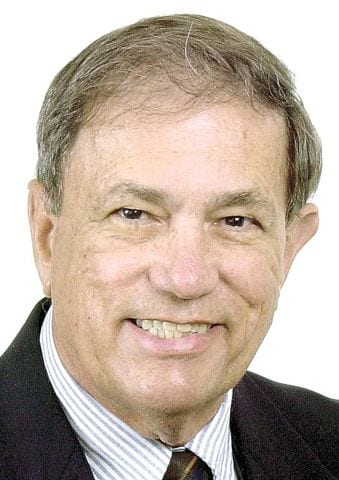
Poised on the other side of the moderator was the South Caroline Senator Jim DeMint, a conservative provocateur who defined the outermost antiestablishment frings of the republican party . . . . Before his election to congress, DeMint had run as advertising agency in South Carolina. He understood how to sell, and what he was pitching that night was an approach to politics that according to historian Sean Wilenz would have been recognizable to DeMint's forebears from the Palmetto state as akin to the radical nullification of federal power advocated in the 1820s by the slavery defender John C. Calhoun.
. . . . Cornyn spoke in favor of the Republican Party fighting its way back to victory by broadening its appeal to a broader swath of voters, including moderates. . . . . the former aide explained . . . . "He believes in making the party a big tent. You can't win unless you get more votes."
In contrast, DeMint portrayed compromise as surrender. He had little patience for the slow-moving process of constitutional government. He regarded many of his Senate colleagues as timid and self-serving. The federal government posed such a dire threat to the dynamism of the American economy, in his view, that anything less than all-out war on regulations and spending was a cop-out. . . . . Rather than compromising on their principles and working with the new administration, DeMint argued, Republicans needed to take a firm stand against Obama, waging a campaign of massive resistance and obstruction, regardless of the 2008 election outcome.
As the participants continued to cheer him on, in his folksy southern way, DeMint tore into Cornyn over one issue in particular. He accused Cornyn of turning his back on conservative free-market principles and capitulating to the worst kind of big government spending, with his vote earlier that fall in favor of the Treasury Department's massive bailout of failing banks. . . . . In hopes of staving off economic disaster, Bush's Treasury Department begged Congress to approve the massive $700 billion emergency bailout known as the Troubled Asset Relief Program, or TARP.
Advisers to Obama later acknowledged that he had no idea of what he was up against. He had campaigned as a post-partisan politician who had idealistically taken issue with those who he said "like to slice and dice our country into red states and blue states." He insisted, "We are one people," the United States of America. His vision, like his own blended racial and geographic heredity, was one of reconciliation, not division.” -- Investigative journalist Jane Mayer describing one of the events in the collapse of mainstream ('establishment') GOP conservatism and the rise of the radical right ideology that has displaced it, Dark Money: The Hidden History of the Billionaires Behind the Rise of the Radical Right, 2107
Radical right elites
The radical right consists mostly of the GOP and libertarians. Presumably there are some independents in the mix too, but those two parties are probably the greatly dominant sources (~85% ?) of this new, aggressive radicalism. The GOP is the much bigger of the two radical right groups (~96% bigger?). The elites who shape and control the ideology and tactics are mostly multi-millionaires, billionaires and business and religious leaders. Their political and social goals are, among other things, rigidly anti-government, anti-taxes, anti-civil liberties and rabidly pro-rich and powerful people and interests, usually at the expense of the public interest. That ideology comes with a significant tinge of bigotry or outright racism.
By contrast, the image the elites portray in their deceptive, manipulative dark free speech (propaganda) is one defense of individual liberty, American power, white privilege and service to the average person and their economic and social concerns.
A recurring Koch brother lie
The Koch brothers have been major financial contributors to the rise of the radical right for decades. The Koch family had been staunch adherents of the John Birch Society (JBS), a virulently racist, anti-civil rights organization that opposed civil liberties. The Koch brothers’ father, Fred C. Koch was a founding member of the JBS. The sons Charles and David supported the JBS during the 1960s when the group was attacking Martin Luther King and the civil rights movement.
In the last 10 days or so, multiple sources have reported that the surviving brother, Charles Koch, is commenting on regrettable(?) governmental, social and commercial effects of his own radical right ideology. Charles has published a new book and his comments seem to be aimed at promoting it.
Investigative journalist Jane Mayer has researched the Kochs in detail for years and asserted that what Charles is telling the public about his political activities, i.e., his regrets about his radicalism, is a bald faced lie. She points out that for some time now, Koch has been making the same claims about every two years after elections. Despite those lies, Charles still financially backs divisive, corrupt, racist and/or crackpot radical right republican candidates.
Mayer makes her point in the ~3 minute video below.
This is what The Hill quotes these lies by Charles: “Boy, did we screw up! What a mess! .... I hope we all use this post-election period to find a better way forward. .... Because of partisanship, we've come to expect too much of politics and too little of ourselves and one another.” Only the last sentence is something the virulently anti-government, libertarian Charles actually believes.
“GOP mega-donor Charles Koch said he regrets his decades of partisanship and now wants to focus on bridging the political divide, The Wall Street Journal reported Friday.
In an interview shortly before the election, the 85-year-old libertarian tycoon told the newspaper that after funding conservative causes, he is turning his attention to issues like poverty, addiction, gang violence, homelessness and recidivism.
Over the years, the Koch brothers — Charles and David Koch — built an influence network that poured money into conservative causes and candidates. Charles Koch remains head of Koch Industries, a multibillion-dollar conglomerate with 130,000 employees.
Despite Koch's calls for unity, his political contributions largely favored GOP candidates in the 2020 election cycle, with $2.8 million donated to Republicans and just $221,000 for Democratic candidates, the Journal reported.”
It is not surprising that some or most people who do not know the Koch family history would fall for Charles’ lies. What is deeply disappointing is that some members of the professional media and news sources actually believe the lies. That apparently includes The Hill, which entitled its article Charles Koch regrets his partisanship: 'Boy, did we screw up!'
Charles does not regret his partisanship. Not even a little. There is no evidence to back it up. Koch just wants to rehabilitate his reputation as a toxic, hate-spewing radical right ideologue.
This feeble attempt by Charles is just like our crackpot, immoral president falsely claiming massive election fraud without evidence of massive fraud. We live in a time of alt-facts, alt-reality and radical right motivated reasoning. For the radicals and their ideology, lies, deceit, emotional manipulation and crackpot reasoning are all normal, moral and patriotic.


Does that crackpottery sound familiar?
How about now (see below)?