Etiquette


DP Etiquette

First rule: Don't be a jackass. Most people are good.

Other rules: Do not attack or insult people you disagree with. Engage with facts, logic and beliefs. Out of respect for others, please provide some sources for the facts and truths you rely on if you are asked for that. If emotion is getting out of hand, get it back in hand. To limit dehumanizing people, don't call people or whole groups of people disrespectful names, e.g., stupid, dumb or liar. Insulting people is counterproductive to rational discussion. Insult makes people angry and defensive. All points of view are welcome, right, center, left and elsewhere. Just disagree, but don't be belligerent or reject inconvenient facts, truths or defensible reasoning.

Friday, November 27, 2020

2020 Was Too Unprecedented for Just One Word of the Year


We talked about the environment, social justice, and mostly the pandemic.
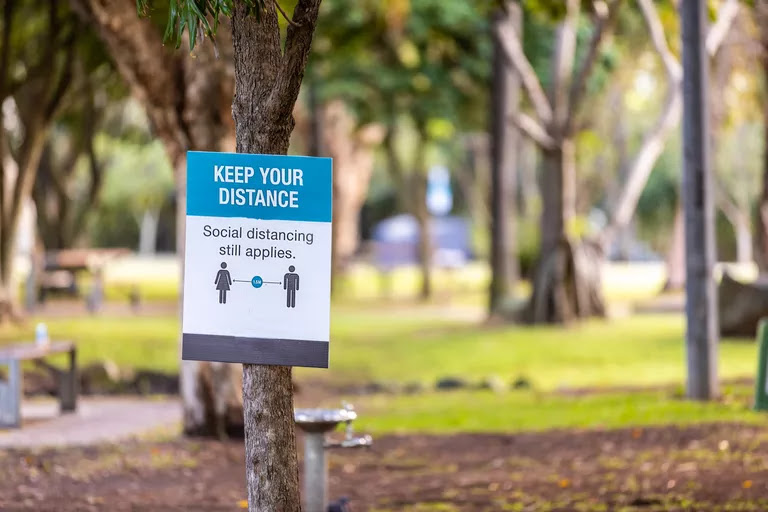

If someone asked you for one word to describe 2020, chances are you might come up with something profane. But even if your vocabulary was a little less colorful, you might have difficulty limiting your selection to just one word.


That’s the same problem the publishers of the Oxford English Dictionary had when they were debating on their annual Word of the Year. Last year, they settled on "climate emergency," and in 2018, their pick was "toxic."


But they said, “Given the phenomenal breadth of language change and development during 2020, Oxford Languages concluded that this is a year which cannot be neatly accommodated in one single word.”

So instead they analyzed their continually updated database of about 11 billion words to highlight the “words of an unprecedented year.”

Of course, the majority of them revolve around the pandemic. In fact, the use of the word “pandemic” itself increased by more than 57,000% over last year.1

The word “coronavirus” dates back to the 1960s, but not many people outside of the medical and scientific fields dropped it in casual conversation until early this year. By March, it was one of the most frequently used nouns in the English language.

“COVID-19” wasn’t even a word until Feb. 11 when the World Health Organization named the mysterious new disease. By May, people were using it more often than coronavirus, Oxford notes.


In March and April, new phrases and words became common parts of our conversations. We had “social distancing” and “lockdown,” “stay at home,” “self-isolating” and “self-quarantine.” Throughout the year, so many pandemic-related terms have continued to surface from PPE (personal protective equipment) to face coverings. And we all learned what it meant to try to “flatten the curve” and many of us were concerned about “superspreader” events.

But because this has been a year of unending news, we’ve talked about so much more than the virus.

How We Talked About the Environment
In January, one of the top keywords was “bushfire” because of the Australian fires that devastated the country at the end of 2019 and through the early part of this year. Other climate-related events include the catastrophic wildfires in California, a record-breaking Atlantic hurricane season, and historic Arctic sea ice loss.


“And yet, with a few exceptions, climate change has not received nearly the amount of media attention as it has in previous years, as Covid-19 and other issues have dominated the news,” according to Oxford.

“Last year, the Oxford Languages Word of the Year was ‘climate emergency,’ with a shortlist composed entirely of words relating to climate and environmental issues. In March this year, the frequency of climate, global warming, and related terms plummeted in our corpus.”

By March, the frequency of the word “climate” plunged by nearly 50% from where it was at the start of the year.1

There is good news for the environment. “Climate” and related terms are becoming more popular again, as is “net zero.” The change in attention is partly due to the pledge by China’s President Xi Jinping in September that the country will be carbon neutral by 2060.2

Social Movements and Politics
The Oxford report highlighted phrases related to social movements and social justice. This year we discussed “Black Lives Matter” and “BLM.” We used “BIPOC” as an abbreviation of black, indigenous, and other people of color. There was talk of “wokeness” and “systemic racism” while the use of “cancel culture” also soared.

And of course, there were politics. We talked a lot about “impeachment” in January, “acquittal” in February, and “mail-in” voting in August.

Words at Home
Because so many people started work at home and staying at home more this year, the language reflected that. They’re not new at all, but “remote” and “remotely” saw a huge surge in use since March. Along with it, the word “unmute” saw a 500% rise. 1(What’s the use of being on Zoom if no one can hear you?)

But not only were we talking about Zoom, we now know what “Zoombombing” is when people infiltrate Zoom calls for disruptive purposes.

“The English language, like all of us, has had to adapt rapidly and repeatedly this year,” the Oxford lexicographers write, when sharing their vast list.

"I’ve never witnessed a year in language like the one we’ve just had," said Oxford Languages President Casper Grathwohl in a statement. "It’s both unprecedented and a little ironic—in a year that left us speechless, 2020 has been filled with new words unlike any other."

And we still have more than a month to go.


WAIT A BLOODY MINUTE!

Definitely 2020 revealed to the world that the USA definitely has way too many SNOWFLAKES!


Thursday, November 26, 2020

Theocracy Continues Its Conquest of Secularism

The supreme court made its first decision related to religious liberty with Justice Barrett siding with the GOP and its radical right ideology. This case helps elevate religious freedom over some pandemic-related restrictions intended to protect public health. Churches can now ignore public safety restrictions in the name of religious liberty. The radical justices argued that violated the Constitution for local officials to impose restrictions on houses of worship that are more stringent than restrictions on businesses considered essential. The presence of Barrett was pivotal in the majority because the court had upheld similar regulations in Nevada and California before she was on the court.

The decision was 5-4, with GOP chief justice Roberts joining the liberal minority. 

“In a speech to the conservative Federalist Society earlier this month, Justice Samuel A. Alito Jr. amplified his objections, saying the pandemic ‘has resulted in previously unimaginable restrictions on individual liberty. .... This is especially evident with respect to religious liberty. It pains me to say this, but in certain quarters, religious liberty is fast becoming a disfavored right.’

Justice Neil M. Gorsuch, another Trump appointee to the court, took pointed aim at Roberts’s opinion in the California case and declared that it should no longer guide lower courts when weighing pandemic-related restrictions on religious services.

‘Courts must resume applying the Free Exercise Clause’, Gorsuch wrote. ‘Today, a majority of the Court makes this plain.’

The Roman Catholic Diocese of Brooklyn and Jewish organizations led by Agudath Israel challenged Cuomo’s system of imposing drastic restrictions on certain neighborhoods when coronavirus cases spike.”

As pointed out here before, the supreme court is now controlled by a majority of Christian nationalist judges. That radical right religious ideology relies on using the free exercise clause to elevate religious liberties to a status above other liberties and secular concerns such as public health. 

This decision seems to mean that churches can hold services with numbers of people equivalent to what is allowed in essential businesses such as grocery stores. In essence, that puts religious practice on the same level of importance as getting food. Religious group complained that religion was being treated unfairly. New York state asserted that religion was being treated favorably compared to other activities. 

Wafer Scale Engine Computer: Faster than Reality

The 1st generation WSE 1.2 trillion transistor chip (~8.5 x 8.5 inches) -- 
the 2nd generation chip will have 2.6 trillion transistors, 
850,00 cores and more than twice the memory


An article at the SungularityHub, The Trillion-Transistor Chip That Just Left a Supercomputer in the Dust, describes what seems to be the first actualization of an old idea in computer chips. The idea is to make computer processing chips bigger, not smaller. So far, all the innovation has gone into making chips and components smaller and smaller and smaller. At present, billions of transistors can be put on a small chip as shown above. The new wafer-scale engine (WSE) takes existing miniaturization technology to put a trillion transistors on a big chip. The big chip is made by Cerebras, a California startup company.

“The Cerebras Wafer-Scale Engine is massive any way you slice it. The chip is 8.5 inches to a side and houses 1.2 trillion transistors. The next biggest chip, NVIDIA’s A100 GPU, measures an inch to a side and has a mere 54 billion transistors. The former is new, largely untested and, so far, one-of-a-kind. The latter is well-loved, mass-produced, and has taken over the world of AI and supercomputing in the last decade.

When Cerebras first came out of stealth last year, the company said it could significantly speed up the training of deep learning models.

Since then, the WSE has made its way into a handful of supercomputing labs, where the company’s customers are putting it through its paces. One of those labs, the National Energy Technology Laboratory, is looking to see what it can do beyond AI.

So, in a recent trial, researchers pitted the chip—which is housed in an all-in-one system about the size of a dorm room mini-fridge called the CS-1—against a supercomputer in a fluid dynamics simulation. Simulating the movement of fluids is a common supercomputer application useful for solving complex problems like weather forecasting and airplane wing design.

The trial was described in a preprint paper written by a team led by Cerebras’s Michael James and NETL’s Dirk Van Essendelft and presented at the supercomputing conference SC20 this week. The team said the CS-1 completed a simulation of combustion in a power plant roughly 200 times faster than it took the Joule 2.0 supercomputer to do a similar task.

The CS-1 was actually faster-than-real-time. As Cerebrus wrote in a blog post, ‘It can tell you what is going to happen in the future faster than the laws of physics produce the same result.’

The researchers said the CS-1’s performance couldn’t be matched by any number of CPUs and GPUs. And CEO and cofounder Andrew Feldman told VentureBeat that would be true “no matter how large the supercomputer is.” At a point, scaling a supercomputer like Joule no longer produces better results in this kind of problem. That’s why Joule’s simulation speed peaked at 16,384 cores, a fraction of its total 86,400 cores.

A comparison of the two machines drives the point home. Joule is the 81st fastest supercomputer in the world, takes up dozens of server racks, consumes up to 450 kilowatts of power, and required tens of millions of dollars to build. The CS-1, by comparison, fits in a third of a server rack, consumes 20 kilowatts of power, and sells for a few million dollars. 

Computer chips begin life on a big piece of silicon called a wafer. Multiple chips are etched onto the same wafer and then the wafer is cut into individual chips. While the WSE is also etched onto a silicon wafer, the wafer is left intact as a single, operating unit. This wafer-scale chip contains almost 400,000 processing cores. Each core is connected to its own dedicated memory and its four neighboring cores.”

What does all that mean?
What that means is that there is a new generation computer technology that can do some things better than existing supercomputers. It's simulations of events can be faster than real time, allowing predicting and acting in advance of future events. At present, the things that WSE dowes best relate to solving specific, highly complex problems that require vast amounts of computing power. WSE will not replace existing technology like the ipad or laptop, which are designed for general uses and generally work quite well. As with most or all new technologies, this can be, and probably will be, used for good and bad. 

WSE excels at doing high speed simulations in real time. It can simulate and at least partially automate aircraft landings. It works faster to train artificial intelligence software than current supercomputers. WSE can be used to train neural networks, simulating brain data processing. Since this is still early days in WSE technology development, it is not known how influential this will become. Competing technologies include quantum computers and memristor-based neuromorphic chips, that mimic the brain by putting processing and memory into individual transistor-like components. 

My guess is that WSE will be tested in stock markets to see if the future can be predicted far enough out to trade on a stock before it moves up or down. It also seems reasonable to think that WSE will be tested in medical situations where real time computing can help in diagnosis or predicting future medical problems using artificial intelligence (AI) technology. AI is used in medicine for a growing number of applications.
 
Lots more cores, memory and bandwidth -- more is better!
(A PB is a petabyte = 2 to the 50th power of bytes; 
1,024 terabytes (TB) = 1 petabyte, or 1 million gigabytes; for comparison, 
human brain data processing operates unconsciously at about 
1.4 million bytes/second and about 1-60 bytes/second consciously)


Wednesday, November 25, 2020

A Radical Right Elite Lie


“The highlight of the Koch summit in [January] 2009 was an uninhibited debate about what conservatives should do next in the face of electoral defeat. As the donors and other guests dined ... they watched a passionate argument unfold that encapsulated the stark choice ahead. . . . . Cornyn was rated the second most conservative republican in the Senate . . . . But he was also, as one former aide put it "very much a constitutionalist" who believed it was occasionally necessary to compromise in politics.

Poised on the other side of the moderator was the South Caroline Senator Jim DeMint, a conservative provocateur who defined the outermost antiestablishment frings of the republican party . . . . Before his election to congress, DeMint had run as advertising agency in South Carolina. He understood how to sell, and what he was pitching that night was an approach to politics that according to historian Sean Wilenz would have been recognizable to DeMint's forebears from the Palmetto state as akin to the radical nullification of federal power advocated in the 1820s by the slavery defender John C. Calhoun.

. . . . Cornyn spoke in favor of the Republican Party fighting its way back to victory by broadening its appeal to a broader swath of voters, including moderates. . . . . the former aide explained . . . . "He believes in making the party a big tent. You can't win unless you get more votes."

In contrast, DeMint portrayed compromise as surrender. He had little patience for the slow-moving process of constitutional government. He regarded many of his Senate colleagues as timid and self-serving. The federal government posed such a dire threat to the dynamism of the American economy, in his view, that anything less than all-out war on regulations and spending was a cop-out. . . . . Rather than compromising on their principles and working with the new administration, DeMint argued, Republicans needed to take a firm stand against Obama, waging a campaign of massive resistance and obstruction, regardless of the 2008 election outcome.

As the participants continued to cheer him on, in his folksy southern way, DeMint tore into Cornyn over one issue in particular. He accused Cornyn of turning his back on conservative free-market principles and capitulating to the worst kind of big government spending, with his vote earlier that fall in favor of the Treasury Department's massive bailout of failing banks. . . . . In hopes of staving off economic disaster, Bush's Treasury Department begged Congress to approve the massive $700 billion emergency bailout known as the Troubled Asset Relief Program, or TARP.

Advisers to Obama later acknowledged that he had no idea of what he was up against. He had campaigned as a post-partisan politician who had idealistically taken issue with those who he said "like to slice and dice our country into red states and blue states." He insisted, "We are one people," the United States of America. His vision, like his own blended racial and geographic heredity, was one of reconciliation, not division.” -- Investigative journalist Jane Mayer describing one of the events in the collapse of mainstream ('establishment') GOP conservatism and the rise of the radical right ideology that has displaced it, Dark Money: The Hidden History of the Billionaires Behind the Rise of the Radical Right, 2107


Radical right elites
The radical right consists mostly of the GOP and libertarians. Presumably there are some independents in the mix too, but those two parties are probably the greatly dominant sources (~85% ?) of this new, aggressive radicalism. The GOP is the much bigger of the two radical right groups (~96% bigger?). The elites who shape and control the ideology and tactics are mostly multi-millionaires, billionaires and business and religious leaders. Their political and social goals are, among other things, rigidly anti-government, anti-taxes, anti-civil liberties and rabidly pro-rich and powerful people and interests, usually at the expense of the public interest. That ideology comes with a significant tinge of bigotry or outright racism. 

By contrast, the image the elites portray in their deceptive, manipulative dark free speech (propaganda) is one defense of individual liberty, American power, white privilege and service to the average person and their economic and social concerns. 


A recurring Koch brother lie
The Koch brothers have been major financial contributors to the rise of the radical right for decades. The Koch family had been staunch adherents of the John Birch Society (JBS), a virulently racist, anti-civil rights organization that opposed civil liberties. The Koch brothers’ father, Fred C. Koch was a founding member of the JBS. The sons Charles and David supported the JBS during the 1960s when the group was attacking Martin Luther King and the civil rights movement.

In the last 10 days or so, multiple sources have reported that the surviving brother, Charles Koch, is commenting on regrettable(?) governmental, social and commercial effects of his own radical right ideology. Charles has published a new book and his comments seem to be aimed at promoting it. 

Investigative journalist Jane Mayer has researched the Kochs in detail for years and asserted that what Charles is telling the public about his political activities, i.e., his regrets about his radicalism, is a bald faced lie. She points out that for some time now, Koch has been making the same claims about every two years after elections. Despite those lies, Charles still financially backs divisive, corrupt, racist and/or crackpot radical right republican candidates.

Mayer makes her point in the ~3 minute video below. 


This is what The Hill quotes these lies by Charles: “Boy, did we screw up! What a mess! .... I hope we all use this post-election period to find a better way forward. .... Because of partisanship, we've come to expect too much of politics and too little of ourselves and one another.” Only the last sentence is something the virulently anti-government, libertarian Charles actually believes.

“GOP mega-donor Charles Koch said he regrets his decades of partisanship and now wants to focus on bridging the political divide, The Wall Street Journal reported Friday.

In an interview shortly before the election, the 85-year-old libertarian tycoon told the newspaper that after funding conservative causes, he is turning his attention to issues like poverty, addiction, gang violence, homelessness and recidivism.

Over the years, the Koch brothers — Charles and David Koch — built an influence network that poured money into conservative causes and candidates. Charles Koch remains head of Koch Industries, a multibillion-dollar conglomerate with 130,000 employees. 
Despite Koch's calls for unity, his political contributions largely favored GOP candidates in the 2020 election cycle, with $2.8 million donated to Republicans and just $221,000 for Democratic candidates, the Journal reported.”

It is not surprising that some or most people who do not know the Koch family history would fall for Charles’ lies. What is deeply disappointing is that some members of the professional media and news sources actually believe the lies. That apparently includes The Hill, which entitled its article Charles Koch regrets his partisanship: 'Boy, did we screw up!'

Charles does not regret his partisanship. Not even a little. There is no evidence to back it up. Koch just wants to rehabilitate his reputation as a toxic, hate-spewing radical right ideologue.

This feeble attempt by Charles is just like our crackpot, immoral president falsely claiming massive election fraud without evidence of massive fraud. We live in a time of alt-facts, alt-reality and radical right motivated reasoning. For the radicals and their ideology, lies, deceit, emotional manipulation and crackpot reasoning are all normal, moral and patriotic.


Does that crackpottery sound familiar? 
How about now (see below)?