Etiquette


DP Etiquette

First rule: Don't be a jackass. Most people are good.

Other rules: Do not attack or insult people you disagree with. Engage with facts, logic and beliefs. Out of respect for others, please provide some sources for the facts and truths you rely on if you are asked for that. If emotion is getting out of hand, get it back in hand. To limit dehumanizing people, don't call people or whole groups of people disrespectful names, e.g., stupid, dumb or liar. Insulting people is counterproductive to rational discussion. Insult makes people angry and defensive. All points of view are welcome, right, center, left and elsewhere. Just disagree, but don't be belligerent or reject inconvenient facts, truths or defensible reasoning.

Saturday, December 26, 2020

A Dart From Germaine to Mr. Haynes


Context
The Washington Post reports on the CDC's failure to rapidly develop and distribute a test for the CARS-CoV-2 virus. It took the CDC in Thailand several hours to develop a test based on the WHO test. It took a couple more days before the first person in Thailand was diagnosed with COVID-19. It took the CDC in the US about six weeks to finish developing its test. WaPo writes:
Another breakthrough came the next day, Jan. 13, when the WHO publicly shared a protocol, essentially a recipe, specifying the materials needed to build a molecular test.

The Thais used that protocol to make a second test to detect the virus. This redundancy would eventually become the model for developing a vaccine against the virus.

Using their version of the WHO test, Thai health officials within days found other cases, including a taxi driver.

“The early availability of the RT-PCR testing definitely helped to reduce transmission and save lives,” Pongpirul told The Post by email.

John R. MacArthur, a physician who had led the CDC’s Thailand operations since 2013, said that when PCR testing confirmed the first case there, “I immediately contacted CDC leadership in Atlanta to let them know what was happening.”

“Seeing the first case outside of China, I thought, was a big moment,’’ MacArthur said in a phone interview. 

“The test that the WHO used early on was quite successful,” said Le Duc, a former senior CDC official who still serves as an adviser to the agency. “I frankly don’t know why CDC didn’t accept it.”

“If we would have put [tests] out there quicker, could we have saved lives? Well sure,’’ said Peter C. Iwen, director of the Nebraska Public Health Laboratory in Omaha. “If we would have diagnosed quicker, we would have saved people.”

The dart
WaPo asked for an interview, but the CDC blew it off: 
Redfield and other CDC leaders declined to be interviewed or to respond to written questions about the agency’s handling of the test.“Appreciate the opportunity, but we are going to pass,” said CDC spokesman Benjamin N. Haynes.

Something about that blithe “appreciate the opportunity” response prompted me to write to Mr. Haynes. I wrote this: 


To: Media (Media@cdc.gov)

Regarding Benjamin Haynes' Washington Post comment (CC: Harmon, Bonds)

Dear Mr. Haynes,

I read your comment to the Washington Post regarding a request for an interview. Your response, “Appreciate the opportunity, but we are going to pass”, was disgusting and an insult to the American people. You and the CDC owe the American people an explanation, not smug deflection while you slither under a rock to hide from accountability. It is no wonder that so many Americans are hostile to the federal government. Your arrogant attitude directly feeds the hostility and distrust. Does this come mostly from you personally, the CDC or Trump?

You are derelict in your duty and should resign.

Sincerely,
My real name, PhD, JD
San Diego, CA

CC: Carrie Harmon, Michelle Bonds


Questions: Was Mr. Haynes derelict, or did I overreact? Does the CDC owe the American people an explanation, or should this story be kept a secret?

Thursday, December 24, 2020

Merry Christmas! Happy Holidays! Best Wishes!

 Pictures by pros:


Pictures by me:

blooming in the desert


A rare freshwater stream about 65 miles east of San Diego

A couple of blocks from my house


A rare flower blooming -- I've seen this in only one place
in my ~15 years of hiking in the mountains east of San Diego 
It is rare and thus precious to me, even if it is common elsewhere


That hawk used to be there almost every time we hiked the mountain
then the tree fell and now that sight is gone forever


That was what was left of a tree after the 2003 Cedar Fire in San Diego county
It is still there today in 2020 - we it saw again last week


Capybara (really big rodents) and offspring units at the San Diego zoo
(2012)

One morning over the bit of bay behind our house
(2016)


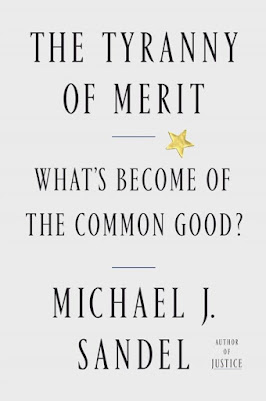
Book Review: The Tyranny of Merit


“Thomas Frank ... criticized liberals focus on education as the remedy for inequality: ‘To the liberal class, every big economic problem is really an education problem, a failure by the losers to gain the right skills and get the credentials everyone knows you’ll need in the society of the future. .... It really isnt an answer at all: it’s a moral judgment handed down by the successful from the vantage of their own success. The professional class is defined by its educational attainment, and every time they tell the country that what it needs is more schooling, they are saying: Inequality is not a failure of the system, it is a failure of you. .... The real problem was one of inadequate worker power, not inadequate worker smarts. The people who produced were losing their ability to demand a share in what they made. -- Chapter 4, Credentialism: The Last Acceptable Prejudice

“[Johnathan] Alter saw a similarity between Kennedy’s team and Obama’s, who ‘shared the ivy league as well as a certain arrogance and a detachment from the everyday lives of most Americans.’ As things turned out, Obama’s economic advisers contributed to a folly of their own, less lethal than Vietnam but consequential nonetheless for the shape of American politics. Insisting on a Wall Street-friendly response to the financial crisis, they bailed out the banks without holding them to account, discredited the democratic party in the eyes of many working people, and helped pave the way to Trump.” -- Chapter 4, Credentialism: The Last Acceptable Prejudice


Michael Sandel’s 2020 book, The Tyranny of Merit: What's Become of the Common Good?, is a detailed analysis of why there was and still is a populist backlash and widespread public support for the president. Sandel’s analysis sheds light on factors he argues are important in driving people to support a authoritarian nationalist. Sandel is a Professor of Government at Harvard and teaches political philosophy. His focus includes political and economic moral philosophy, which he wrote on in several books including his 2012 book, What Money Can't Buy: The Moral Limits of Markets (book review here).

The essence of Sandel’s argument is that American politics on the left and right have shifted since the 1960s to a mindset that asserts merit as the moral justification for wealth inequality and equally importantly, social esteem associated with work. In essence, both the right and left latched onto the false concept that if you work hard and play by the rules, you will get your just reward. That is not always true. It is not true most of the time for most people. More than academic credentials, factors such as luck and other fortunate circumstances like being born into a wealthy family are also often relevant.

In poll and interview data, Sandel sees the main complaint among Trump supporters as one of resentment of the bad attitude of liberal elites toward the dignity of working class work and the workers who do not have college educations. Sandel argues that open discrimination against people without college degrees, about two-thirds of the American people, is the last acceptable prejudice. People without a college degree remember and still feel the sting of Hillary Clinton calling them ‘deplorables’ and Obama referring to their security blanket need for ‘guns and bibles’. Those things cut deeply and are still remembered with anger and resentment.

Regarding higher education, Sandel recognizes a need for talent, merit and university education. His criticism focuses on when the educated elites get it wrong. When things go bad, e.g., Vietnam and Iraq, the elites and their elitist attitude, have a hard time seeing their own hubris, failings and weaknesses. He argues that the problem has been worsened by a slow reduction in the number of people without college degrees who participate in high level politics. Overt prejudice against non-college educated people is made socially acceptable by meritocratic ideology. 

Several things add to the credibility of Sandel’s argument. Other people could see and predict the resentments among the losers that would arise if a system of merit without social conscience came to dominate thinking and policy in government and society. What we are witnessing today was predicted with amazing accuracy decades ago by British sociologist Michael Young writing in 1958. The reasoning then was the same as what Sandel asserts today. To his credit, Sandel makes the origin of his argument clear. What Sandel has done is fit the current data with the earlier prediction. One source commented on Young and Sandel:
“THE BRITISH SOCIOLOGIST Michael Young coined “meritocracy” in 1958 in the title of a satire, The Rise of the Meritocracy, which purported to look backward from 2034 at a dystopian United Kingdom on the brink of revolution. Young feared the new meritocrats he saw emerging in the post-World War II order would surmount multiple rounds of rigorous testing for intelligence and talent, then wield their authority over government and business with the assurance that, unlike the aristocrats of yore, they had earned their perch atop a hierarchy. Everyone else would have lost the chance for power and prosperity because of personal failings like laziness—which would fuel resentment among populists who felt shut out of the system. To Young’s dismay, he lived to see the notion of “meritocracy” enter common use as a term not of censure but of praise, used by leaders from Ronald Reagan and Margaret Thatcher to Bill Clinton and Tony Blair. More recently, Barack Obama recited “You can make it if you try” like a personal slogan in more than 140 speeches during his presidency. 
The latest entry in this debate comes from Bass professor of government Michael Sandel, the political theorist .... In contrast to Guinier’s reformist account, his The Tyranny of Merit: What’s Become of the Common Good? launches a direct attack on the philosophical underpinnings of meritocracy: he comes not to salvage the concept, but to bury it. Meritocracy, he argues, is obviously imperfect in its current form; it approximates true equality of opportunity only roughly. But even if equality of opportunity were attainable, which Sandel doubts, he thinks meritocracy would be neither desirable nor sustainable: even a perfect meritocracy has multiple flaws that make it unjust. The biggest problem is that meritocracy demands equality of opportunity at the starting line, but legitimates whatever inequalities follow as natural products of innate differences in talent and virtue: hardworkingness, intelligence, perseverance.” (emphasis added)

Both Sandel and Young argue that inequalities sanctioned by meritocracy lead to an insidious self-satisfaction among the winners and a seething resentment among the losers. The losers see a system that is rigged against them, and disrespects them. The winners cannot see the contribution of circumstances, luck and public infrastructure that led to their success based on their innate talents and hard work. Sometimes, winner innate talents are limited, but luck or circumstances more than compensate and the meritocracy doesn't account or for care about that. 

One last point that Sandel repeatedly makes needs to be commented on. Meritocracy is focused on people as consumers, not as producers. Most people are both. The consumer focus leads to GDP-based thinking and ignores the well-being of the producers. The ill-effects of globalization, automation and free trade could have been softened, but they were not. Many people who lost good jobs never recovered. Sandel writes:
“Those left behind by four decades of globalization and rising inequality were suffering from more than wage stagnation; the were experiencing what they feared as growing obsolescence. .... [Liberals][1] have been offering working-class and middle-class voters a greater measure of distributive justice -- fairer fuller, access to the fruits of economic growth. But what those voters want even more is a greater measure of contributive justice -- an opportunity to win the social recognition and esteem that go with producing what others need and value. .... It falls to politics to reconcile our identities as consumers and producers. But the globalization project sought to maximize economic growth, and hence the welfare of consumers, with little regard for the effect of outsourcing, immigration and financialization on the well-being of producers. The elites who presided over globalization not only failed to address the inequality it generated; they also failed to appreciate its corrosive effect on the dignity of work. .... the anger abroad in the land is, at least in part, a crisis of recognition. And it is in our role as producers, not consumers, that we contribute to the common good and win recognition for doing so.”

Footnote: 
1. Although this review repeatedly mentions failings of liberals and liberalism, Sandel makes it clear throughout his book that conservatism is even more on board with the downsides of the meritocracy illusion. The modern GOP is very hostile to job retraining and income support spending that would soften the blows of globalization and job loss. Sandel wrote: “Looking back across the wreckage we can see why this project failed. First of all, it was never really implemented.” The controlling conservative ideology holds that the losers deserve their plight and that generally makes effective worker protection policy impossible in our broken, polarized government. Obstinate, uncaring conservatism is more toxic than misguided liberalism.

Lack of government can be 
a big part of people’s problems

Wednesday, December 23, 2020

The COVID Relief Bill: Tax Breaks for the Rich, Lack of Concern for Everyone Else

Context
Deriding the "Green New Deal" and "Medicare for All," Senate Majority Leader Mitch McConnell vowed to be Congress' "grim reaper" and thwart all progressive proposals on the Senate floor. "If I'm still the majority leader of the Senate after next year, none of those things are going to pass the Senate," the Kentucky Republican told a small crowd during an event in his home state Monday. "They won't even be voted on. So think of me as the Grim Reaper: the guy who is going to make sure that socialism doesn't land on the president's desk." -- CBS News, April 22, 2019


The New York Times writes:
Tucked away in the 5,593-page spending bill that Congress rushed through on Monday night is a provision that some tax experts call a $200 billion giveaway to the rich.

It involves the tens of thousands of businesses that received loans from the federal government this spring with the promise that the loans would be forgiven, tax free, if they agreed to keep employees on the payroll through the coronavirus pandemic.

But for some businesses and their high-paid accountants, that was not enough. They went to Congress with another request: Not only should the forgiven loans not to be taxed as income, but the expenditures used with those loans should be tax deductible.
“High-income business owners have had tax benefits and unprecedented government grants showered down upon then. And the scale is massive,” said Adam Looney, a fellow at the Brookings Institution and a former Treasury Department tax official in the Obama administration, who estimated that $120 billion of the $200 billion would flow to the top 1 percent of Americans. 
The new provision allows for a classic double dip into the Payroll Protection Program, as businesses get free money from the government, then get to deduct that largess from their taxes. 
And it is one of hundreds included in a huge spending package and a coronavirus stimulus bill that is supposed to help businesses and families struggling during the pandemic but, critics say, swerved far afield. President Trump on Tuesday night blasted it as a disgrace and demanded revisions.

“Congress found plenty of money for foreign countries, lobbyists and special interests, while sending the bare minimum to the American people who need it,” he said in a video posted on Twitter that stopped just short of a veto threat.

Once again, the radical right GOP makes clear that it serves wealthy people and interests before average and poor people and without one shred of regard to increasing the federal debt. Oddly, the president seems to be miffed about the focus on service to the rich and powerful. One can only wonder what prompted that bizarre, out-of-character outburst.

The other aspect of this complex, massive bill that may jump out is the way it was written and presented to congress.
“Members of Congress have not read this bill. It’s over 5000 pages, arrived at 2pm today, and we are told to expect a vote on it in 2 hours,” Representative Alexandria Ocasio-Cortez, Democrat of New York, tweeted on Monday. “This isn’t governance. It’s hostage-taking.”

Senator Ted Cruz, Republican of Texas, agreed — the two do not agree on much.

“It’s ABSURD to have a $2.5 trillion spending bill negotiated in secret and then—hours later—demand an up-or-down vote on a bill nobody has had time to read,” he tweeted on Monday.

A personal peeve
In the last few days, the MSM reported on this in ways that are increasingly personally irritating. NPR referred to the process as having taken about seven months to do. That is false and completely misleading. Other sources are making similar gross mistakes in mischaracterizing the situation. In fact, it took the House a short period of time to write and pass the bill. Republican Senator Mitch McConnell did little or nothing after that to work on its passage. McConnell played his usual obstructionist Grim Reaper role and ignored the House bill, which the House passed last May.

What some sources gently suggest, and I believe is true, is that partisan politics, not concern for the American people, prompted McConnell to finally take up the COVID relief and spending bill. The two republicans running for Senate in Georgia appear to be floundering in their campaigns. Passing the bill out of the Senate would give them something to point to as their success on behalf of the American people. McConnell does not care about the welfare of the American people any more than the radical right GOP in congress or the president. What McConnell and the GOP are concerned about is remaining in power. McConnell wants to remain in power as Senate majority leader. That is why this bill was passed and that is why no one in congress had a chance to read it before voting on it.

That is how this disaster would have been reported if accuracy and context were important to the MSM.

When the hell is the MSM going to grow a spine and start reporting accurately? Probably not as long as big corporations own it. The profit motive and advertiser demands are not only incompatible with professional journalism. They are highly destructive and hostile toward it (and democracy and the rule of law).