Etiquette


DP Etiquette

First rule: Don't be a jackass. Most people are good.

Other rules: Do not attack or insult people you disagree with. Engage with facts, logic and beliefs. Out of respect for others, please provide some sources for the facts and truths you rely on if you are asked for that. If emotion is getting out of hand, get it back in hand. To limit dehumanizing people, don't call people or whole groups of people disrespectful names, e.g., stupid, dumb or liar. Insulting people is counterproductive to rational discussion. Insult makes people angry and defensive. All points of view are welcome, right, center, left and elsewhere. Just disagree, but don't be belligerent or reject inconvenient facts, truths or defensible reasoning.

Saturday, August 28, 2021

Where the fascist Republican Party stands on voting rights: In staunch opposition


What the aftermath of the 2020 elections in
Georgia led to in 2021: voter suppression laws, election rigging laws
and protests against those laws 


The Washington Post reports in an opinion piece on how the debate went in the House of Representatives on the John R. Lewis Voting Rights Advancement Act. As one might expect, it was ugly. WaPo writes:
This week’s House debate on the John R. Lewis Voting Rights Advancement Act, which passed on a 219-to-212 party-line vote, was a reprise of past legislative wars on voting rights. It was a disgusting sight to behold.

The Lewis Act itself is straightforward. It strengthens the Voting Rights Act of 1965 against the onslaught of voter suppression measures that many states passed following the 2020 elections. It also restores enforcement mechanisms that the Supreme Court gutted in 2013.

But when the Lewis Act reached the House floor Tuesday, a host of Republicans weighed in against the measure hurling objections that were as old and as specious as arguments made by Southern lawmakers against the original Voting Rights Act.

Fifty-six years ago, faced with compelling evidence of blatant discrimination against Black voters — as well as a nationally televised attack by Alabama state troopers on the peaceful participants in a march from Selma to Montgomery that left civil rights leader John Lewis with a cracked skull — Republican Sen. Strom Thurmond of South Carolina argued that passing the Voting Rights Act would make Congress “the final resting place of the Constitution and the rule of law," Thurmond said. “For it is here that they will have been buried with shovels of emotion under piles of expediency in the year of our Lord, 1965.”

Sen. Lister Hill (D-Ala.) denounced the act as a “head-on rush to the destruction of the basic rights of the individual states and the liberties of the American people to satisfy the demands, the clamor, and the expediency of the day.” He continued: “Never in my more than 40 years in Congress have I seen a measure come before this body that has had such built-in potential for the destruction of our constitutional system and the breakdown of law and order as the pending bill.”

Fast-forward to 2021.

House Democrats had compiled compelling evidence that the Supreme Court’s 2013 decision eviscerating the Voting Rights Act prompted states with discriminatory records, that were previously covered by the law, to enact measures that restricted voting. They had also collected data showing that Republican-led state legislatures have been passing restrictive election laws that disproportionately impacted Black and brown voters.

Confronted last Tuesday with the John Lewis Voting Rights Advancement Act, which would help correct those wrongs, House Republicans fell back on Thurmond and Hill’s line of attack.

“If you vote for this legislation, you are voting for a federal takeover of elections,” said Rep. Rodney Davis (R-Ill.). “You are removing the people elected at the state and local level to run elections from making decisions about how elections are run, including voter ID laws, and putting an unaccountable, unelected election czar at the DOJ, the attorney general, in charge of all election decisions in this country.”

Said Rep. Jim Jordan (R-Ohio): “This bill is not about expanding voting rights; it is about Democrats consolidating their political power. That is why they are focused on this. They are focused on consolidating their power and, I think, taking it away from the states.”

“[The Lewis bill] is a radical, unprecedented federal power grab by unaccountable bureaucrats in Washington that every conscientious American ought to oppose,” said Mike Johnson (R-La.).

“This bill would comprehensively transfer the power to govern elections in this country from the sovereign states to the federal government permanently and everywhere,” said Dan Bishop (R-N.C.).
Once again, the fascist Republican Party (FRP) relies on lies, hyperbole, irrational emotional manipulation and crackpot motivated reasoning to attack free and fair elections. As argued here before, the party has no choice but to suppress votes and rig elections. The FRP is out of step with the American public. Demographic changes have been against it for decades and the party has been acutely aware of that fact for decades. RINO hunts have left the party ideologically cleansed, intolerant and a shrinking small tent. Increasingly, it cannot win free and fair elections. It has to subvert democracy to stay in power.

In their arguments against free and fair elections, FRP House members have no choice but to (i) ignore what has happened since 2013 when the FRP Supreme Court gutted enforcement of the 1965 Voting Rights Act[1] (or argue that never happened in effect), or (ii) claim as some do now that states have the power to run elections as they see fit and there is no actionable racial or political discrimination going on.  

FRP Senators have been mostly quite because they have political cover to say nothing. Mitch McConnell has made it clear that the John Lewis bill, is “unnecessary.” He promises it will be filibustered into oblivion in the US Senate. Saying it is unnecessary to protect free and fair elections might be about as close as FRP leadership will ever come to saying (1) there is no racial discrimination going on, and (2) there is no partisan discrimination going on against Democratic voters or candidates. All the party is trying to do is get rid of all that voter fraud that made Biden's election invalid.


Free election: roughly, easy voter access to voting with minimal reasonable voting requirements
Fair election: roughly, an election not subject to laws that allow the FRP to overturn the vote for partisan advantage without a valid reason(s), i.e., a rigged election 


Questions: 
1. Is the FRP merely trying to get rid of all that voter fraud that made Biden's election invalid? Or was Biden's election valid and something else is going on here, i.e., is the FRP in congress racist and/or fascist (single-party rule oriented, autocratic, etc.)? If not either, what is it? 

2. What about rank and file voters who vote for those people? 

3. How serious a threat to two-party rule and free elections does FRP opposition to free and fair elections pose, lethally serious, serious, moderate, low or trivial to nonexistent?

4. If there is no racial discrimination or opposition to free and fair elections as the congressional FRP leadership at least implies, why oppose federal laws that reinforce free and fair elections, while state FRP legislatures are passing dozens of state laws that directly attack free and fair elections?


Footnote: 
1. For context, Wikipedia says this about the 1965 Voting Rights Act
The Voting Rights Act of 1965 is a landmark piece of federal legislation in the United States that prohibits racial discrimination in voting. It was signed into law by President Lyndon B. Johnson during the height of the civil rights movement on August 6, 1965, and Congress later amended the Act five times to expand its protections Designed to enforce the voting rights guaranteed by the Fourteenth and Fifteenth Amendments to the United States Constitution, the Act sought to secure the right to vote for racial minorities throughout the country, especially in the South. According to the U.S. Department of Justice, the Act is considered to be the most effective piece of federal civil rights legislation ever enacted in the country. It is also "one of the most far-reaching pieces of civil rights legislation in U.S. history.

As initially ratified, the United States Constitution granted each state complete discretion to determine voter qualifications for its residents. After the Civil War, the three Reconstruction Amendments were ratified and limited this discretion. The Thirteenth Amendment (1865) prohibits slavery "except as a punishment for crime"; the Fourteenth Amendment (1868) grants citizenship to anyone "born or naturalized in the United States" and guarantees every person due process and equal protection rights; and the Fifteenth Amendment (1870) provides that "[t]he right of citizens of the United States to vote shall not be denied or abridged by the United States or by any State on account of race, color, or previous condition of servitude." These Amendments also empower Congress to enforce their provisions through "appropriate legislation".

To enforce the Reconstruction Amendments, Congress passed the Enforcement Acts in the 1870s. The acts criminalized the obstruction of a citizen's voting rights and provided for federal supervision of the electoral process, including voter registration. However, in 1875 the Supreme Court struck down parts of the legislation as unconstitutional in United States v. Cruikshank and United States v. Reese. After the Reconstruction Era ended in 1877, enforcement of these laws became erratic, and in 1894, Congress repealed most of their provisions.

Southern states generally sought to disenfranchise racial minorities during and after Reconstruction. From 1868 to 1888, electoral fraud and violence throughout the South suppressed the African-American vote. From 1888 to 1908, Southern states legalized disenfranchisement by enacting Jim Crow laws; they amended their constitutions and passed legislation to impose various voting restrictions, including literacy tests, poll taxes, property-ownership requirements, moral character tests, requirements that voter registration applicants interpret particular documents, and grandfather clauses that allowed otherwise-ineligible persons to vote if their grandfathers voted (which excluded many African Americans whose grandfathers had been slaves or otherwise ineligible). During this period, the Supreme Court generally upheld efforts to discriminate against racial minorities. In Giles v. Harris (1903), the court held that regardless of the Fifteenth Amendment, the judiciary did not have the remedial power to force states to register racial minorities to vote.  
In South Carolina v. Katzenbach (1966) the Supreme Court also held that Congress had the power the pass the Voting Rights Act of 1965 under its Enforcement Powers stemming from the Fifteenth Amendment.
From that bit of history, one can clearly see that conflicts over race and the scope of government have plagued American governance and society for a long time. Those same conflicts are still with us today.


In the pre-Jim Crow era, lynchings were more likely in the lead up to an election. This relationship disappeared once Jim Crow laws were in place. Southern politicians replaced violence to suppress black voters with laws that had the same effect. While these laws fell away following the Civil Rights Era, with the recent rolling back of much of the Voting Rights Act, there is a return to legal means for voter suppression.

Friday, August 27, 2021

HAVE we lost our starry notions on the way?

 Yesterday posted a thread on my channel about the joys of growing up in the 1970s.

https://snowflakesforum.blogspot.com/2021/08/the-70s.html

Now, the era was not a joy for everyone, clearly.

The 1970s were a tumultuous time. In some ways, the decade was a continuation of the 1960s. Women, African Americans, Native Americans, gays and lesbians and other marginalized people continued their fight for equality, and many Americans joined the protest against the ongoing war in Vietnam. In other ways, however, the decade was a repudiation of the 1960s. A “New Right” mobilized in defense of political conservatism and traditional family roles, and the behavior of President Richard Nixon undermined many people’s faith in the good intentions of the federal government. By the end of the decade, these divisions and disappointments had set a tone for public life that many would argue is still with us today.

https://www.history.com/topics/1970s/1970s-1

I was too removed from all the political upheaval at the time, being in my own head space, but the reason I am pointing this out:

SO many are viewing THIS age as the "worst of times", yet my views, which I have expressed often, are quite different.

In the 60s and 70s, there was a movement afoot to change attitudes, but we still had to deal with assassinations, unjustifiable wars, rampant racist which included lynchings, and further back - McCarthyism.

But for me, the difference is more basic, at eye level. What we have NOW is social media, 24/7 news cycles, every word spoken, every policy advanced, is dissected to meet a narrative. Are things bad now? YOU BET YOUR BIPPY THEY ARE? BUT worse than the 50s, 60s, 70s?

Now I see gay couples walking hand in hand, I have witnessed the election of a black President, I see Muslim kids walking to school side by side with non-Muslim kids. 

AND the talk around the coffee table? You know, the "everyday" chatter? 

Believe it or not, NOT about stolen elections, NOT about Cuomo or Marjorie Taylor Greene. Granted, what I am hearing is anecdotal, but day to day, among my friends, family members, fellow townspeople - the talk right now is Afghanistan, still about Covid, concerns about the "weather" and what a shame about what is happening in Haiti.

HAITI! Yet how often does THAT make the news? Or gets discussed on social media?

So is NOW worse than it was back in the days of Jim Crow, lynchings, segregation, Vietnam, gay bashing, and fears of nuclear war?

YET, I would argue that:

Those were the days, my friend

We thought they'd never end

We'd sing and dance forever and a day

We'd live the life we choose

We'd fight and never lose

For we were young and sure to have our way


Now we just dwell on angst and anxiety, or so it seems, we have lost the ability:

Where we used to raise a glass or two

Remember how we laughed away the hours

Dreamed of all the great things we would do?


MAYBE:

Then the busy years went rushing by us

We lost our starry notions on the way

Thursday, August 26, 2021

The fascist Republican Party attack on voting rights and fair elections continue

A Washington Post editorial comments on fascist Republican Party (FRP) efforts in Ohio to rig elections so that FRP candidates tend to win while Democrats tend to lose regardless of what voters might have wanted:
The latest came this month from a group of Ohio Republican lawmakers. Their bill would ban ballot drop boxes, rescind no-excuse absentee voting, slash early voting, bar election officials from sending out absentee ballot applications and narrow the forms of ID that people may present to vote, ruling out military IDs, bills and paychecks. “It would eliminate some of that fraud that potentially is happening in the system,” one Republican lawmaker told the Cincinnati Enquirer.

Ohio has offered early and no-excuse absentee voting since 2005 without major incident. Other states run their elections almost entirely by mail without seeing substantial deviations from other states in their level of fraud, which is tiny.

Aside from the usual fuming about fraud, they argue that early and absentee voting make it harder for campaigns to get out their messages, as though voting rules existed for candidates’ convenience. The real reason they want to crimp the early and absentee vote is not hard to discern: Even though Mr. Trump carried Ohio last year, Democratic voters appeared to cast most of the early votes.

The WaPo opinion piece noted that one FRP politician complained that Democrats want their ballots “served with breakfast in bed.” The FRP apparently wants voters to get their ballots from the top of Mt. Everest and they have to get them by hiking up there without a tour guide. To get rid of ballots served with breakfast in bed, the Ohio FRP is imposing a voting crackdown. This self-righteous voter discipline will “reduce the time people have to request absentee ballots; cut off early voting the day before Election Day; limit drop boxes to only one location per county, and permit their use in only the 10 days before Election Day.”

Note that thing about drop boxes being limited to just one location per county. Think about it. In counties with big populations, voters tend to be Democrats. In small population counties, voters tend to vote for the FRP. One location in a big pop. county will cut off far more votes than one location in a small pop. county. That would be especially true if the location in the big pop. counties is made as inconvenient and inaccessible as possible for the largest number of Democratic voters, while locating the one drop box in the low pop. counties in a place that is as convenient and accessible for the largest number of FRP voters. That one measure alone could be enough to throw an election to the FRP.

See how that works? Those mischievous little FRP devils! ðŸ˜ˆ Take that you rotten voters.

But, this is the socialist fake news WaPo speaking, so it has the audacity to opine: “if Republicans cannot compete when more Americans have their say, they should change their candidates and their policies, not discourage people from casting ballots.”

What socialist gall and rot! The FRP is not going to field candidates that are acceptable to most voters. What were all those RINO hunts for? Not to be responsive to voter sentiment, that’s for sure. Fascism is not acceptable to most voters, and that’s that. The goal of suppressing votes by the FRP dates back at least to the 1980s. Rigging elections and suppressing voters are absolute necessities for the FRP to remain competitive today.


The bigger picture
But that is just Ohio. What about the rest of the country? How has the FRP effort to suppress votes and rig elections gone so far in other states? For context, the most recent surge in voter suppression and vote suppressing and election rigging started in 2013. That is when the FRP judges on the Supreme Court gutted voter protections under the 1965 Voting Rights Act in FRP states that had historically discriminated against voters they wanted to discriminate against. Shortly after that court decision, many FRP states passed laws that limited voting. That anti-democratic trend accelerated enormously after the 2020 election and the constant stream of FRP lies that the vote was fraudulent and invalid.

As of June 21, 2021, the Brennan Center reported that, among other things, 17 states had passed laws to restrict voting and/or rig elections.[1] Provisions are categorized as restrictive if they would make it harder for Americans to register, stay on the rolls, and/or vote, as compared to existing state law. The Brennan Center commented
“At the same time, at least 880 bills with expansive provisions have been introduced in 49 states. Of these, at least 28 bills with expansive provisions have been signed into law in 14 states. At least 115 bills with expansive provisions are moving in 25 states: 45 have passed at least one chamber, and 70 have had some sort of committee action. .... At least 14 bills moving in 6 states would expand voter purge practices in ways that risk improper removals. At least eight bills would require the use of new and often unreliable data sources to eliminate voters from the rolls. 
Three new state laws seek to punish local election officials for technical mistakes. Iowa’s SF 413 allows the state commissioner of elections to impose a fine on county election officials for technical infractions, including failure to purge voters. In Arkansas, SB 644 allows the State Board of Election Commissioners to decertify local election officials or even take over the administration of local elections based on any violation (even if inadvertent) of voter registration or election laws they deem severe enough. 
After governors, secretaries of state, and local officials took action in 2020 so that voters could safely cast their ballots during the pandemic, state legislators are advancing bills that limit executive and local power. 
This session, five bills have been enacted that restrict or prohibit the use of outside funding for election administration expenses. In 2020, nonpartisan philanthropic grants were essential to election officials’ ability to conduct safe elections during the pandemic. Laws in Arizona, Florida, and Georgia prohibit election administrators from accepting private funding for election expenses, while the Kansas law creates a felony offense for election officials to accept or spend money on elections from private sources.” 


In recent weeks Texas also acted to rig elections and suppress votes. Now Ohio can be added to the list. If my arithmetic is right, these suppressed and/or rigged states, TX, GA, OH, MT, WY, UT, AZ, IA, KS, OK, AK, ID, KY, FL and AL control 176 Electoral College votes, 32 Senate seats and 144 Representatives.[2] At least 270 electoral college votes is required to elect the president and vice president. Given that, it is possible that FRP efforts have effectively subverted free and fair elections, but we just cannot know it yet. To assess the final impact of all the new laws, it will be necessary to see the outcomes of the 2022 and 2024 elections. In the case of restrictive laws the FRP supports, the goal has usually or always been to make it harder for Democrats to win according to experts who have looked at the laws and the rationales, if any, for passing them. 

Questions: Do restrictive FRP laws constitute a lethal, serious, moderate, low or no threat to free and fair elections? Can one define a free and fair election as one that rigs it so that the FRP candidate almost always beats the Democrat?


Footnotes: 
1. In some of the states that passed restrictive laws or election rigging laws, some laws were also passed that could expand voting, e.g., easier vote by mail laws. What could be given to voters with one law, could more than be taken away by another law(s) that suppresses votes or rigs elections. Election results from 2022 and 2024 will be necessary to assess the situation.

2, Some other states, e.g., ND, SD, NE, TN, NC, SC, MO, AK, and LA (71 Electoral College votes), rarely voted for Democrats in recent times in most congressional and presidential elections. That seems unlikely to change by 2024 if not a lot longer than that.


Christian nationalist Paul Weyrich attacking 
goo-goo, voting and majority rule
https://youtu.be/8GBAsFwPglw

Wednesday, August 25, 2021

A tactical shift in social media propaganda?

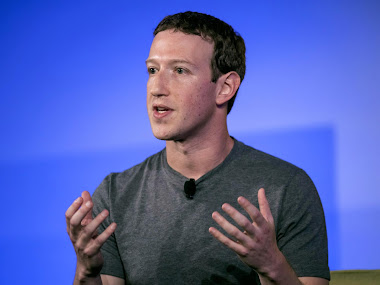
Zuckerberg -- Liar or truth teller?


Misleading propaganda from politics-related sites are among some of the most popular sources of online interaction with people. Misleading propaganda is up a notch in sophistication compared to simple lying. Instead of merely asserting blatant lies, misleading content is more subtle. One can call this lies of omission because the intent is to deceive as is the case with simple lying. Misleading content is harder to fact check and harder to expose as intentional propaganda because of differences in how different people perceive information and think about it. 
One interesting trend is that people are less engaged with sites that sites that repeatedly post outright lies and blatantly false information. That data indicates that some of the public has become aware of the amount of lying that drives a lot of politics-related news content and consciously wants to avoid it. The Washington Post writes:

More than 1 in 5 interactions — such as shares, likes or comments — with U.S. sites from April to June happened on “outlets that gather and present information irresponsibly,” according to a report by the German Marshall Fund.

This includes outlets such as the Daily Wire, TMZ, the Epoch Times and Breitbart[1] that researchers say “distort or misrepresent information to make an argument or report on a subject,” a metric determined by NewsGuard, a website cited in the study that rates the credibility of news sources. Researchers say these sources, which they argue spread subtler but still harmful forms of misinformation, are decidedly different from sites that publish overtly false news.
“These are the kinds of sites that will cherry pick anecdotes and are giving rise to vaccine hesitancy and other kinds of conspiracy theories,” said Karen Kornbluh, director of the German Marshall Fund’s Digital Innovation and Democracy Initiative, a public policy think tank.

Researchers highlighted articles that they say “disproportionately amplify vaccine-hesitant voices over experts” and “fail to mention risks of not being vaccinated against covid-19,” such as a June story on football, titled, “NFL Wide Receiver Refuses Vaccine, Wants To ‘Represent’ Other Silent Players.”

While platforms have cracked down on black-and-white cases of fiction masquerading as fact, they are still grappling with how to handle murky yet wide-reaching cases that stop short of falsehood. [lies are usually a lot easier to fact check and debunk than flawed motivated reasoning (crackpottery)]

“What we really see is that the information environment has changed dramatically,” said Kornbluh, who served as U.S. ambassador to the Organization for Economic Cooperation and Development under the Obama administration.

The ratio of misleading content marks a five-year high for Facebook, where “false content producers” have received a higher share of engagement in the past, according to the findings. At the same time, engagement with U.S. sites that repeatedly share outright false information — going a step beyond merely misrepresenting information — has plummeted across Facebook and Twitter. 

On Twitter, 9 percent of shares by verified accounts to U.S. sites went to misleading sites, while 3 percent went to sites that publish false content, marking a three-year low for both categories.
WaPo goes on to comment that cracking down on false content producers is low hanging fruit. It will be harder for social media to figure out how to deal with an information ecosystem increasingly shades of gray as the sophistication of propaganda increases. Obviously, sites like Daily Wire and Breitbart that rely on divisive, deceptive propaganda will continue to refine their dark art, so those sources of social poison are not going to go away unless people finally realize they are being manipulated and betrayed. It may be the case that outright lies will have to play a smaller role in deceiving and polarizing people into irrational states of mind. 

The open question is whether the more subtle propaganda will be as effective as the blunt stuff that pushed us to the poisoned society we have today. Some evidence hints that subtle deceit may be somewhat less effective than a blunderbuss packed with lies. WaPo commented that engagement decreased among U.S. sites in the second quarter, dropped significantly faster for misleading sites compared to reliable sites with a high trustworthiness rating. That is quite encouraging. Maybe society’s defenses against the dark arts are slowly increasing.

If only social media companies could be trusted. WaPo reports that some evidence indicates that Facebook is lying about some of this the data to limit damage to its reputation. Content with lies has been a money-maker for social media companies, so there is an economic incentive for them to keep the lies coming. This reporting therefore has to be taken with some caution. 


Footnote: 
1. From what I can tell, most hard core radical right politics sites block commenters like myself who post content that contradicts false fact assertions or clearly flawed reasoning. It is often fairly easy to find and cite evidence that rebuts false fact assertions. It usually takes significantly more time and effort to rebut flawed reasoning, i.e., intentionally misleading motivated reasoning. In retaliation for posting truth and sound reasoning, I’ve been blocked and cannot comment at multiple big fascist right sites including Daily Wire and Breitbart. Before I was blocked, my comments that contradicted lies tended to generate the most responses and the most emotional responses by people who disliked hearing that they were being lied to. 

Early on (before ~March 2016), fascist right sites allowed links to be in comments. I used links to cite to evidence that rebutted lies and crackpot reasoning. But over time, sites used links to hold inconvenient comments in moderation, allegedly to look for spam, but most often for no reason. Inconvenient comments with links in them were destined to never be seen. That made it a little harder to rebut lies, but significantly harder to rebut crackpot reasoning. 

But even that level of free speech censoring wasn’t enough. In time, radical right sites decided they needed to flat out block people like me from making any comments. No reason was ever given. Based on what WaPo is reporting here, it may be the case that, despite what appeared to be no impact from people posting truth and sound reasoning, maybe there was some impact. Maybe some people who trusted those sites gained some awareness that they were possibly being lied to or crackpotted on (misled). That would be consistent with sites like Daily Wire and Breitbart shifting somewhat from heavy reliance on flat out lies to more reliance on misleading motivated reasoning as WaPo is reporting now.

Maybe, just maybe, people like me who commented in opposition to wanton dark free speech at least for a while were not acting completely in vain. Of course, maybe we didn't have anything to do with this mindset shift, assuming it is real.