Etiquette


DP Etiquette

First rule: Don't be a jackass. Most people are good.

Other rules: Do not attack or insult people you disagree with. Engage with facts, logic and beliefs. Out of respect for others, please provide some sources for the facts and truths you rely on if you are asked for that. If emotion is getting out of hand, get it back in hand. To limit dehumanizing people, don't call people or whole groups of people disrespectful names, e.g., stupid, dumb or liar. Insulting people is counterproductive to rational discussion. Insult makes people angry and defensive. All points of view are welcome, right, center, left and elsewhere. Just disagree, but don't be belligerent or reject inconvenient facts, truths or defensible reasoning.

Friday, August 26, 2022

Very bad economist forecasting about climate change


Forecasts by economists of the economic damage from climate change have been notably sanguine, compared to warnings by scientists about damage to the biosphere. This is because economists made their own predictions of damages, using three spurious methods: assuming that about 90% of GDP will be unaffected by climate change, because it happens indoors; using the relationship between temperature and GDP today as a proxy for the impact of global warming over time; and using surveys that diluted extreme warnings from scientists with optimistic expectations from economists. Nordhaus has misrepresented the scientific literature to justify the using a smooth function to describe the damage to GDP from climate change. Correcting for these errors makes it feasible that the economic damages from climate change are at least an order of magnitude worse than forecast by economists, and may be so great as to threaten the survival of human civilization. -- Steve Keen, The appallingly bad neoclassical economics of climate change, Globalizations, DOI: 10.1080/14747731.2020.1807856, 2020

If there is uncertainty in climate science, as most climate change deniers like yourself claim, then it is possible that the climate situation could be better than, about the same as, or worse than what expert consensus argues it is. If each is equally possible, then there is a 66.67% chance the situation is what experts claim or worse. If one thinks that the experts are better than random guessing about climate and chances are that they are about right is 75%, then there is a 87.5% chance the situation is what experts claim or worse. -- paraphrasing Germaine, locking horns in a futile attempt to communicate rationally with climate science deniers, ~2015 


Germaine communicating rationally with Republicans
and other climate science deniers
Epiphany: Since we're going to burn carbon fuels, why not
push harder to incentivize alternatives and just hope it's not too late?
But what to do? → Put up solar panels, buy an electric car
and install a little nuclear reactor in the back yard ☢️


Recent articles are coming out arguing that due to fear of backlash by the radical right, climate science experts have soft-pedaled their estimates of damage from climate change. Our climate situation is worse than previous estimates. Now, some economists are starting to wake up to what the climate really is in real reality, instead of what it is in the faux reality dreams of rigid laissez-fair capitalists. That is forcing some to do a rethink about climate and economic damage. The New York Times writes:
Pace of Climate Change Sends Economists Back to Drawing Board

They underestimated the impact of global warming, and their preferred policy solution [a carbon tax] floundered in the United States.

Economists have been examining the impact of climate change for almost as long as it’s been known to science.

In the 1970s, the Yale economist William Nordhaus began constructing a model meant to gauge the effect of warming on economic growth. The work, first published in 1992, gave rise to a field of scholarship assessing the cost to society of each ton of emitted carbon offset by the benefits of cheap power — and thus how much it was worth paying to avert it.

Dr. Nordhaus became a leading voice for a nationwide carbon tax that would discourage the use of fossil fuels and propel a transition toward more sustainable forms of energy. It remained the preferred choice of economists and business interests for decades. And in 2018, Dr. Nordhaus was honored with the Nobel Memorial Prize in Economic Sciences.

But as President Biden signed the Inflation Reduction Act with its $392 billion in climate-related subsidies, one thing became very clear: The nation’s biggest initiative to address climate change is built on a different foundation from the one Dr. Nordhaus proposed.

Rather than imposing a tax, the legislation offers tax credits, loans and grants — technology-specific carrots that have historically been seen as less efficient than the stick of penalizing carbon emissions more broadly.

Carbon taxes and emissions trading systems have been instituted in many places, such as Denmark and California. But a federal measure in the United States, setting a cap on carbon emissions and letting companies trade their allotments, failed in 2010.

At the same time, Dr. Nordhaus’s model was drawing criticism for underestimating the havoc that climate change would wreak. Like other models, it has been revised several times, but it still relies on broad assumptions and places less value on harm to future generations than it places on harm to those today. It also doesn’t fully incorporate the risk of less likely but substantially worse trajectories of warming.

Dr. Nordhaus dismissed the criticisms. “They are all subjective and based on selective interpretation of science and economics,” he wrote in an email. “Some people hold these views, as would be expected in any controversial subject, but many others do not.”The outcome reflects a larger trend in public policy, one that is prompting economists to ponder why the profession was so focused on a solution that ultimately went nowhere in Congress — and how economists could be more useful as the damage from extreme weather mounts.

“You’re saying, ‘Things are going to cost more, but we aren’t going to give you help to live with that transition,’” said Rhiana Gunn-Wright, director of climate policy at the left-leaning Roosevelt Institute and an architect of the Green New Deal. “Gas prices can go up, but the fact is, most people are locked into how much they have to travel each day.”

At the same time, the cost of technologies like solar panels and batteries for electric vehicles — in part because of huge investments by the Chinese government — was dropping within the range that would allow them to be deployed at scale.

For Ryan Kellogg, an energy economist who worked as an analyst for the oil giant BP before getting his Ph.D., that was a key realization. Leaving an economics department for the public policy school at the University of Chicago, and working with an interdisciplinary consortium including climate scientists, impressed on him two things: that fossil fuels needed to be phased out much faster than previously thought, and that it could be done at lower cost.  
“We all cringe [because we're all laissez-faire capitalists],” said James H. Stock, an economist who serves as vice provost for climate and sustainability at Harvard University. But all things considered, he said, a $7,500 tax credit and reliable charging network might be as powerful as high gas prices in getting someone to buy an electric vehicle.

In that sense, subsidies are a variant of pricing policy: They effectively raise the cost of fossil fuels relative to renewable alternatives. Only recently did the supply of those alternatives reach the point where a tax credit would make the difference, on a large scale, between buying an electric vehicle or not.

“Economists could be faulted for not shifting quickly enough as these prices have fallen so surprisingly,” Dr. Stock said. “My criticism wouldn’t be ‘Why did you start with a carbon tax?’ but ‘Why didn’t we embrace the investment strategy five years ago?’”
Some economists are rethinking cost-benefit. They are reluctantly concluding something actually politically doable actually needs to be done, even if it does mean, gasp!!, some government intervention and policy action. The Republican Party and carbon energy sector (Exxon-Mobile, Shell, etc.) have successfully denied climate change and blocked a carbon tax for decades because they both hate government and taxes. The GOP is clear that the climate change threat is that it suggests a need for government intervention, not that we need to cut back on burning carbon fuels. According to GOP sacred gospel, all government intervention must be blocked at all costs, because all government is all bad all the time (except of course when it protects the elites and their power and wealth). 

Government, just like Democrats and liberalism, are evil atheistic socialists and pro-pedophilia. The only people who do not know this are Democrats, liberals, atheists and pedophiles.


Q: Will the awakening of some economists make any difference in the Republic Party's all out opposition to trying to do anything serious about trying to combat climate change, while being dead serious about defending carbon fuel pollution business as usual?
Thursday, August 25, 2022

Once again, plausible deniability shields a vicious white collar criminal from the law

In multiple posts here, e.g., here, I have pointed to plausible deniability as probably the most important defense that a white collar criminal has in keeping his/her free from prosecution and their corrupt asses out of jail. My guess is that plausible deniability shields about $2.5 trillion/year in economic crime from ever being prosecuted, much less imposing criminal or civil liability on the lawbreakers and criminals. About $1.2 trillion of that comes from tax cheating alone.

The New York Times writes on how the morally rotted, corrupt, fascist Attorney General, Bill Barr, used his “Department of Justice” and plausible deniability to shield his morally rotted boss, the corrupt, fascist ex-president. Barr shielded the rotter from liability for multiple obstruction of justice felonies. Those felonies were described in great detail in the Mueller Report that was made public on April 18, 2019. To any sane neutral observer, there was no question that the ex-president committed multiple felonies. But as we all know, Barr and his corrupted “Department of Justice” were neither sane nor neutral.

The Biden administration released a Trump-era memorandum on Wednesday that provided the most detailed look yet at the Justice Department’s legal reasoning for proclaiming that President Donald J. Trump could not be charged with obstruction of justice over his efforts to impede the Russia investigation.

The March 2019 memo, delivered to the attorney general at the time, William P. Barr, concluded that none of Mr. Trump’s actions chronicled in the report by the special counsel, Robert S. Mueller III — from firing his F.B.I. director to pressuring the White House counsel to recant his testimony to prosecutors — could be shown beyond a reasonable doubt to be criminal acts.

Many of these actions, two senior Justice Department officials wrote, should be interpreted by an inference that Mr. Trump “reasonably believed” the investigations were impeding his government agenda, meaning he lacked the corrupt intent necessary to prosecute him for obstruction.  
The Justice Department under both the Trump and the Biden administrations fought unsuccessfully in court to avoid releasing the full text of the memo, which was the subject of a Freedom of Information Act lawsuit by the government watchdog group Citizens for Responsibility and Ethics in Washington.

There it is. The highlighted part gets right to the point. Prosecutors cite a lack of intent. That is plausible deniability in action shielding yet another felon from prosecution.

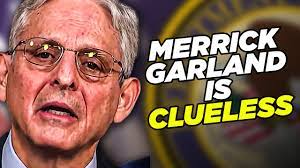
What is deeply disappointing here, to say the least, is that Biden doesn’t understand. He actively worked to illegally keep the DoJ memo hidden from the public. The court forced his hand, not his own sense of justice, and not the sense of justice that Merrick Garland is supposed to have. Those two nincompoops are screwing us and betraying democracy.

T**** did not “reasonably believe the investigations were impeding his government agenda.” That lie is pure bullshit. T**** knew exactly what laws he was breaking. He did it knowingly. That betrayal of the the law and the American people was standard operating procedure for T**** and his thug co-conspirators, like the treasonous Bill Barr.

America desperately needs a new political party that is seriously dedicated to enhancing, defending and vindicating what little is left of the rule of law in American politics. American politics includes (i) the rule of law, and (ii) federal tax policy and its enforcement. 

The status quo “rule of law” for rich and powerful elites is far too weak, rotted and corrupt to be taken seriously. But it’s a deadly threat, not a sick joke. 


Truth, hyperbole or a lie?

Dragging the US into the EV age

Since I'm on the verge of getting an EV, (a Tesla Model 3, Long Range, dual motor), I'm sort of jazzed about electric cars. One thing that shocked me was poll data indicating that over half of people looking for a new car are interested in an all electric or plug-in hybrid. No wonder the wait time for my 1st choice, a Hyundai Ionic 5 went from ~6 months to ~20-24 months. That forced me to reluctantly (because Musk is what he is, an unpleasant fellow) look at the Tesla Model 3

At least with Tesla, the wait time was a mere ~3 months. Well, it used to be ~3 months about 3 months ago when I ordered the car. Tesla has stopped taking orders for the Model 3 because demand exploded and the company cannot build them fast enough to come close to keeping up.

The Verge posted an interesting article about EVs. 
California is ready to drag the rest of the US into the EV age

The state is prepared to ban the sale of new gas-powered vehicles starting in 2035

California is poised to ban the sale of new gas-powered vehicles — a far-reaching policy that is likely to reverberate throughout the rest of the country and the world.

On Thursday, the California Air Resources Board will issue the new rules that were first rolled out by Governor Gavin Newsom in 2020, which would require 100 percent of new cars sold in the state to be free of carbon emissions, according to The New York Times.

The rule would phase in over time, with 35 percent of new passenger vehicles sold by 2026 and 68 percent by 2030. California says that over 16 percent of new car sales were “zero-emission vehicles” in 2022 — up from 12.41 percent last year and 7.78 percent in 2020.  
California’s stance on new car sales is extremely consequential given the state’s status as a standard bearer for clean air regulations. To date, 14 other states have adopted its progressive zero-emission vehicle program for passenger vehicles, which was launched in the early 1990s and has spurred automakers to develop hybrid and fully electric cars. California is also one of the largest markets for car sales in the world, with nearly 15 million registered vehicles on the road and 1.85 million new vehicle registrations in 2021.

Zero-emission means the vehicle is all electric, not hybrid gas and electric. It really does look like the US is going to go into the EV age. Not because government wants it, but because enough people want it. Battery technology is going to need to improve significantly.


Qs: About 2 years ago, who would have thought it possible for a state like CA to act to ban gas engine cars by 2035, (i) without riots in the streets, which is (ii) a massive change, and (iii) in the midterm future?

What are gas stations going to do, sell ice, tater chips, questionable sushi and beer? 

Who would have thunk that Germaine, being the the old ossified fossilly gasbag he is, would be so close to being on the edge of a major change like this?


The Model 3 in my color, 
with the surprisingly effective 
(without the $15,000 autopilot
software - thanks, but I'll drive myself)

Toward a workable pacifism


 I am a pacifist–with qualms.


As a working definition, let’s say pacifism is opposition to engaging in warfare under any circumstances.


It is easy for me to dismiss as morally wrong every US war except one: WWII. WWII has every appearance of being a necessary resistance to a clear evil. None of our other wars meet that criterion for me.


But then comes Ukraine.


Like WWII, Ukraine challenges my pacifism to the core. If ever a people had a right to take up arms, this is one of those times. In apparent violation of my own moral compass, I cheer the destruction of Russian forces (read: killing). I instinctively support the US and other countries’ military aid to Ukraine. These are very un-pacifist sentiments.


And yet, as the war drags on and large swaths of the country lie in ruin, I am reminded of why I am a pacifist in the first place.


The US fancies itself the great protector of peace and freedom; yet in most of our wars, we have been the aggressor. It’s easy to oppose that. But when your country is invaded and raped–wouldn’t it be wrong to not take up arms in self-defense? Don’t we need a deterrent to others’ aggression? To put it another way, isn’t pacifism unworkable? To me, this is the only real challenge to pacifism. And let’s admit it: that’s a pretty serious challenge.


I think in Ukraine in 2022, the answer is yes–a pacifist response would be unworkable, and their choices were to fight or submit. The world’s choices are to provide military aid or see Ukraine fall. But maybe it doesn’t need to remain that way. Maybe humans can create an alternative–a workable pacifism. 


You would have to be prepared to accept the unacceptable. Many of the non-violent resisters would likely be raped, tortured and killed. But then, that’s already what happens in war. Would it be possible to devise a non-violent strategy that ultimately rendered military aggression untenable? If so, what would it look like? Would it be worth it?


I think the core requirement is you would need a strategy to make a country ungovernable by a hostile power. You would need to organize and prepare your entire society for the eventuality of a foreign attempt at occupation–and have plenty of non-violent strategies to gum up the works. You would need to train the bureaucrats & technocrats on how to sabotage the occupier’s plans, and train the populace as a whole how to deal with invading soldiers who can torture, kill and rape you. Non-cooperation, sabotage, and non-violent confrontation would be key. Make plans for calling a crowd of 100,000 people to demonstrate & occupy as needed.


Also, it seems such a strategy could theoretically be devised and deployed in advance of disarmament, and disarmament could be done gradually. 


I am not well-read on pacifist theory & philosophy. I expect these questions have been explored by others. Is what I’m suggesting pure nonsense? I’m interested in your thoughts and reading suggestions.


Note: Thanks to Germaine for granting me publishing permission, and sorry it took so long to get this out there.