What normalization does is transform the morally extraordinary into the ordinary. It makes us able to tolerate what was once intolerable by making it seem as if this is the way things have always been. — Jason Stanley, How Fascism Works, 2018
When Trump and the Republican Party attack political correctness, their goal is to normalize demagoguery, insults, lies, deceit and slanders, making them much more tolerable. That helps to pave the way to making authoritarianism more acceptable to the American people, while undermining respect for, among other things, democracy, the rule of law and adult manners. — Germaine, 2022
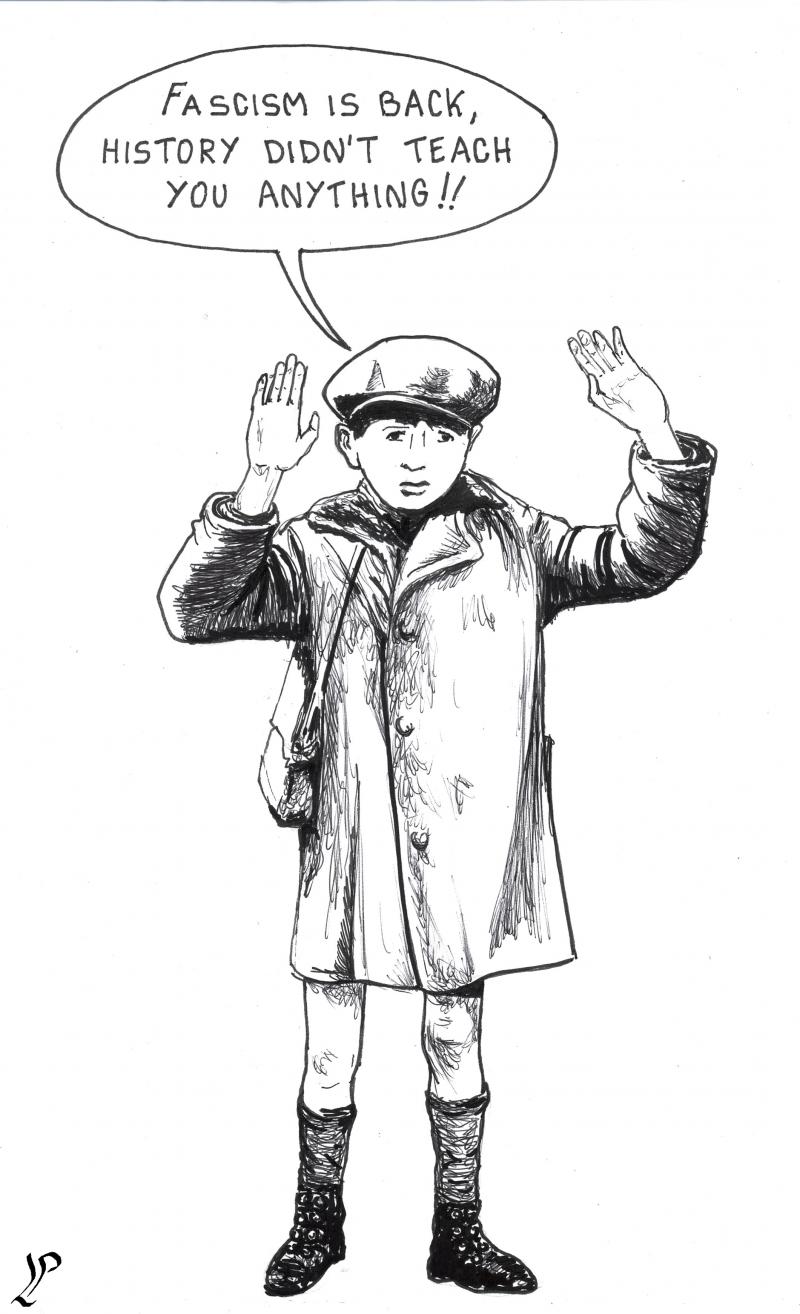
In 2019, Jason Stanley wrote an essay, The Philosophy of Fascism, which makes some points that most informed people probably want to be aware of. Stanley is a political philosopher and an expert focused on rhetoric and propaganda. Stanley's essay discussed the historical location of fascism and whether it is a localized political phenomenon or not. According to Stanley, it is not. That means some form of fascism can happen to America.
Fascism is inherent in the human condition, a point I have argued here multiple times.
To distinguish fascism America from 20th century fascism in Italy, one should call an American variant something like modern fascism, American fascism, neo-fascism or something along those lines. Fascism reflects local circumstances and local societies and it thus has to be adapted for such differences to take hold on societies.
Stanley sees fascism as an ideology and process that normalizes the intolerable. He sees this process underway in the US, Russia, Hungary and some other countries.
Stanley starts by pointing out that democracy differed in different places at different times. The same is true for other political concepts.
The concept of democracy is not tied to a particular time and place. Even if democracy originated at some point, perhaps 5th and 4th Century BC in Athens, the concept of democracy describes a structure that is realized in different places under very different material conditions. We can understand democracy as a voting system, one that reflects majority rule. We can also understand democracy as a culture, one that values liberty and equality (on some suitable interpretation). Both democracy as a voting system and democracy as an ideology (that is, a culture) have wide generality.
What about concepts like liberalism, socialism, communism, and capitalism? These are more specific than the concept of democracy; their origin times are more recent. In the case of these concepts, one must be attentive to the possibility that their elucidation reflects social structures local to their origins.
Stanley moves on to fascism, a topic he deals with in detail in his 2018 book How Fascism Works: The Politics of Us and Them. Contrary to some experts, he argues that fascism is thing that can move from one place to another:
.... I argue that the concept of fascism has wide interpretive applicability across societies that otherwise differ quite drastically from one another. If I am right, fascism is not one of [Léopold Sédar] Senghor’s “completely historically located” concepts. I aim to rescue the concept of fascism from the discipline of history and make a case for its centrality in political and social philosophy. Such a rescue would in fact constitute a return; some of the greatest theorists of fascism, such as Theodore Adorno and Hannah Arendt, were philosophers.To rescue the concept of fascism for philosophy requires arguing that fascism has the kind of universal significance and centrality characteristic of philosophical concepts. It must have a recognizable structure that abstracts from local historical contexts, and be capable of being interpretively useful in locations that differ significantly from one another. .... If fascism is a historically located concept, however, then we do not need to be worried about confronting it. Fascism cannot reoccur, and political philosophers in recent decades have been right to ignore it.If I am right, the view that fascism is a historically located concept is not just false, it is dangerously false. If fascism describes a dangerous ideology with universal appeal, representing it as an artifact of particular past historical circumstances masks a real danger. By not studying fascism philosophically, philosophy lends credence to the view that fascism is not a risk. How Fascism Works is a case for revisiting thinking in political philosophy, to reopen the case that philosophers should study fascism.
If “fascism” is not the right word to use, what is? One of the attractions of the ideology to its supporters is that it promises to provide a strong leader whose decisions will not be filtered through the mechanisms of democracy, discussion and deliberation, but imposed by strength and will and even cruelty. In other words, this ideology involves an element of authoritarianism.
Stanley's vision of fascism reflects normal functioning of the human mind. It is inherent in some or many people and in societies. What is needed to bring it out and allow it to control societies and governments is talented, charismatic demagogues. By Stanley's definition, fascism normalizes the intolerable, or as I put it, the immoral, the reality-detached and the irrational. That is what Trump and the Republican Party have done to millions of Americans who now distrust or reject democracy, inconvenient facts and truths and appeals to reason. Fascism appeals to base emotions and prejudices to tear societies apart, and to foment distrust, fear, rage, bigotry and etc.
IMO, Stanley is right to argue that fascism (i) isn't just a nasty but one-off thing from 1930's Italy, or (ii) that it requires normalizing the intolerable, i.e., the immoral and anti-democratic. Powerful conservatives in America are working hard to bring their version of fascism to America, whether the majority likes or wants it or not.
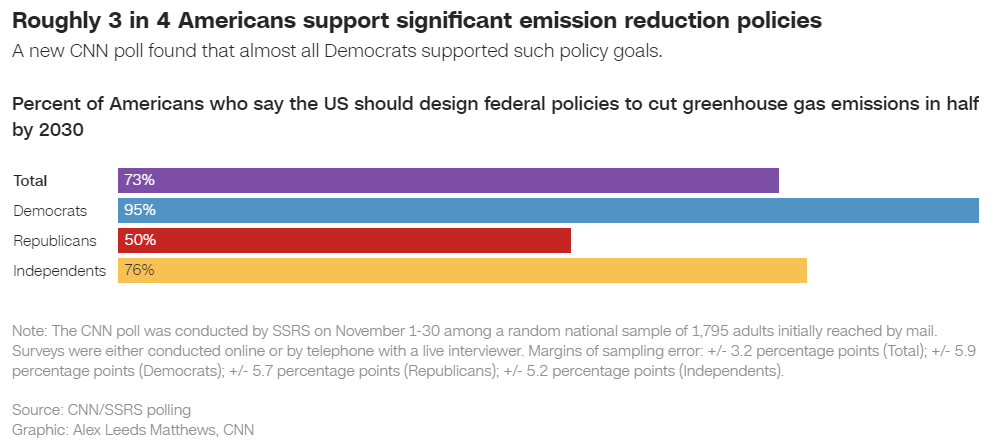
For the record, poll data suggests that the majority of Americans do not like or want an American version of fascism. However, many unknowingly support it due to the effective deceptiveness and constant presence of neo-fascist propaganda and its many sources, e.g., Faux News.
Adapted from orig. post 3/6/22