Etiquette


DP Etiquette

First rule: Don't be a jackass. Most people are good.

Other rules: Do not attack or insult people you disagree with. Engage with facts, logic and beliefs. Out of respect for others, please provide some sources for the facts and truths you rely on if you are asked for that. If emotion is getting out of hand, get it back in hand. To limit dehumanizing people, don't call people or whole groups of people disrespectful names, e.g., stupid, dumb or liar. Insulting people is counterproductive to rational discussion. Insult makes people angry and defensive. All points of view are welcome, right, center, left and elsewhere. Just disagree, but don't be belligerent or reject inconvenient facts, truths or defensible reasoning.

Wednesday, August 21, 2024

DORITOSGATE


“Every road trip needs a snack break. Doritos acquired. I got you, @KamalaHarris.”

CUE the OUTRAGE

“Cringe photo op. Btw no one can afford to do what you are doing”, wrote one person.


Tuesday, August 20, 2024

The mainstream media fails to deal with the flow of power and wealth in politics

Political science is the study of politics, and more precisely power. -- Political Science for Dummies, Marcus Stadelmann, 2020, Chapter 1, paragraph 1, first sentence

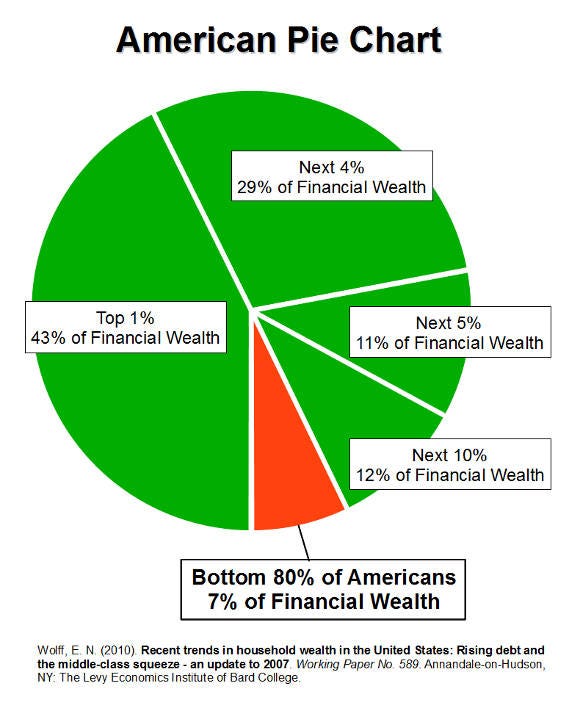
Wealth distribution Q4, 2022


Understanding that politics is overwhelmingly about distributing power and attendant wealth is useful. From what I can tell, the MSM (mainstream media) does a lousy job of reporting about the flow and distribution of power and wealth with various political, social and business policies. But that is just personal opinion. What about data on this point? Does any even exist? Perplexity comments:
Q: How well does the mainstream media cover the flow of wealth and power when covering political issues and policies?

A: The mainstream media's coverage of wealth and power dynamics in political issues and policies appears to be limited and often biased.
That accords with my understanding. So does this:
The mainstream media's coverage of wealth and power dynamics in political issues and policies appears to be limited and often biased. This reliance on officially-provided information has been described as the "biggest weakness" of the American press by prominent journalists. A study analyzing nearly 3,000 news stories in major newspapers found that nearly 80% of stories involved official sources. Critics argue this makes the media passive and susceptible to manipulation by political powers.
Studies have found significant imbalances in coverage of political candidates, with some receiving much more favorable treatment than others. State-owned media in particular tends to show strong bias in favor of incumbents and against opposition candidates. Critics argue the media is increasingly hostile to conservatives and Republicans compared to the past.
The most convincing evidence that DJT and his GOP are authoritarian (autocratic, plutocratic, theocratic and kleptocratic) arguably rests in the overall effects of their policies on the distribution of power and wealth. At least some of the public seems to be aware of a power concentration issue:


For all issues I am aware of, none strike me as promoting flow of power to most individual citizens or the public interest generally. Instead nearly all authoritarian radical right policies, e.g., Project 2025, DJT's secret policies, etc., withdraw power and wealth (directly or indirectly) from the people. Power and wealth get channeled into various special interests in commerce, religion or politics. Examples help clarify the situation, which can be sometimes counterintuitive:
  • Forced birth laws take power from affected women and families to choose an abortion and transfers it to politicians who are religious and theocratic or opposed to abortion for non-religious reasons.
  • Voter suppression and election subversion laws take power from voters and transfer it to radical right authoritarians who want to neuter voter power and democracy itself.
  • This one may seem counterintuitive: Obliteration of many or most gun safety laws by the authoritarian radical right USSC has given power to gun and ammo makers and people who want all kinds of weapons, including military assault rifles. That took power from governments to try to reduce gun violence, and deprived society of some measure of safety, while imposing enormous human and economic cost (~$557 billion/year by one estimate) on the people and our economy. Neither gun makers nor owners bear any or much of the gigantic costs of gun violence.
  • Project 2025 calls for major tax cuts without offsetting spending cuts, thereby increasing the federal debt. Wealth directly flows mostly to wealthy elites and corporations. Eventually, the federal debt will be too large to sustain. Most of the ensuing pain will be felt by average people. With wealth comes power, so again, power flows to narrow interests at the expense of the public interest. The people are deprived of their power to protect their own long-term interests.
Similar arguments can be made about (i) LGBQT, atheist and ethnic minority rights, (ii) consumer, worker and environmental protections, and (iii) and reasonable business and religious regulations. Project 2025, nearly all authoritarian GOP elites and DJT all vehemently oppose all of that.


Q: Does the MSM fail to adequately report about power and wealth flows in reporting of politics and political issues?


Monday, August 19, 2024

Thinking about the mainstream media and how it fails to deal with authoritarianism

A matter of high importance strikes me as not reported or understood nearly enough is how the MSM deals with two very different concepts, conservatism and authoritarianism. In my opinion, (i) the MSM conflates the two concepts most of the time, and (ii) that amounts to a major failure of professional journalism. The MSM constantly fails to refer to DJT, MAGA politicians (election deniers, etc.), the Republican Party, Christian nationalism as authoritarian. That failure has great negative consequences for the survival of what is left of our fading democracy. In essence, the MSM normalizes and strengthens the radical American authoritarian wealth and power movement by usually referring to it as conservative.

Before the Republican Party radicalized and turned dominantly authoritarian some years ago, real conservatives supported and believed in democracy, the rule of law, civil liberties, pluralistic secularism, and facts, truths and sound reasoning, even when inconvenient. By authoritarian I mean some combination of (i) kleptocratic autocracy with DJT as the dictator, (ii) kleptocratic Christian nationalist theocracy, and (iii) kleptocratic, barely regulated plutocratic capitalism. This exemplifies what I mean about the GOP's radicalization and de-democratization, i.e., RINO hunting pro-democracy, pro-civil liberties Republicans out of the GOP and/or power:


In multiple important ways, the new GOP
arguably it is more like the old Democratic Party
than the old GOP


Prominent Republicans and organizations like the Heritage Foundation and Federalist Society, the MSM still routinely refer to as "conservatives" or "conservative." Those people and groups are usually ones who openly oppose or reject democracy, the rule of law, civil liberties (abortion, voting rights, free and fair elections), pluralistic secularism, and inconvenient facts, truths and sound reasoning. There is no way that DJT or most major Republican state or federal politicians can reasonably be called conservative any more. They are authoritarian.

So why does the MSM persist in putting nice conservative lipstick on an obviously authoritarian pig? The only meaningful response to that criticism, which I have sent to dozens of journalists, editors and opinion columnists, is this: We have to stay neutral.

That's it. The one and only response I've ever received back. I got no response when I followed up with this: Since when and how is fact-based truth and/or sound reasoning not neutral? 

Qs: Is the MSM correct that it needs to stay neutral and calling what America's radical right is doing conservative, not authoritarian? In other words, is it factually incorrect to refer to America's radical right as authoritarian, regardless of how non-neutral the GOP and DJT would vehemently claim it is?


Sunday, August 18, 2024

Another advance in brain to machine communication

A SciAm article discusses what appears to be a significant advance in turning brain activity into coherent speech:
Brain-to-Speech Tech Good Enough for 
Everyday Use Debuts in a Man with ALS

A highly robust brain-computer interface boasts low error rates and a durability that allows a user to talk all day long
By July 2023, Casey Harrell, then age 45, had lost the ability to speak to his then four-year-old daughter. The neurodegenerative disorder amyotrophic lateral sclerosis (ALS) had gradually paralyzed him in the five years since his symptoms began. As the effects spread to the lips, tongue and jaw, his speech devolved into indistinct sounds that his daughter could not understand.


But a month after a surgery in which Harrell had four 3-by-3 millimeter arrays of electrodes implanted in his brain that July, he was suddenly able to tell his little girl whatever he wanted. The electrodes picked up the chatter of neurons responsible for articulating word sounds, or phonemes, while other parts of a novel brain-computer interface (BCI) translated that chatter into clear synthetic speech.
“She hadn’t had the ability to communicate very much with me for about two years. Now that is very different,” Harrell says, speaking through the device a year after the surgery. “I can help her mother to parent her. I can have a deeper relationship with her and tell her what I am thinking.”

His face contorts with emotion, and after a pause, he adds, “I can simply tell her how much I love her.”

Neuroscientist Sergey Stavisky and neurosurgeon David Brandman, both at the University of California, Davis, and their team described the new BCI on August 14 in the New England Journal of Medicine. Harrell isn’t the first person with paralysis to talk with his thoughts. But his BCI is easier to use and far less error-prone than similar devices that were announced a year ago. The improvements are such that Harrell can use the new BCI regularly to chat with colleagues, friends and family.

“It marks a landmark in the field of speech BCIs,” says Christian Herff, a computational neuroscientist at Maastricht University in the Netherlands, who was not involved in the study. “It has achieved a level of quality that is now of actual use for patients.” The device predicts the wrong word less than 3 percent of the time, an error rate on par with nondisabled speakers reading a paragraph aloud. “We can basically call it perfect,” Herff says.

After a year of use, Harrell has seen no decline in performance either. And the UC Davis team plans to implant the array in several more participants in the coming months to years. In the meantime, the researchers are adding bells and whistles to Harrell’s device, such as prosody—inflections in pitch and rhythm—and the ability to sing.

One feature Harrell already has is the ability to send text to his computer to write e-mails, including a few he sent to the author of this article. That exchange was, on its surface, unremarkable. He introduced himself, suggested times for his interview and expressed enthusiasm about the technology. His signature, however, showed there was nothing ordinary about these messages whatsoever. It read, “Sent from my 🧠.”
Background: Brain–computer interfaces can enable communication for people with paralysis by transforming cortical activity associated with attempted speech into text on a computer screen. Communication with brain–computer interfaces has been restricted by extensive training requirements and limited accuracy. [training time has been a major impediment to widespread use of BCI tech] 

Methods: A 45-year-old man with amyotrophic lateral sclerosis (ALS) with tetraparesis and severe dysarthria underwent surgical implantation of four microelectrode arrays into his left ventral precentral gyrus 5 years after the onset of the illness; these arrays recorded neural activity from 256 intracortical electrodes.

Results: On the first day of use (25 days after surgery), the neuroprosthesis achieved 99.6% accuracy with a 50-word vocabulary. Calibration of the neuroprosthesis required 30 minutes of cortical recordings while the participant attempted to speak, followed by subsequent processing. On the second day, after 1.4 additional hours of system training, the neuroprosthesis achieved 90.2% accuracy using a 125,000-word vocabulary. With further training data, the neuroprosthesis sustained 97.5% accuracy over a period of 8.4 months after surgical implantation, and the participant used it to communicate in self-paced conversations at a rate of approximately 32 words per minute for more than 248 cumulative hours.