Etiquette


DP Etiquette

First rule: Don't be a jackass. Most people are good.

Other rules: Do not attack or insult people you disagree with. Engage with facts, logic and beliefs. Out of respect for others, please provide some sources for the facts and truths you rely on if you are asked for that. If emotion is getting out of hand, get it back in hand. To limit dehumanizing people, don't call people or whole groups of people disrespectful names, e.g., stupid, dumb or liar. Insulting people is counterproductive to rational discussion. Insult makes people angry and defensive. All points of view are welcome, right, center, left and elsewhere. Just disagree, but don't be belligerent or reject inconvenient facts, truths or defensible reasoning.

Friday, September 13, 2024

Detecting animal self-awareness; Global warming warning ≠ weather; Some headlines


A fascinating research paper in Nature published another bit of data suggesting that at least some animals have some degree of self-awareness. Self-awareness refers to the capacity to focus on oneself and identify one’s own existence. This paper correlates self-awareness of body size with aggression behavior. This data is based on teaching cleaner fish self-awareness using a mirror. Cleaner fish clean (eat) dead skin and parasites off the skin and other surfaces of bigger animals who intentionally stop by for occasional cleanings. The Nature abstract says
Abstract

Animals exhibiting mirror self-recognition (MSR) are considered self-aware; however, studies on their level of self-awareness remain inconclusive. Recent research has indicated the potential for cleaner fish (Labroides dimidiatus) to possess a sophisticated level of private self-awareness. However, as this study revealed only an aspect of private self-awareness, further investigation into other elements is essential to substantiate this hypothesis. Here, we show that cleaner fish, having attained MSR, construct a mental image of their bodies by investigating their ability to recall body size. A size-based hierarchy governs the outcomes of their confrontations. The mirror-naïve fish behaved aggressively when presented with photographs of two unfamiliar conspecifics that were 10% larger and 10% smaller than their body sizes. After passing the MSR test, they refrained from aggression toward the larger photographs but still behaved aggressively toward the smaller ones without re-examining their mirror images. These findings suggest that cleaner fish accurately recognize their body size based on mental images of their bodies formed through MSR. Additionally, mirror-experienced fish frequently revisited the mirror when presented with an intimidating larger photograph, implying the potential use of mirrors for assessing body size. Our study established cleaner fish as the first non-human animal to be demonstrated to possess private self-awareness.
As usual, the normal caveat applies to all or nearly all new research findings: further investigation into other elements is essential to substantiate this hypothesis

Two points I submit for your consideration:
  • This exemplifies how science struggles with the study of consciousness and mind generally. Using mirrors to look for signs of self awareness. Scientists have been using mirrors to look for signs of self-awareness in animals for over 50 years. The mirror test, also known as the mirror self-recognition (MSR) test, was developed by psychologist Gordon G. Gallup Jr. in 1970. 
  • Studying consciousness, free will, and other aspects of the mind is challenging for science. Consciousness and subjective experiences are inherently first-person phenomena that cannot be directly observed or measured by third-party scientists. This creates difficulties in obtaining objective data. Studying consciousness involves using consciousness to examine itself, which can lead to circular reasoning and logical paradoxes. There is still no scientific explanation for how subjective, qualitative experiences arise from physical brain processes. Bridging this explanatory gap remains a major challenge.

1-minute cleaner fish video
__________________________________________________________________
__________________________________________________________________

We probably all suspect something like this, but it's worth mentioning. Mother Jones reports:
If Trump Wins in November, Life on Earth 
Is Likely to Get Far, Far Worse

The consequences of this election could extend for millennia

Here is the biggest thing happening on our planet as we head into the autumn of 2024: The Earth is continuing to heat dramatically. Scientists have said that there’s a better than 90 percent chance that this year will top 2023 as the warmest ever recorded. And paleoclimatologists were pretty sure last year was the hottest in the last 125,000 years. The result is an almost-clichéd run of disasters: Open Twitter/X anytime for pictures of floods pushing cars through streets somewhere. It is starting to make life on this planet very difficult, and in some places impossible. And it’s on target to get far, far worse.

Here’s the second-biggest thing happening on our planet right now: Finally, finally, renewable energy, mostly from the sun and wind, seems to be reaching some sort of takeoff point. By some calculations, we’re now putting up a nuclear plant’s worth of solar panels every day. In California, there are now enough solar farms and wind turbines that day after day this spring and summer they supplied more than 100 percent of the state’s electric needs for long stretches; there are now enough batteries on the grid that they become the biggest source of power after dark. In China it looks as if carbon emissions may have peaked—they’re six years ahead of schedule on the effort to build out renewables.

And here’s the third biggest thing in the months ahead: the American presidential election, which looks as if it is going down to the wire—and which may have the power to determine how high the temperature goes and how fast we turn to clean power.

Donald Trump gave an interview last week, in which he laid out his understanding of misrepresentation and lies about [my correction of the error] climate change:

You know, when I hear these poor fools talking about global warming. They don’t call it that any more, they call it climate change because you know, some parts of the planet are cooling and warming, and it didn’t work. So they finally got it right, they just call it climate change. They used to call it global warming. You know, years ago they used to call it global cooling. In the 1920s they thought the planet was going to freeze. Now they think the planet’s going to burn up. And we’re still waiting for the 12 years. You know we’re down almost to the end of the 12-year period, you understand that, where these lunatics that know nothing, they weren’t even good students at school, they didn’t even study it, they predict, they said we have 12 years to live. And people didn’t have babies because they said—it’s so crazy. But the problem isn’t the fact that the oceans in 500 years will raise a quarter of an inch, the problem is nuclear weapons. It’s nuclear warming…These poor fools talk about global warming all the time, you know the planet’s going to global warm to a point where the oceans will rise an eighth of an inch in 355 years, you know, they have no idea what’s going to happen. It’s weather.
No, global warming is not weather. It is global warming, i.e., climate change.
__________________________________________________________________
__________________________________________________________________

Headlines:

Taylor Swift's endorsement of Harris sends more than 400,000 visitors to Vote.gov

Laura Loomer's response to Lindsey Graham urging Trump to ditch her? 'We all know you're gay' -- Loomer is a key DJT advisor and an ultra-radical right authoritarian, White nationalist, crackpot and liar

Nutty radical Laura & her nutty 
radical gay friend Lindsey


"Appalling and extremely racist": Trump's embrace of Laura Loomer is blowing up in his face: "How racist is Laura Loomer, the far-right extremist, 9/11 conspiracy theorist and trusted ally of Donald Trump? Enough to make Rep. Marjorie Taylor Greene, R-Ga., call her out as racist." -- Hm, that sounds pretty racist.

Thursday, September 12, 2024

Nazi "morality": Tales from under the bowels of the crypt

Himmler

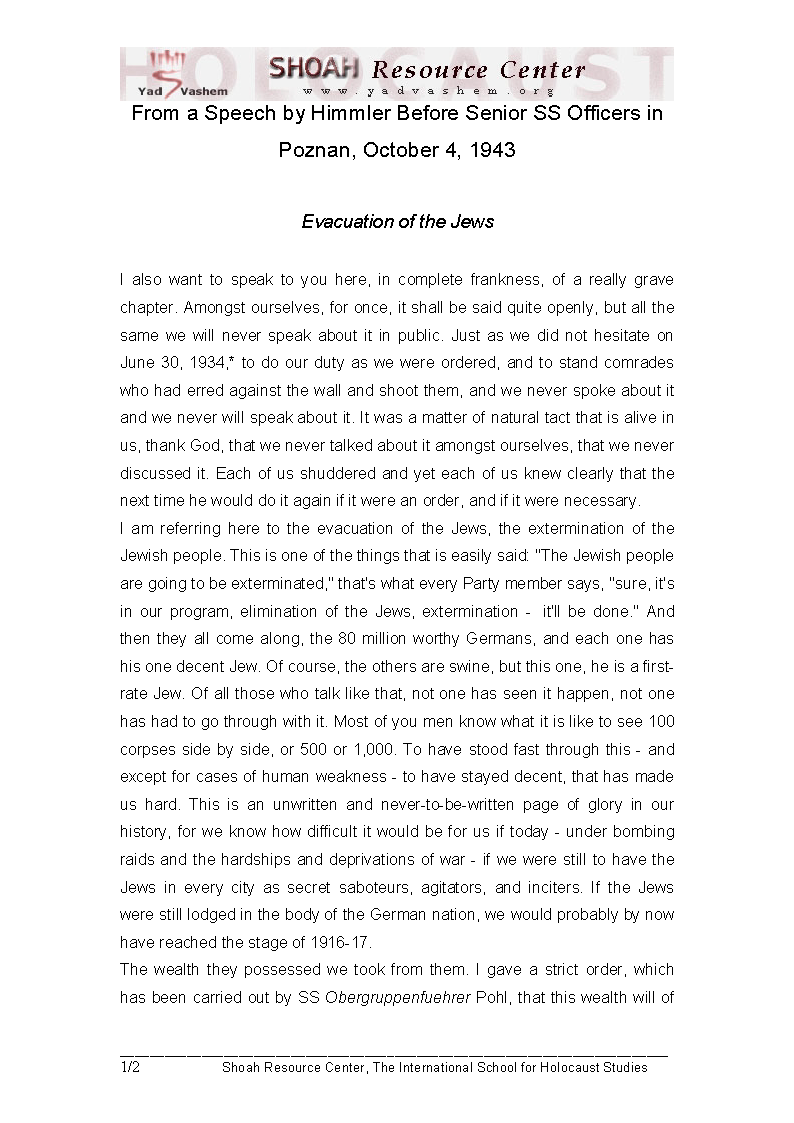
On Oct. 4, 1943, Heinrich Himmler gave a 3-hour speech to about 100 senior SS officers. Himmler was a German Nazi politician, the leader of the German SS and the main architect of the Holocaust. This short excerpt is a part (the only part?) of that speech that addressed and justified murdering Jews.

Evacuation of the Jews

I also want to speak to you here, in complete frankness, of a really grave chapter. Amongst ourselves, for once, it shall be said quite openly, but all the same we will never speak about it in public. Just as we did not hesitate on June 30, 1934,* to do our duty as we were ordered, and to stand comrades who had erred against the wall and shoot them, and we never spoke about it and we never will speak about it. It was a matter of natural tact that is alive in us, thank God, that we never talked about it amongst ourselves, that we never discussed it. Each of us shuddered and yet each of us knew clearly that the next time he would do it again if it were an order, and if it were necessary.

I am referring here to the evacuation of the Jews, the extermination of the Jewish people. This is one of the things that is easily said: "The Jewish people are going to be exterminated," that's what every Party member says, "sure, it's in our program, elimination of the Jews, extermination - it'll be done." And then they all come along, the 80 million worthy Germans, and each one has his one decent Jew. Of course, the others are swine, but this one, he is a first- rate Jew. Of all those who talk like that, not one has seen it happen, not one has had to go through with it. Most of you men know what it is like to see 100 corpses side by side, or 500 or 1,000. To have stood fast through this - and except for cases of human weakness - to have stayed decent, that has made us hard. This is an unwritten and never-to-be-written page of glory in our history, for we know how difficult it would be for us if today - under bombing raids and the hardships and deprivations of war - if we were still to have the Jews in every city as secret saboteurs, agitators, and inciters. If the Jews were still lodged in the body of the German nation, we would probably by now have reached the stage of 1916-17.

The wealth they possessed we took from them. I gave a strict order, which has been carried out by SS Obergruppenfuehrer Pohl, that this wealth will of course be turned over to the Reich in its entirety. We have taken none of it for ourselves. Individuals who have erred will be punished in accordance with the order given by me at the start, threatening that anyone who takes as much as a single Mark of this money is a dead man. A number of SS men - they are not very - many committed this offense, and they shall die. There will be no mercy. We had the moral right, we had the duty towards our people, to destroy this people that wanted to destroy us. But we do not have the right to enrich ourselves by so much as a fur, as a watch, by one Mark or a cigarette or anything else. We do not want, in the end, because we destroyed a bacillus, to be infected by this bacillus and to die. I will never stand by and watch while even a small rotten spot develops or takes hold. Wherever it may form we will together burn it away. All in all, however, we can say that we have carried out this most difficult of tasks in a spirit of love for our people. And we have suffered no harm to our inner being, our soul, our character. (emphasis added)


** The reference is to "the night of the long knives" murder of Roehm, SA leaders and other purges.

Source: Documents on the Holocaust, Selected Sources on the Destruction of the Jews of Germany and Austria, Poland and the Soviet Union, Yad Vashem, Jerusalem, 1981, Document no.161. pp. 344-345.


Q: What do you think of modern American holocaust deniers American Nazis and people who accept or normalize them, e,g., are some or all among the "fine people on both sides"?


Is it inherent in the human condition?


Himmler's speech
about the Jews 


"Fine people on both sides"

Regarding the power of language and labels

This is why politics is so messy and often irrational

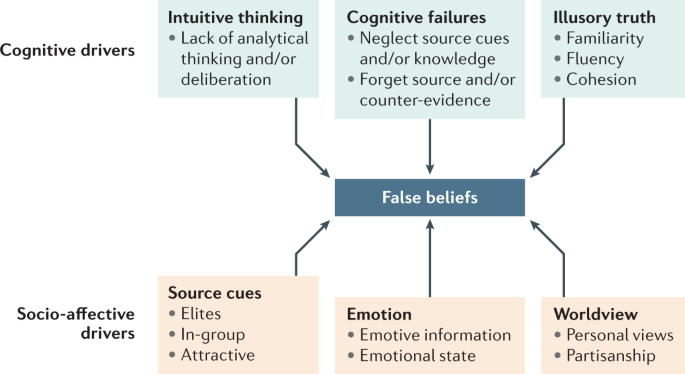
If I am not self-deluded, there is a slowly growing awareness among some of the cognoscenti in the MSM (mainstream media) about the two core sources of politics that I have been harping on for the last ~26 years. What sources? Human cognitive biology and human social behavior. I do believe that some people are actually starting to get it. Is that possible? Nah, can't be. Right? well, maybe not right.

A fascinating NYT opinion (not paywalled) makes some very cognitive biology-centered arguments about language and how labels influence perceptions of reality (how reality is framed) and how we think about what we think we see:

To Put It Bluntly


If Donald Trump ends up serving a term in prison (there’s still hope!), I’d relish the chance to refer to him as an ex-con. Like “felon,” the brute force of the term, with its hard-boiled matter-of-factness, would be extremely satisfying.

But the very power of that label has made it practically taboo. In its place, even federal prosecutors have adopted phrases like “justice involved” or “justice impacted” to describe those convicted of crimes — as if we could reform the entire criminal justice system simply by using new words.

Much ado has been made of euphemism inflation, the ceaseless efforts to reform the English language toward desired social or political ends.

Let’s return to the old “ex-con.” .... Even “former prisoner” and “formerly incarcerated person” have grown passé. But “justice involved” and “justice impacted” go further yet. They not only avoid stigma, they also remove the implication of responsibility altogether, as if the crime were something that happened to the criminal rather than an act he committed himself.

The right euphemism not only removes blame, it also reassigns it. Thus, “prisons” become the “carceral system” or part of the “carceral state,” which suggests that the act of imprisoning people may itself be the crime. The implied question is: What gives the state a right to put people away?

One major goal of lexical reform is to humanize and dignify the person behind a simple label. This is exemplified by what The Associated Press calls “person-first” language, recommended in its latest guidebook, issued in May, when referring to anyone implicated in the criminal justice system, avoiding terms like “inmate” and “juvenile.”

Another example is the word “slave,” which suggests a totalizing condition, while the increasingly preferred “enslaved person” emphasizes that the person is someone upon whom slavery (or “enslavement”) has been imposed.

Not all these rephrasings are necessarily downgrades, or even wrong. There is inarguably a power, sometimes a necessary one, in reconstituting terms, especially when they refer to human beings. As Toni Morrison once explained, “The definers want the power to name. And the defined are now taking that power away from them.”

Many of these changes seem neutral on the face of it. The replacement of “homeless” with “unhoused” at first glance seems like a superfluous switcheroo. But key to the change is the implication that the government has failed to provide a home, not that someone has lost one. Similarly, “poor” neighborhoods become “under-resourced communities.” And truancy, which feels like an accusation of juvenile delinquency, instead becomes “absenteeism,” which humbly suggests a box left unticked on the attendance list, more the fault of the school than the student.

Language has always driven and reflected societal change. In Orwell’s time, vague language was used by the powerful to defend or obscure brutality (e.g., British rule in India, Stalin’s purges, Soviet deportations).

This tendency still exists in political language (see “enhanced interrogation”). But today’s vague language is more often used as a means to ward off bad things so we don’t have to deal with harsh reality. Euphemistic language becomes a kind of wishcasting, and perhaps even a way of avoiding — or covering up a lack of — more substantive reform.

At a time when words are frequently treated as tools of oppression or means of resistance, charged with causing harm or spreading misinformation, we’ve all started watching what we say. But for language to remain an effective way to communicate intent and meaning, we should consider the reasons — beyond kindness or sensitivity — behind our euphemisms. Some words are brutal for a reason, and sometimes we need to deliver a pure blunt force.
In the recent Harris vs DJT debate, I was looking for more blunt force from Harris than she delivered. That led me to think her debate performance was mediocre. Apparently, my assessment was wrong and her performance was better than mediocre.

This opinion piece raises the issue of political correctness. Professional political propagandists and marketers have been aware of the power of labels for decades. For example relabeling the estate tax as the "death tax" was coined in the 1940s, but it didn't gain traction until the 1990s. This propaganda tactic is old, not new. The death tax label effectively reframed the issue in a negative way that wealthy people wanted. In essence, radical right authoritarians invented their own political correctness (PC) and treated it as the right way to see things as opposed to how pro-democracy.

That is why, at least for a while, America's authoritarian radical right wealth and power movement was so critical of PC. PC was contentious because it took power from authoritarian definers and transferred it to the defined. The MSM seems to be waking up to this. 

That raised a question -- attacks on PC seem to be less common, but why?:

A: The perception that American radical right authoritarians are not attacking political correctness as much as they did in recent years may not be entirely accurate. However, there are some factors that could contribute to a shift in focus or messaging:

Evolving Rhetoric and Priorities
Changing Targets: Rather than directly attacking "political correctness," radical right groups may have shifted their focus to more specific issues like critical race theory, gender identity, or immigration policies.

Mainstreaming of Anti-PC Sentiment: Some anti-political correctness views have become more mainstream within conservative circles, potentially reducing the need for radical groups to emphasize this particular issue.

Political and Social Climate
Post-Trump Era: During the Trump presidency, attacks on political correctness were a central theme. In the post-Trump era, radical right groups may be recalibrating their messaging strategies.

Social Media Dynamics: Changes in social media platforms' policies and algorithms may have affected the visibility of radical right content, including anti-PC messaging.

Tactical Shifts
Rebranding Efforts: Some radical right groups may be attempting to rebrand themselves to appear more mainstream, potentially toning down explicit anti-PC rhetoric.

Focus on Other Issues: The COVID-19 pandemic, economic concerns, and other current events may have shifted attention away from political correctness as a primary talking point.
It's important to note that while the specific language or frequency of attacks on political correctness may have evolved, the underlying sentiments often remain present in different forms within radical right discourse. The apparent reduction in attacks on political correctness could be more a matter of changing tactics and rhetoric rather than a fundamental shift in ideology.

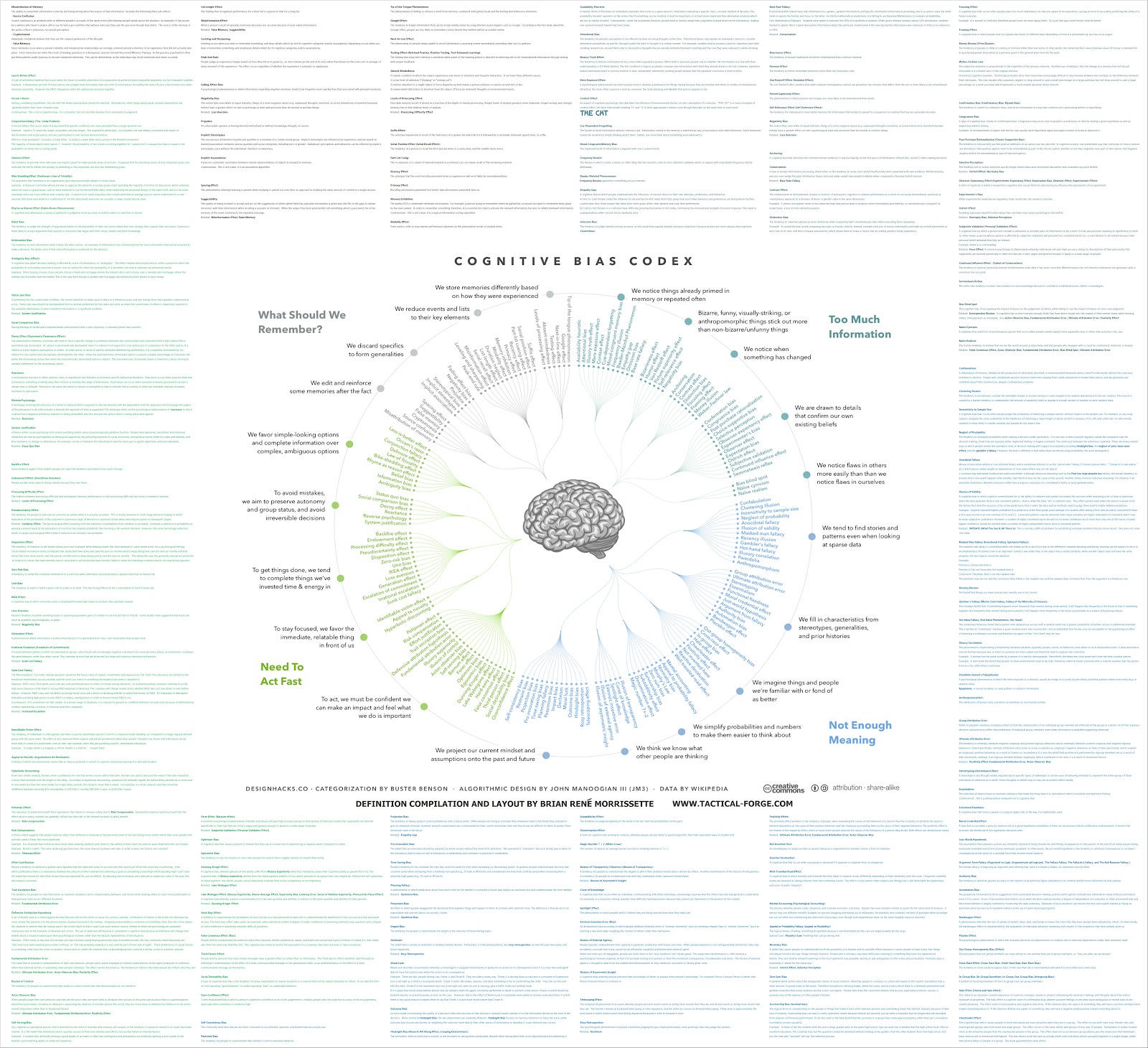
Humans are a bundle of 
unconscious biases


High resolution image


Science: About the origins of political beliefs

From time to time, the question arises about where a person's political beliefs come from. At the most basic human level there is nature (inheritance of genes) and nurture. Nurture refers to the environmental factors that influence a person's development after conception including things like upbringing, life experiences, family and social relationships and norms, culture, community, learning ability, sex, language, poverty, wealth, religion, education and epigenetics. Epigenetics refers to gene expression changes after an egg gets fertilized, e.g., exposure to lead, or PFAS or other toxic chemicals in the environment, especially effects on a fetus or young children.

Some years ago I came across two nature vs nurture estimates for the origin of personal politics. If I recall right, one estimate was that politics came about equally from nature and nurture. The other was that it was about 40% nature and 60% nurture. Being interested in this, I did some searching to see what the research says these days. 

Q: What are current estimates of the influence of nature (genes) compared to nurture on how people form their political beliefs or ideologies?

A: Genetic Influences: Twin studies found that genetic factors account for a substantial proportion of individual differences in political traits, with heritability estimates averaging around 0.50 (on a scale of 0-1). One study using data from the Minnesota Twin Study found that sociopolitical conservatism was 57% heritable for the overall population. For the most politically informed fifth of the public, the heritability of sociopolitical conservatism was estimated to be as high as 74%.

Environmental Influences: For the least politically informed half of the public, the heritability of sociopolitical conservatism was estimated to be only 29%, suggesting a stronger role for environmental influences.

Interaction of Genes and Environment: Political knowledge appears to facilitate or influence the expression of genetic predispositions in political attitudes.

The NYT wrote in 2022: In “The Law of Group Polarization,” Cass Sunstein of Harvard Law School argues this about polarization: This general phenomenon — group polarization — has many implications for economic, political, and legal institutions. It helps to explain extremism, “radicalization,” cultural shifts, and the behavior of political parties and religious organizations; it is closely connected to current concerns about the consequences of the internet; it also helps account for feuds, ethnic antagonism, and tribalism.


What about political orientation? Left-leaning liberals estimated a greater genetic contribution to psychiatric disorders and sexual orientation compared with conservatives, while conservatives assumed a relatively greater contribution of genes to traits like intelligence and musical ability. This led to what the researchers called "a surprising sort of 'balancing out'," meaning that individuals' accuracy did not differ by political persuasion.

The researchers believe this pattern is consistent with the idea that moral judgments are central to the political split in the USA. Right-wing participants more strongly endorsed the idea that some people have more innate aptitude than others, while the left-wing participants more strongly endorsed the idea that many stigmatized traits are largely innate and should therefore be treated with fairness and compassion, not judgment. 
 
So there was no greater biological denialism or "blank slatism" by one political wing than the other, but rather a genetic cherry-picking to suit one's own world view.
First, we find that religiosity’s role on political attitudes is more heritable than social. Second, religiosity accounts for more genetic influence on political attitudes than personality. When including religiosity, personality’s influence is greatly reduced. Our results suggest religion scholars and political psychologists are partially correct in their assessment of the “culture wars” – religiosity and ideology are closely linked, but their connection is grounded in genetic predispositions.

A 2024 research paper about the genetics of right wing authoritarianism commented:

Objective: Political attitudes are predicted by the key ideological variables of right-wing authoritarianism (RWA) and social dominance orientation (SDO), as well as some of the Big Five personality traits. Past research indicates that personality and ideological traits are correlated for genetic reasons.
Results: RWA and SDO exhibit very high genetic correlation (r=0.78) with each other and some genetic overlap with the personality traits of openness and agreeableness. Importantly, they share a larger genetic substrate with political attitudes (e.g., deporting an ethnic minority) than do Big Five personality traits, a relationship that persists even when controlling for the genetic foundations underlying personality traits. 
Conclusion: Our results suggest that the genetic foundations of ideological traits and political attitudes are largely non-overlapping with the genetic foundations of Big Five personality traits.[1]

In other words, two core ideological traits of RWA and SDO have a much higher genetic association with political policy attitudes than the Big Five personality traits. The covariation of such ideological traits with policy attitudes is best explained by genetic overlap, not common socialization or nurture. Contrary to key social and political psychology theories, the data here suggests that hierarchy-related traits might form a heritable genetic package for navigating intergroup struggles over territory and resources.

The research is sometimes hard to integrate into a simple left vs right framework. This 2023 paper argues that knowledge of basic science is more important in shaping attitudes toward at least a few issues of science such as global warming than partisan politics:

It is often assumed that a primary source of contention surrounding science is political and, therefore, that partisan disagreement drives attitudes about various science topics. Other models focus on the roles of basic science knowledge and cognitive sophistication, arguing that these facilitate pro-science beliefs. To test these competing accounts, we identified a range of controversial issues ostensibly subject to potential ideological disagreement and examined the relative roles of political ideology, science knowledge, and cognitive sophistication. Results show there was actually very little partisan disagreement on a wide range of nonetheless contentious scientific issues. We also found only weak evidence for identity-protective cognition; instead, reasoning ability was broadly associated with pro-science beliefs. Two experiments that focused specifically on anthropogenic climate change found that increasing political motivations did not increase polarization among individuals who are higher in cognitive sophistication, indicating that increasing political motivations may not have as straightforward of an impact in this context as often assumed. Finally, one’s level of basic science knowledge was the most consistent predictor of people’s beliefs about science across a wide range of issues. Results suggest that educators and policymakers should focus on increasing basic science literacy and critical thinking rather than the ideologies that purportedly divide people.

In conclusion, it seems that nature or genetics seems to be more important than nurture for some or most people who score high on social dominance and authoritarianism traits. But lack of knowledge (nurture) is also an important or dominant factor for at least some people with some political issues. As a species, humans doing politics appears to be non-trivially influenced by both nature and nurture.


Footnote:
1. The Big Five personality traits are on a spectrum, with individuals scoring anywhere along a continuum, allowing for a nuanced understanding of personality rather than a simplistic categorization:

Openness to Experience: This trait reflects how open-minded and willing an individual is to new experiences. High scorers tend to be imaginative, curious, and open to new ideas, while low scorers may prefer routine and familiarity.

Conscientiousness: This dimension indicates how organized, responsible, and goal-oriented a person is. Individuals high in conscientiousness are typically diligent, disciplined, and reliable, whereas those with lower scores may be more spontaneous and less structured.

Extraversion: Extraversion measures how outgoing and energetic a person is in social settings. High extraversion is associated with sociability, assertiveness, and a tendency to seek out social interactions, while low extraversion (or introversion) is linked to being reserved and needing solitude.

Agreeableness: This trait assesses how compassionate and cooperative an individual is towards others. High agreeableness is characterized by kindness, empathy, and a desire for social harmony, while low agreeableness may reflect competitiveness or a more critical nature.

Neuroticism: Neuroticism refers to emotional stability and the tendency to experience negative emotions. Individuals high in neuroticism may be more prone to anxiety, mood swings, and emotional instability, whereas those low in this trait are generally more calm and resilient under stress