Etiquette


DP Etiquette

First rule: Don't be a jackass. Most people are good.

Other rules: Do not attack or insult people you disagree with. Engage with facts, logic and beliefs. Out of respect for others, please provide some sources for the facts and truths you rely on if you are asked for that. If emotion is getting out of hand, get it back in hand. To limit dehumanizing people, don't call people or whole groups of people disrespectful names, e.g., stupid, dumb or liar. Insulting people is counterproductive to rational discussion. Insult makes people angry and defensive. All points of view are welcome, right, center, left and elsewhere. Just disagree, but don't be belligerent or reject inconvenient facts, truths or defensible reasoning.

Saturday, September 21, 2024

Major neuroscience update: Zeroing in on ways to measure and characterize cognition


A new research paper discusses an absolutely amazing aspect of cognition in the brain. In essence, when engaged in significant cognitive effort, like listening to a story, the brain compresses a huge amount of information into a small set of electrical signals. 

One author described the stunning degree of data compression like this: “If human language was similarly efficient, I’d be able to tell you the details of every Wikipedia article just by speaking a dozen or so words.” That has to be either a gross exaggeration, or the high degree of compression is incomprehensible to me. I do not see how this can be remotely possible.

If this research holds up on replication, it is mind-blowing.  PsyPost reports:
A new neuroimaging study reveals that when we engage in more complex cognitive tasks, our brain activity becomes not only richer in detail but also more streamlined. The findings suggest that the brain adjusts its patterns of activity to match the demands of the task, allowing for more efficient processing during mentally challenging activities.

The study, published in the Proceedings of the National Academy of Sciences, was driven by a desire to understand how the brain manages different cognitive demands. Previous research by the same team had revealed the brain’s remarkable ability to reconstruct missing data from minimal measurements, raising questions about why the brain can generate such detailed and efficient activity patterns with limited input.

“Several years ago, my co-author and graduate student at the time, Lucy Owen, and I came out with a precursor to this study, where we found something very surprising,” explained study author Jeremy Manning, an associate professor of psychological and brain sciences at Dartmouth College and director of the Contextual Dynamics Lab.

“At the time, we were working with neurosurgical patients who had electrodes implanted in their brains to monitor for seizure activity. A challenge with working with those recordings is that our brains contain roughly a hundred billion neurons, but we can only safely implant around a few hundred wires into someone’s brain. So there is a massive undersampling problem: for every measurement we take, we miss roughly a billion others! We wanted to understand how much of that ‘missing’ data we could reliably and accurately reconstruct using statistical ‘hacks.'”

“We were very surprised to find that just a few hundred measurements from an essentially random sampling of locations throughout someone’s brain could give us enough information to fill in an accurate guess about activity patterns throughout their entire brain, at millimeter-scale resolutions (roughly on par with the best fMRI available today), but at millisecond-scale sampling rates (roughly 1000 times faster than fMRI),” Manning said. “If human language was similarly efficient, I’d be able to tell you the details of every Wikipedia article just by speaking a dozen or so words.”

To assess the informativeness and compressibility of brain activity, the researchers used advanced computational techniques. They measured informativeness by analyzing how much specific information about the task was reflected in participants’ brain activity. Compressibility, on the other hand, was evaluated by examining how efficiently the brain’s activity patterns could be represented using fewer components or data points. A highly compressible brain pattern is one in which fewer pieces of information are needed to reconstruct the full activity.

“In the world of machine learning, the ability to reconstitute a detailed pattern from its parts is called ‘compression,'” Manning told PsyPost. “Highly compressible patterns can be accurately rebuilt from just a tiny sliver, like reconstructing the complete text of a novel from just a single word. Another related property is called ‘informativeness.’ This refers to how ‘expressive’ a sequence of patterns is– akin to the length of a novel.”

The researchers uncovered two key findings. First, brain activity was more informative and compressible when participants engaged in the more demanding task of listening to a coherent story compared to the scrambled story or resting conditions. This suggests that during higher-level cognitive tasks, the brain produces detailed, information-rich activity that is also organized efficiently. In simpler tasks, or during rest, the brain’s activity is less organized and contains less specific information.

Second, the study found that these brain patterns became more informative and compressible over time as participants continued to listen to the coherent story. As the narrative unfolded, the brain seemed to adapt by refining and optimizing its activity patterns. This pattern was less pronounced in the scrambled conditions, where the lack of a coherent structure in the story likely led to less mental engagement and, consequently, less organization in the brain’s activity.

“Going into this study, we would have guessed that ‘compression’ and ‘informativeness’ would have changed in opposite directions,” Manning said. “That would be analogous to either being able to reconstruct short novels from just a few words (perhaps under certain cognitive circumstances — representing high compressibility but low informativeness), or being able to reconstruct longer novels from more words (perhaps under different circumstances — representing low compressibility and high informativeness). Finding that compression and informativeness change in the same direction helped us to understand that these two aspects of how our brains respond can vary independently from each other.” 
“We looked at data from a little over 100 participants, using one set of experimental conditions, and using one method for measuring brain activity,” Manning noted. “Although it is tempting to generalize to ‘all humans and circumstances,’ the true test of these findings, as with any study, will be in how well they replicate and generalize.”  
“We are deeply curious about understanding fundamental questions about how our brains work, and what makes us ‘us.’ This line of work is a tiny part of a much broader literature aimed at uncovering the neural basis of thought,” Manning said. “My website is www.context-lab.com. It has links to all of my lab’s publications, data, and software, along with some open courses that could be of interest to people who want to learn more about this stuff.”

In their research paper (behind a paywall), the authors describe the significance of their research like this:
How our brains respond to ongoing experiences depends on what we are doing and thinking about, among other factors. We examined two fundamental aspects of brain activity under different cognitive circumstances: informativeness and compressibility. Informativeness refers to how specific the brain activity we measure at a given moment is to whatever was being done in that particular moment. Compressibility is a measure of how redundant the activity patterns are. We found that when people were engaged in higher-level cognitive tasks, their brain activity was both more informative and more compressible than when they were engaged in lower-level tasks. Our findings suggest that our brains flexibly reconfigure themselves to optimize different aspects of how they function according to ongoing cognitive demands. 
So, this paper is saying that during high-level cognition (high cognitive load), the brain dynamically, i.e., cognitive load-sensing, produces detailed, information-rich activity that is organized and compressed with astounding efficiently. The effect was more pronounced in higher-order brain networks associated with complex functions like decision-making and memory. 
As participants continued engaging in a complex task like listening to a coherent story, brain patterns became more informative and compressible over time. That suggests the brain adapts and optimizes data process while engaging in a significantly cognitive loaded task. In essence, the brain's data compression ability seems to become more efficient and effective during complex, engaging cognitive tasks, allowing for rich information processing while maintaining compressible, organized activity patterns.

This research challenges the researchers' initial hypothesis that informativeness and compressibility would trade off against each other. Instead, they both change in the same direction during complex cognitive tasks. That is counterintuitive, at least to me. That alone ought to prompt real quick testing in other labs this to see if these results replicate and get either verified or debunked.


Germaine mental status: Mind blown

One of the tyrant things tyrant-kleptocrat DJT will do if he gets re-elected: Pervert justice

 The NYT reports (not paywalled) about what DJT tried to do to his enemies while he was in office. We can reasonably expect he will do the same again if re-elected, but this time with a lot less restraints and an even more enraged vengeance:  

As President, Trump Demanded Investigations of Foes. 
He Often Got Them.
He has threatened to target his perceived enemies if elected again. A look at his time in the White House shows how readily he could do so.

It was the spring of 2018 and President Donald J. Trump, faced with an accelerating inquiry into his campaign’s ties to Russia, was furious that the Justice Department was reluctant to strike back at those he saw as his enemies.

In an Oval Office meeting, Mr. Trump told startled aides that if Attorney General Jeff Sessions would not order the department to go after Hillary Clinton and James B. Comey, the former F.B.I. director, Mr. Trump would prosecute them himself.

Recognizing the extraordinary dangers of a president seeking not just to weaponize the criminal justice system for political ends but trying as well to assume personal control over who should be investigated and charged, the White House counsel, Donald F. McGahn II, sought to stall.

“How about I do this?” Mr. McGahn told Mr. Trump, according to an account verified by witnesses. “I’m going to write you a memo explaining to you what the law is and how it works, and I’ll give that memo to you and you can decide what you want to do.”

The episode marked the start of a more aggressive effort by Mr. Trump to deploy his power against his perceived enemies despite warnings not to do so by top aides. And a look back at the cases of 10 individuals brings a pattern into clearer focus: After Mr. Trump made repeated public or private demands for them to be targeted by the government, they faced federal pressure of one kind or another.

The broad outlines of those episodes have been previously reported. But a closer examination reveals the degree of concern and pushback against Mr. Trump’s demands inside the White House.

And it highlights how closely his expressed desires to go after people who had drawn his ire were sometimes followed by the Justice Department, F.B.I. or other agencies. Even without his direct order, his indirect influence could serve his ends and leave those in his sights facing expensive, time-consuming legal proceedings or other high-stress inquiries.
Nearly four years after Mr. Trump left office, a more complete picture of how Mr. Trump’s critics and rivals came to be scrutinized by the government is emerging from interviews and court records.

Mr. Trump sought to use the government to go after four broad categories of perceived enemies and critics.

One was F.B.I. officials, whom he sought to portray as biased or corrupt as they investigated him. Another was political rivals, whom he sought to tar with allegations of the same kind of wrongdoing, like collusion with foreign countries, that he was under investigation for.

He also wanted government power deployed against news organizations that produced coverage he did not like, as well as against people from his personal and business life he felt had betrayed him.
The NYT article is long and has some examples of DJT's authoritarian moral rot. Two points for consideration:
  • Most of the MAGA rank and file (my guess, about 99.5%) will either (i) never become aware of information like this and thus it will have no impact on their votes in November, or (ii) become aware of what DJT did but will reject that reality as communist Dem/liberal/MSM lies, or rationalize it into less importance compared to how evil and tyrannical Harris and the Dems would be.
  • This information, coupled with everything else, will lead very few or no MAGA elites (mostly corrupt authoritarians) to change their vote for DJT -- most MAGA elites already know all about all the nasty business that DJT did. They heartily approve and are looking with hopeful anticipation of a lot of purging and jailing of opponents to come. 👍 

Elite MAGA thugs


Hm, Matt Gaetz, naughty newt, proud sex pervert and 
prominent, MAGA respected & approved thug MAGA elite

MAGA seal of approval

Matt Gaetz accused in new court filings of attending drug-fueled sex party with teen -- The sworn affidavits contain details that previously only existed as rumors, according to a new report

Even the Hindus are shocked 😮: 
Matt Gaetz attended drug-fueled sex party with 17-yr-old girl, court docs claim


As expected, Gaetz denies the charges as all good MAGA elites do when accused of lawbreaking, 
corrupt sleaze, lying, pedophilia, murder, fornication, tax evasion, wife beating, etc.
___________________________________________________________________
___________________________________________________________________

Reporting about DJT and other fun-filled MAGA-approved/inspired activities:

A dramatic rise in pregnant women dying in Texas after abortion ban

Trump’s Electoral College Power Play in Nebraska Is a Troubling Sign of Things to Come | He’s already pressuring lawmakers to change the rules in his favor. Imagine if he loses.

Trump to women: Stop ‘thinking about abortion.’ You’re broke and depressed, but I can make you happy (😱)

New Docs Reveal Horrific Extent of Matt Gaetz’s Creepy Sex Scandal

Mark Cuban says Trump's billionaire backers know they can manipulate him because he's 'so transactional, and so devoid of core values'


Election-Deniers' Georgia Scheme Is Going Exactly According To Plan | The MAGA fanatics who hijacked the election board just passed a ballot-counting measure that could royally f*ck things up.

Donald “Blame the Jews” Trump Is Truly Losing His Sh*t Now

Etc.

A MAGA storm is 
coming

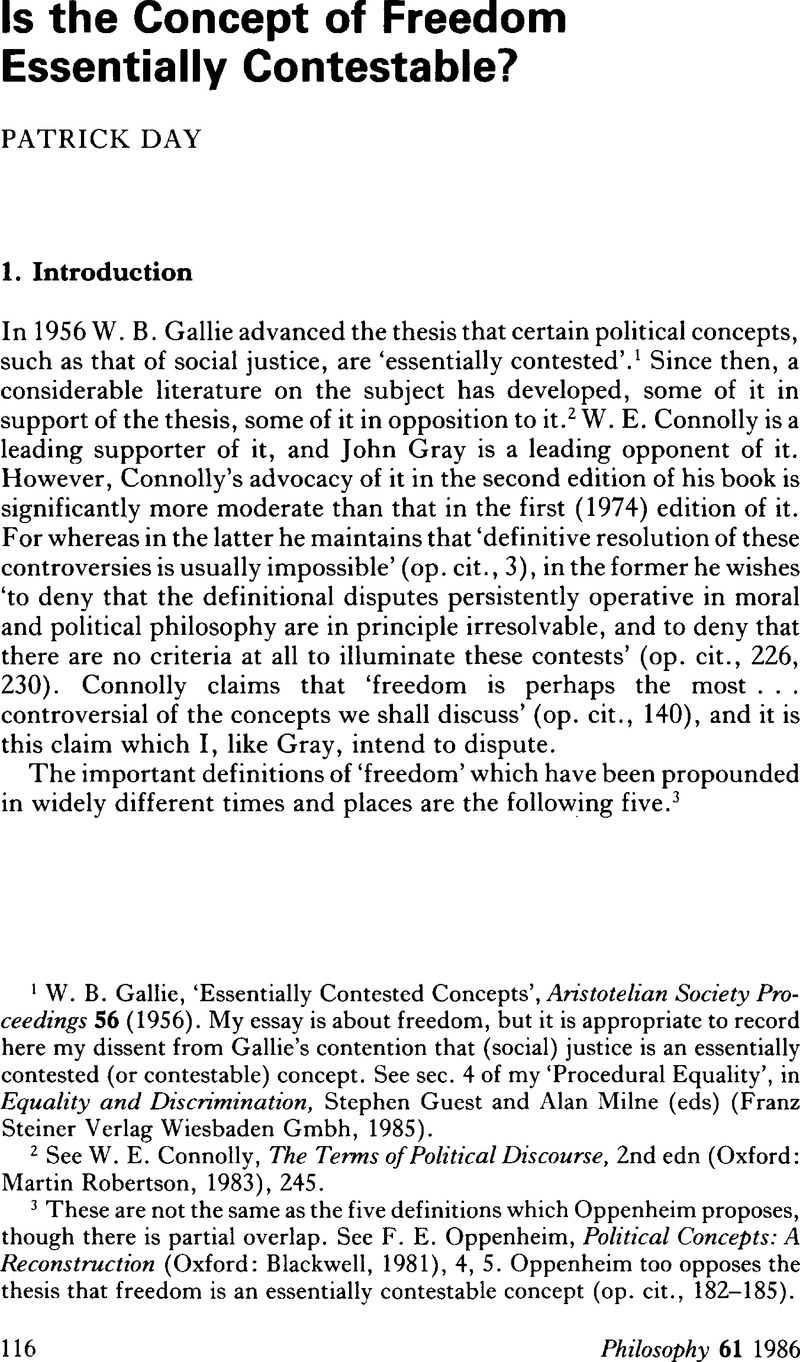
Personal musings about essentially contested concepts and rationality

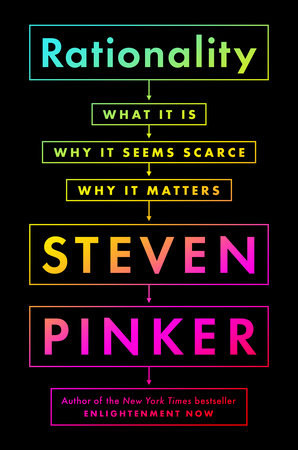
In my opinion, "rationality" in politics is an essentially contested concept . If so, at least as applied to politics, a definition will never be universally agreed on. The Google definition, the quality of being based on or in accordance with reason or logic, itself is circular/flawed. My new friend Perplexity agrees with me that "rationality" is an essentially contested concept (ECC). For politics, "reason" is also an ECC. So are concepts like reasonable, open-mindedness, fairness, true truths, the rule of law and lots of other concepts common in politics, sometimes including, "constitutional", as in that is (or isn't) constitutional.

In view of the human messiness, my personal definition of rationality constitutes a description of an ideal to strive for. Specifically, my definition of rationality for politics is, more or less (and subject to revision or correction), that it is a state of mind consisting of (i) some non-trivial degree of self-awareness of human cognitive biology and social behavior such as unconscious biases and personal moral beliefs, (ii) a reasonable degree of open-mindedness and acceptance of (all three are essentially contested) toward inconvenient facts (not essentially contested among rational people -- see the circularity in that?), true truths (essentially contested) and sound reasoning (essentially contested), and (iii) reasonable adherence (contested) to a personal moral framework. 

See how messy that is? That, coupled with personal agendas among the elites, is mostly why politics is so damned messy.  ECCs shoot through about all or nearly all of politics. It is a freaking human plague. ECCs arise from the human brain-mind that came from evolution. Disagreements over ECCs lead to or underpins the "rationality" of wars, savagery, good things, stupid things and just about all other kinds of human behavior and disagreement.


In time, I came to understand and internalize what an ECC is and what it does to people, and their minds and politics. That understanding significantly changed how I viewed politics, individual humans acting alone and humans acting in various groups, e.g., families, clans, tribes, cults, and nations. My understanding of ECCs also made me aware of how powerful and effective dark free speech is in the hands of a talented demagogue. Demagoguery relies heavily on appeal to ECCs that the demagogue defines in ways that serve the demagogue's personal agenda, usually ideological supremacy and/or crass personal lust for lots of wealth and power. A demagogue's appeals are usually irrational and/or based on false information. 

For me, stumbling across the concept of the ECC was a major personal epiphany. Applying it to rationality was fun.

"bounded rationality"

As we all know, Herbert Simon introduced the term ‘bounded rationality’ (Simon 1957b: 198; see also Klaes & Sent 2005) as a shorthand for his brief against neoclassical economics and his call to replace the perfect rationality assumptions of homo economicus with a conception of rationality tailored to cognitively limited agents.

Hey!! Is that yahoo calling me a cognitively limited agent??
Them's fightin' words!


If the Dems really want to win the election........

 They just have to post the following comments on every social media outlet, on every billboard, put it into every ad, and make NO commentary about the following comments, because they speak for  themselves.