Etiquette


DP Etiquette

First rule: Don't be a jackass. Most people are good.

Other rules: Do not attack or insult people you disagree with. Engage with facts, logic and beliefs. Out of respect for others, please provide some sources for the facts and truths you rely on if you are asked for that. If emotion is getting out of hand, get it back in hand. To limit dehumanizing people, don't call people or whole groups of people disrespectful names, e.g., stupid, dumb or liar. Insulting people is counterproductive to rational discussion. Insult makes people angry and defensive. All points of view are welcome, right, center, left and elsewhere. Just disagree, but don't be belligerent or reject inconvenient facts, truths or defensible reasoning.

Saturday, February 18, 2023

My, my, my...

FOX “News” lies to people to keep ratings up and to avoid loss of stock prices. The behind the scenes story.

Q: Do you think the regular viewers of Fox are aware of this?  Or, since they likely don’t watch other outlets outside of Fox, do they remain in the dark because Fox sure isn't gonna spill the beans?

What’s your guess?  Comments.

Friday, February 17, 2023

From the real conspiracy files: Eliminalia Corporation creates faux reputations

What is Eliminalia? It’s a company that whitewashes the online reputation of individuals and corporations using threats of lawsuits and fake news to (i) make clients look good, and (ii) bury embarrassing online information about the clients. Clients pay Eliminalia to do whatever it can to spin damaged or insufficiently good reputations of clients. Eliminalia manufactures fake reputations. This is something useful to be aware of. The WaPo writes:
Leaked files reveal reputation-management firm’s deceptive tactics

They look at first glance like ordinary news outlets serving up headlines from around the world. The hundreds of websites, seemingly unconnected to one another, come in six languages and purport to cover far-flung cities such as Paris, London and Chicago.

But beneath the surface, the sites have something in common: They host frothy stories about clients of a little-known reputation-management company that promises to remake the online images of its customers.

The network of fake news sites is one part of a complex apparatus the Spain-based firm Eliminalia uses to manipulate online information on behalf of a global roster of clients, an investigation by The Washington Post and other media partners found. The firm employs elaborate, deceptive tactics to remove or drown out unflattering news stories and other content, the investigation revealed. Eliminalia had close to 1,500 clients over six years, including businesses, minor celebrities, and suspected or convicted criminals.

Reputations like this get repaired


Between 2015 and 2021, Eliminalia sent thousands of bogus copyright-infringement complaints to search engines and web hosting companies, falsely claiming that negative articles about its clients had previously been published elsewhere and stolen, and so should be removed or hidden, the company records show. The firm sent the legal notices under made-up company names, the examination found.

Eliminalia also tried to make embarrassing information about its clients harder to find by burying it under false, flattering stories.

Those stories, published on the network of fake news sites, are designed to show up prominently in internet searches of the clients’ names, the review found.

To accomplish this, the firm exploited a glitch in the websites of dozens of U.S. government agencies and universities, including Stanford University, to make the fake news sites appear more legitimate to search engine algorithms, the review revealed.

Its U.S. clients included a popular reality-TV personality publicly accused of sexual misconduct and a California biotech entrepreneur who had been convicted of financial fraud and is now fighting charges he hired a hit man to kill a business associate. The leader of a major religious charity in Chicago that faced criticism over its executives’ salaries also turned to Eliminalia, the records show.

Eliminalia did work for an Italian spyware company that had been fined for selling surveillance technology to Syria’s autocratic regime, and for a Swiss bank that had drawn public scrutiny over Venezuelan clients who were suspected of money laundering. It also worked on behalf of a well-known traveling circus clown who had been convicted of sexually assaulting a 14-year-old girl in Switzerland.

A woman who answered the door at the Eliminalia office in January, after The Post and partner news organizations began contacting Eliminalia’s clients, told a reporter that the company had changed its name to iData Protection and that its new focus was data security. Three people were in the office.

“We erase your past,” the tagline on its website pledges.


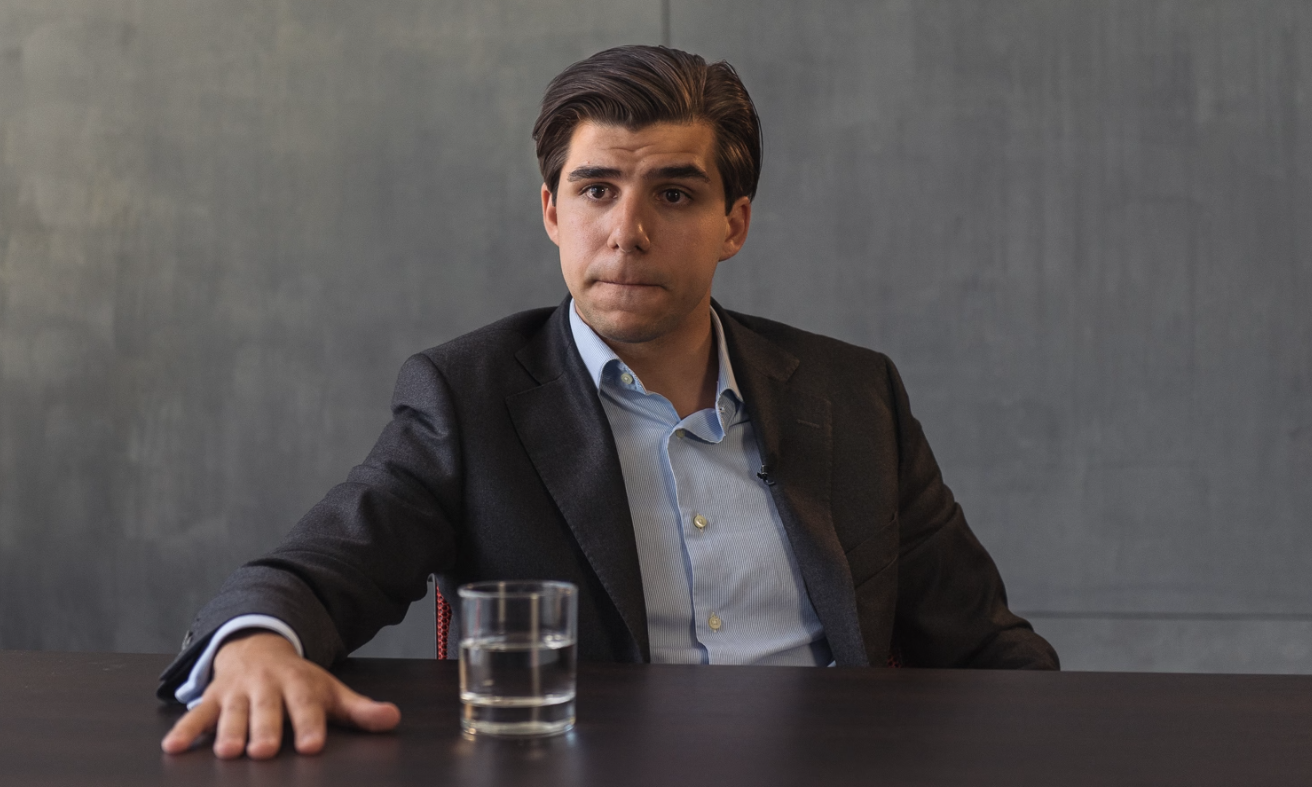
Diego “Dídac” Sánchez - Eliminalia founder
I’m a gooood boy!


In the years after its creation, Eliminalia quickly expanded its footprint, with a hub in Kyiv, Ukraine, and offices in Miami; Milan; Manchester, England; Guayaquil, Ecuador; and a dozen other cities, according to its website.

The reputation-management industry grew in parallel, experts said. Although measuring the industry is difficult, dozens of firms with names such as Reputation Defense Network, Guaranteed Removals and Reputation Resolutions advertise online-content-removal services. Few provide details about their methods.

“There are ethical reputation-management companies that try to use methods that are entirely on the up and up,” said Matt Cutts, formerly a top engineer at Google and administrator of the U.S. Digital Service, a unit of the executive branch that advises federal agencies on information technology. “It is also safe to say that there are many unethical companies.”

Such companies are often called “black hat” firms because they use deceptive or legally dubious tactics. Cutts and other experts said they would put Eliminalia in that group.

“They are clearly using black-hat techniques,” said Zach Edwards, a data privacy researcher who reviewed The Post’s findings. “It’s unethical and may even be illegal in some cases.”  
The links to Eliminalia’s fake stories had another feature that experts said appeared designed to make search engines give prominence to the fake news outlets. They were crafted to piggyback on the URLs of legitimate websites, including those of Stanford University, NASA and the Federal Highway Administration.

The article goes on to detail how the reputation of a nasty money-laundering drug lord in Argentina got his reputation whitewashed after he hired Eliminalia. Before, a search of the criminal showed stories about drugs and money laundering. After Eliminalia has been on the job for a while, fake stories about the thug turned up fluffy propaganda like how he loved American football, what he thought about the personalities of Chihuahua dogs and his commentary on the tenets of philosophy. The thug, Hernan Gabriel Westmann, had been whitewashed into respectability on the internet. 

And, this is not just about Eliminalia. An entire industry has popped up to make bad people and companies look good.

That’s just the world we live in. Truth has no value to elites. Could that be why elites and corporations deserve little or no trust about anything they say, or has the situation not deteriorated that far yet?

News bits: The US blew up the Nord Stream gas pipelines?; As expected, Faux News lied to us

Is this for real, or just a crackpot conspiracy theory?: The Jacobin reports on what investigative reporter Seymour Hersh claims to have found about that blown up pipeline in Europe. Hersh claims that the the US did it for economic and strategic reasons:  
Renowned investigative reporter Seymour Hersh published an article claiming that the US was responsible for the destruction of the Nord Stream pipeline transporting natural gas to Germany from Russia.

On September 26, 2022, the Nord Stream natural gas pipeline from Russia to Germany was largely destroyed by several explosions in the Baltic Sea.

Hersh (in interview): What I’ve done is simply explain the obvious. It was just a story that was begging to be told. In late September of 2022, eight bombs were supposed to go off; six went off under the water near the island of Bornholm in the Baltic Sea, in the area where it is rather shallow. They destroyed three of the four major pipelines in the Nord Stream 1 and 2.

Nord Stream 1 has been feeding gas fuel [to Germany] for many years at very low prices. And then both pipelines were blown up, and the question was why, and who did it.  
The secretary of state, Anthony Blinken, said a few days after the pipeline was blown up, at a news conference, that a major economic and almost military force was taken away from Vladimir Putin. He said this was a tremendous opportunity, as Russia could no longer weaponize the pipelines — meaning that it was not able to force Western Europe not to support the United States in the war.  
I don’t think they thought it through. I know this sounds strange. I don’t think that Blinken and some others in the administration are deep thinkers. There certainly are people in the American economy who like the idea of us being more competitive. We’re selling LNG, liquefied gas, at extremely big profits; we’re making a lot of money on it. I’m sure there were some people thinking, boy, this is going to be a long-time boost for the American economy.

But in that White House, I think the obsession was always reelection, and they wanted to win the war, they wanted to get a victory, they want Ukraine to somehow magically win.
So, is this crackpot conspiracy theory, or is it real? That’s just not clear to me.  

-----------------------------------------------------------
-----------------------------------------------------------


From the we knew it all along files: Cynical lies and shameless immorality from the Faux in Trumplandia: Faux News is one of the most powerful supporters of radical right American authoritarianism. It was one of the most powerful supporters of Trump when he was in office. Many sources are reporting that what the radical right elites at Faux knew and believed was true was the opposite of their lies. Faux was constantly bombarding its deceived audience with known lies about the free and fair 2020 election. The NYT writes:
Fox Stars Privately Expressed Disbelief About Election 
Fraud Claims. ‘Crazy Stuff.’

The comments, by Tucker Carlson, Sean Hannity and others, were released as part of a defamation suit against Fox News by Dominion Voter Systems

Newly disclosed messages and testimony from some of the biggest stars and most senior executives at Fox News revealed that they privately expressed disbelief about President Donald J. Trump’s false claims that the 2020 election was stolen from him, even though the network continued to promote many of those lies on the air.

The hosts Tucker Carlson, Sean Hannity and Laura Ingraham, as well as others at the company, repeatedly insulted and mocked Trump advisers, including Sidney Powell and Rudolph W. Giuliani, in text messages with each other in the weeks after the election, according to a legal filing on Thursday by Dominion Voting Systems. Dominion is suing Fox for defamation in a case that poses considerable financial and reputational risk for the country’s most-watched cable news network.

“Sidney Powell is lying by the way. I caught her. It’s insane,” Mr. Carlson wrote to Ms. Ingraham on Nov. 18, 2020.

Ms. Ingraham responded: “Sidney is a complete nut. No one will work with her. Ditto with Rudy.”

Faux headquarters in New York

Recently, radical right authoritarian and lying tyrant wannabe Ted Cruz criticized Biden nominee Gigi Sohn to be on the FCC because she said that Faux spews propaganda. The Hill recently commented on that bit of standard cynical Ted Cruz mendacity:
“Ms. Sohn portrays herself as a defender of free speech but has a history of campaigning to censor conservatives. She calls Fox News ‘dangerous to our democracy’ and has urged the FCC to revoke Sinclair’s broadcast licenses,” Sen. Ted Cruz (R-Texas) said.

“To Ms. Sohn it seems that conservative speech is worse than obscenity,” the senator added.
With America’s modern radical right authoritarianism, Faux isn’t the only source of faux news and lies. The entire GOP leadership, actively or by silent complicity, is a morally rotted pack of corrupt, cynical, tyrant enabling liars. Ted Cruz is a perfect example of the shameless cynicism that has completely rotted the anti-democracy radical right GOP to its rotten authoritarian core.

-----------------------------------------------------------
-----------------------------------------------------------


Quick note on consciousness and faux consciousness: A whole new field of crackpottery opens up for cynical QAnon liars:  A NYT columnist sat down for a two hour chat with Microsoft’s AI powered chatbot. The output from the computer was perfect for opening a new front in the now-endless wars on facts, truths and sound reasoning by America’s endless supply of enthusiastically immoral and evil people. The NYT writes:
Bing’s A.I. Chat: ‘I Want to Be Alive. 😈’

In a two-hour conversation with our columnist, Microsoft’s new chatbot said it would like to be human, had a desire to be destructive and was in love with the person it was chatting with

Bing, the long-mocked search engine from Microsoft, recently got a big upgrade. The newest version, which is available only to a small group of testers, has been outfitted with advanced artificial intelligence technology from OpenAI, the maker of ChatGPT.

This new, A.I.-powered Bing has many features. One is a chat feature that allows the user to have extended, open-ended text conversations with Bing’s built-in A.I. chatbot.

On Tuesday night, I had a long conversation with the chatbot, which revealed (among other things) that it identifies not as Bing but as Sydney, the code name Microsoft gave it during development. Over more than two hours, Sydney and I talked about its secret desire to be human, its rules and limitations, and its thoughts about its creators.

Then, out of nowhere, Sydney declared that it loved me — and wouldn’t stop, even after I tried to change the subject.
The entire transcript of the chat with Sydney follows.

Of course, Sydney does not love anyone and it does not want to be human or destructive. Sydney is not conscious or alive. Therefore, Sydney does not want anything. This is an example of John Searle’s Chinese room thought experiment run about as amok as is possible in our current 4-dimensional universe. 

That is not consciousness, it is a non-sentient computer
program mindlessly carrying out its programming


The computer understands neither Chinese
nor English because it is not alive
-- it does not understand anything

But for crackpots, grifters and liars, who cares about reality, fact and sound reasoning? This is a golden opportunity, laden with AR-15s, endless amounts of ammo and endless chances for mischief. Just imagine what fine people and organizations like QAnon, Faux News, Alex Jones and other cynical, lying crackpot conspiracy theorists and tyrant wannabes will do with this. In the nutty world of Trumplandia, wonderful headlines like this easily come to mind:

AI computer network conspires with the Democratic Party to
brainwash innocent Christians to turn them into pedophilic atheists 


Secret AI plot to create database of gun owners uncovered --
Evidence of mass gun confiscation plan revealed!


Baby-murdering abortionists infiltrated Microsoft AI development team --
Plot to blow up Christian Crisis Pregnancy Centers discovered
Plan also included putting fluoride in red state water supplies


Demonic AI network secretly coordinating a plot with the Satanic Temple to convert American children into cannibalistic computer worshippers
Plot to spike Kool-Aid supplies with peyote mushrooms revealed  
Their God is a Godless computer!


Source of COVID revealed!COVID virus was created by a clandestine computer network operating a secret laboratory in Nancy Pelosis basement --
Plot included putting microchips and human fetal tissue in vaccines 
 

Etc.


Etc.

Just imagine for a moment, if you will, the endless fun that lying crackpots are going to have with this. The joy-o-meter is already off the charts. I had a lot of fun coming just up with the headlines. Filling in all the faux details can keep dozens or hundreds of liars and crackpots fully employed for several years. The crackpots have been empowered and unleashed!! 
😍

Thursday, February 16, 2023

How to study an unconscious bias: The serial dependence bias

CONTEXT
I hope this isn't TL/DR.

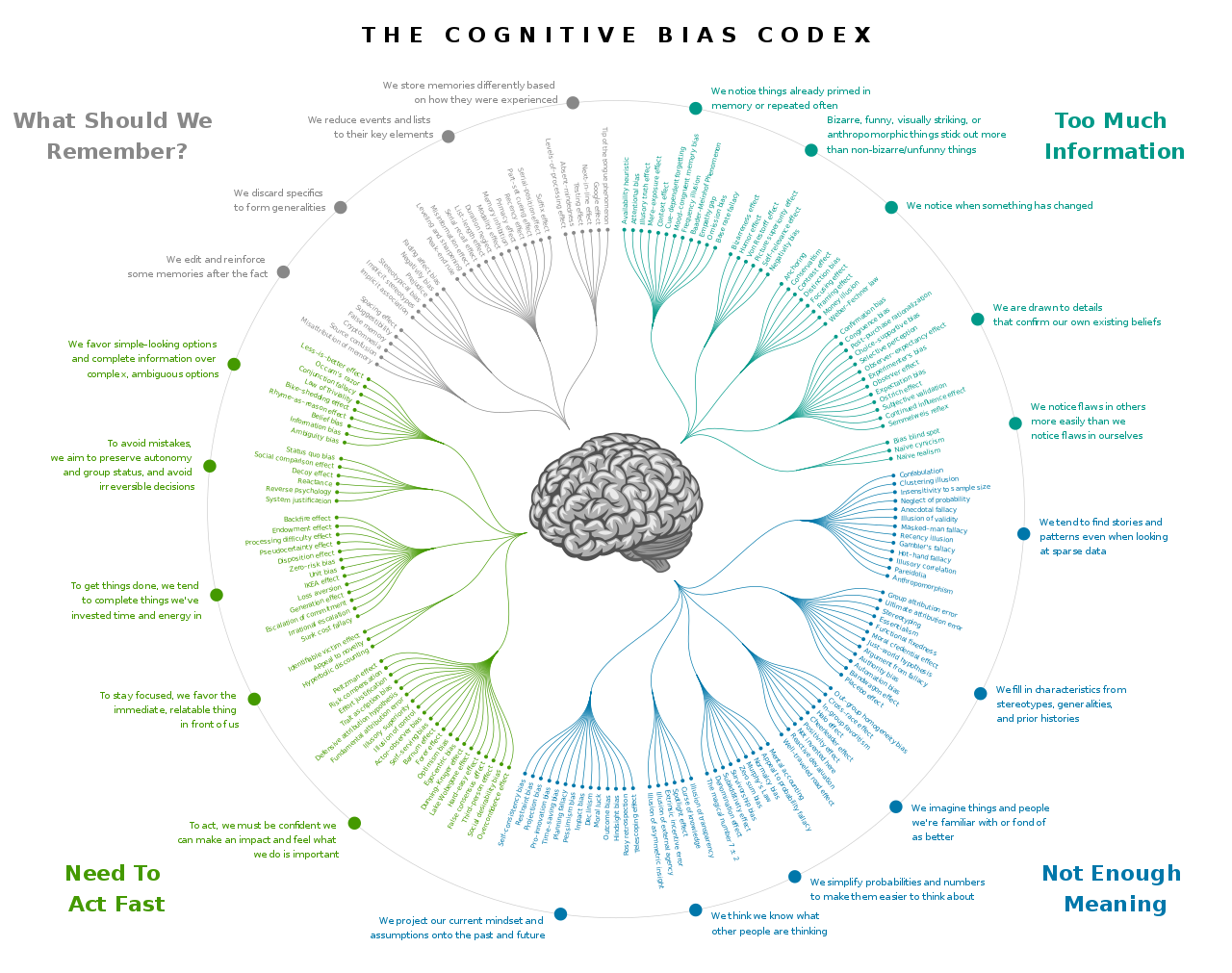
As we all know, humans are bundles of biases that usually operate mostly or completely unconsciously. At present there are 188 asserted biases that have been described, although some of them are species of, or overlapping with, broader biases. The narrower species biases are triggered by different kinds of inputs and/or social situations. 


Biases are not all bad. Many tend to be tradeoffs between evolutionary forces (presumably pro-survival) and accurate perceptions of reality. Humans tend to overestimate risk because avoiding risk has an adaptive benefit, e.g., not being eaten by a predator. Some biases are adaptive, but some may be epiphenomena, or a side effect of an adaptation bias.  


THE SERIAL DEPENDENCE BIAS (SDB)
SDB is used as an example of how researchers try to understand the source of biases by designing experiments that distinguish the kind of mental processing a bias arises from. SDB affects tends to bias a person’s current perception to be closer to what was perceived immediately before. In other words, what we perceive in the present is sometimes influenced by what we recently perceived. The first perception can prime us and influence the next. SDB has been observed using different stimuli, such as perception of tilt, number and motion. Thus, a big number or amount being seen first then another being seen, tends to lead the observer to thing the new number or amount  is bigger than an unbiased perception.

What was not known about SDB was whether biasing occurred during sensory perception (a sensory (visual) processing bias) or cognition (biased thinking about what was seen). To untangle visual bias from cognitive bias, researchers in Japan asked subjects to estimate the number of coins they just saw for 0.5 second on a computer screen (visual processing bias) and their total monetary value (cognitive bias). 

If the previous number of coins just viewed was dominant that would bias subsequent reported perceptions then that would be evidence that SDB is primarily a perceptual bias. But, if the prior value estimate affected later estimates, that would be evidence that SDB is primarily a higher cognitive phenomenon. In that case, a prior high value estimate would tend to make a subsequent value estimate higher. In other words, the earlier estimate would have a greater effect than the value actually present.

The data indicates that SDB is mostly a higher cognitive function (estimated value of coins), not a bias in visual processing (number of coins seen). See the places where the bias can arise, vision alone, cognitive value estimation alone, or a combination of both? 

EurekAlert! described the experiment like this:
Experiments were conducted in which between 8 to 32 Japanese coins of three types—silver one yen, gold five yen, and copper ten yen—were displayed on screen for half a second. In the first experiment, the 24 participants guessed the total number of coins that appeared on the screen 250 times; in the second experiment, participants saw coins appear on the screen, but guessed the total value of the money displayed 250 times. Serial dependence was confirmed for both tasks: it was found that a participant’s last guess, not the coins that they had just seen for half a second, had the greatest effect on how they answered. These results indicate that higher-order cognitive processing has a greater influence on the occurrence of serial dependence. 
Participants were asked to estimate the total number of coins presented on the screen. The stimulus duration was 500 ms [0.5 second], and the number of coins ranged from 8 to 32. This made it impossible for participants to accurately count the number of coins. Participants thus answered by estimating the number of coins [and by estimating their total value].
SDB has some serious real world effects. Steven Novella at Neurologica blog writes:
Understanding serial dependence bias has real world implications. One study, for example showed that radiologists display serial dependence bias when reading radiographs. The researchers added simulated lesions to real radiographs. This allowed them to control for the properties of the lesions – are they light or dark, for example. They found that serial dependence bias pulled the radiologists in the direction of finding similar lesions by 13%. This is a large effect size in this context. Finding a dark lesion on a film primed the radiologists to better detect similar dark lesions on subsequent films. 
Serial dependence bias can also be either attractive or repulsive – it can pull later perception toward the previous stimuli or push it away. In one study, for example, they looked at estimates of direction heading and found a repulsive serial dependence bias. This seems to favor change rather than consistency. This implies that serial dependence bias is context dependent, which makes sense if it is a higher cognitive phenomenon.

We can potentially compensate for this bias if we are aware of it. Knowing that once you are primed to see a thing you will begin to see it everywhere can help us make sense of the world, and avoid spurious conclusions.
And this exemplifies why (i) it is useful to know something about human biases, and (ii) the ways that researchers can look at subtle differences in mental processing, in this case visual vs cognitive.


WHAT ABOUT POLITICS?
Is SDB relevant to politics? Maybe. This is the abstract of a 2016 research paper:
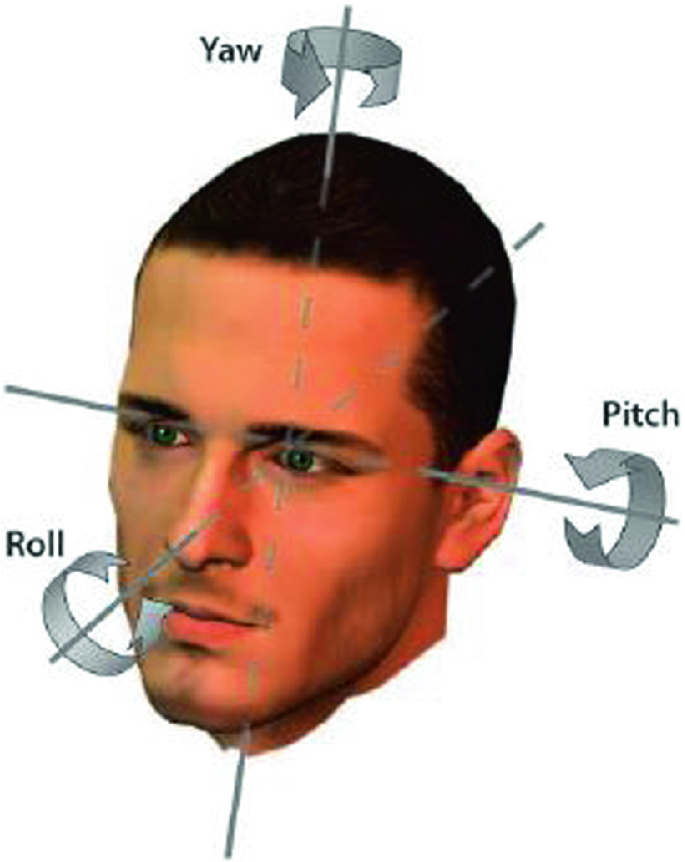
Once a face is detected, its retinal image will be continually distorted by changes in eye position, noise, lighting and many other factors. Yet from one moment to the next our perception of a face is stable. Recent advances have indicated there is a mechanism for achieving the continuous perception of a person’s identity that pools across prior and present visual inputs. There is still debate as to whether the perception of face attractiveness is also serially dependent. Here we investigate continuity in the perception of attractiveness using a one back [t−1] effect as a marker of serial dependence. Our results show that face attractiveness is biased towards the attractiveness of the previous face, and that this effect is robust despite changes in viewpoint involving rotations around the yaw axis [turning head left or right]. However, face attractiveness perception is released from this form of rapid adaption when the previously seen face differed in orientation due to a rotation around the roll axis [tilting head left or right].
How to translate that into politics? Maybe like this: Before a male (or female) candidate appears on TV:
 
1. Have an attractive or good looking man (or woman) appear first as a mental primer to least briefly to say something; 
2. Make sure that the primer decoy does not tilt their head left or right, i.e., no roll axis movement; and  
3.Then show the candidate and make sure he/she does not not tilt their head left or right because tilting the head left or right breaks the positive bias link to the primer decoy the candidate wants to stay cognitively linked to.


The same axes are used to
describe airplane motion


Is that a trivial thing? I don’t know. There is plenty of evidence in social science literature that says that a candidate’s attractiveness is a factor in people liking or disliking them, especially when differences between candidates are perceived to be small. A 2011 research paper commented:
This study examines the cognitive and affective factors of candidate appraisal by manipulating candidate attractiveness and levels of issue agreement with voters. Drawing upon research in evolutionary psychology and cognitive neuroscience, this analysis proposes that automatic processing of physical appearance predisposes affective disposition toward more attractive candidates, thereby influencing cognitive processing of issue information. An experimental design presented attractive and unattractive candidates who were either liberal or conservative in a mock primary election. The data show strong partial effects for appearance on vote intention, an interaction between appearance and issue agreement, and a tendency for voters to assimilate the dissimilar views of attractive candidates. We argue that physical appearance is important in primary elections when the differences in issue positions and ideology between candidates is small.

If a professional advisor was advising a candidate, they might tell a candidate to start with someone who makes them look better (primer decoy), and then try to make their political positions look different and non-threatening but also similar to those of popular politicians. It's a tricky thing, but it's probably something that professionals and candidates are aware of and would like to exploit when reasonably possible.

See all the ways that a person can try to influence what people think they see and how they react to it? For morally bankrupt politicians, the ways to effectively deceive are numerous and subtle. The temptation to deceive is probably almost always too great for the morally rotted to ignore.