Many American Christians support DJT because they believe he will save them from
ongoing persecution and/or an impending massive crackdown after the next election.
A fascinating opinion (
not paywalled) by NYT columnist and evangelical Christian David French describes his experience with both sides of that issue:
The Christian Persecution Narrative Rings Hollow
This June, I was invited on a friend’s podcast to answer a question I’ve been asked over and over again in the Trump era. Are Christians really persecuted in the United States of America? Millions of my fellow evangelicals believe we are, or they believe we’re one election away from a crackdown. This sense of dread and despair helps tie conservative Christians, people who center their lives on the church and the institutions of the church, to Donald Trump — the man they believe will fight to keep faith alive.
As I told my friend, the short answer is no, not by any meaningful historical definition of persecution. American Christians enjoy an immense amount of liberty and power.
But that’s not the only answer. American history tells the story of two competing factions that possess very different visions of the role of faith in American public life. Both of them torment each other, and both of them have made constitutional mistakes that have triggered deep cultural conflict.
One of the most valuable and humbling experiences in life is to experience an American community as part of the in-group and as part of the out-group. I spent most of my life living in the cultural and political center of American evangelical Christianity, but in the past nine years I’ve been relentlessly pushed to the periphery. The process has been painful. Even so, I’m grateful for my new perspective.
When you’re inside evangelicalism, Christian media is full of stories of Christians under threat — of universities discriminating against Christian student groups, of a Catholic foster care agency denied city contracts because of its stance on marriage or of churches that faced discriminatory treatment during Covid, when secular gatherings were often privileged over religious worship.
Combine those stories with the personal tales of Christians who faced death threats, intimidation and online harassment for their views, and it’s easy to tell a story of American backsliding — a nation that once respected or even revered Christianity now persecutes Christians. If the left is angry at conservatives for seeking the protection of a man like Trump, then it has only itself to blame.
After living inside and outside conservative evangelicalism, I have a different view. While injustice is real, the Christian persecution narrative is fundamentally false. America isn’t persecuting Christians; it’s living with the fallout of two consequential constitutional mistakes that distort our politics and damage our culture.
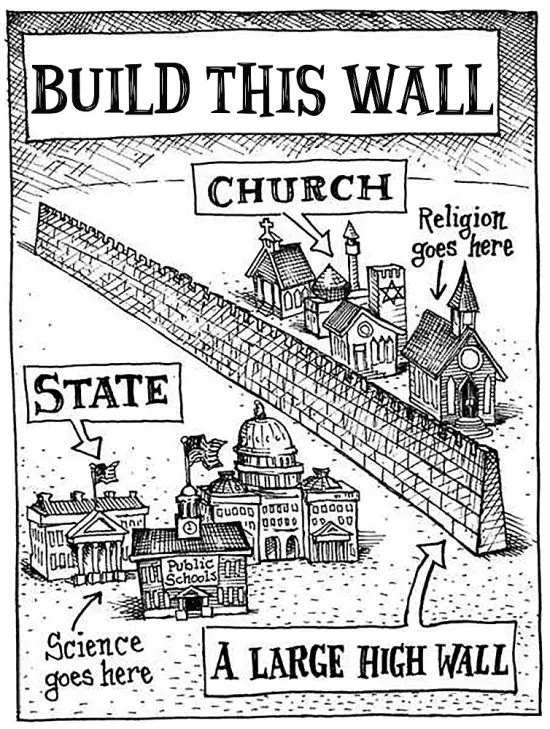
First, for most of American history, courts underenforced the establishment clause of the First Amendment. It wasn’t even held clearly applicable to the states until 1947. Americans lived under what my colleague Ross Douthat calls the “soft hegemony of American Protestantism.” It was “soft” in part because America never possessed a national church on par with European establishments, but it was certainly hard enough to mandate Bible readings and prayer in schools and to pass a host of explicitly anti-Catholic Blaine Amendments that were intended to blunt Catholic influence in the United States.
This soft hegemony wasn’t constitutionally or culturally sustainable. Mandating Protestant Scripture readings is ultimately incompatible with a First Amendment that doesn’t permit the state to privilege any particular sect or denomination. Culturally, the process of diversification and secularization makes any specific religious hegemony impossible. There simply aren’t a sufficient number of Americans of any single faith tradition to dominate American life.
In the 1960s the Warren court began dismantling the soft Protestant establishment by blocking school prayer and Scripture reading. A series of cases limited the power of the state to express a religious point of view. But then state and local governments overcorrected. They overenforced the establishment clause and violated the free speech and free exercise clauses by taking aim at private religious expression.
The desire to disentangle church and state led to a search-and-destroy approach to religious expression in public institutions. Public schools and public colleges denied religious organizations equal access to public facilities. States and public colleges denied religious institutions equal access to public funds.
Conservative and liberal justices have created a different, sustainable equilibrium, but the religious liberty culture war rages on anyway — in part because millions of Americans don’t want to strike a balance. They actually prefer domination to accommodation. Many conservative evangelicals miss the old Protestant establishment, and they want it back. This is part of the impulse behind the recent Ten Commandments law in Louisiana, for example, or the recent effort in Oklahoma to establish a religious charter school, a public school run by the Catholic Church.
Combine these efforts at religious establishment with red-state legislation aimed at progressive and L.G.B.T.Q. Americans, and one could fairly assert that Christians are persecuting their opponents.
But there’s more to it than that. There are secular Americans who do take aim at Christian expression and at Christian institutions. They don’t want separation of church and state so much as they seek regulation of the church by the state, to push the church into conformance with a secular political ideology.
French overstates the threat to Christianity
French argues that (i) injustice against Christians is real, (ii) states and public colleges deny religious institutions equal access to public funds, (iii) religious gatherings were more strictly controlled than places like grocery stores and restaurants, and (iv) people who want to keep the church separate from the state want to have government regulate the church. One can easily disagree with all of that. For (i), based on how he describes anti-Christian injustice, it is minor. How bad is it for a university to block a Christian speaker,
a rare to nearly non-existent event, or how often is a Christian group denied a city contract,
something that is also rare (and illegal)?
For (ii), one can argue that reasonable enforcement of the establishment clause demands that tax dollars be kept separate from religion. As it is now, religion already is greatly favored over most everything else in the tax code. Those tax breaks are worth tens of billions per year.
For (iii), as far as being more strict with religious gatherings than secular ones during COVID,
evidence of that is weak. Lots of complaining went on, but without much substance behind it.
For (iv), French falsely claims his cited court case is about the state regulating the church. That is false. That lawsuit is about keeping the church from openly discriminating against groups of people that religious elites hate in taxpayer-funded religious educational institutions.[1] As usual, the churches want to be free to discriminate against and oppress LGBQT students. Our tax dollars are being used to support cruel religious bigotry.
Why should tax dollars be used by religious institutions to treat some people like crap? That is not a matter of state regulating church. It is a matter of the church being an asshole to people. In the lawsuit that French cites, the state protected the church's tax money and its freedom to discriminate against out-groups on religious freedom grounds. There is no way that can be construed as the state regulating the church. The opposite is closer to the mark.
French is right to assert that (1) the Christian persecution narrative rings hollow, and (2) the establishment clause has been underenforced. But his arguments about threats to Christianity are hyperbolic and not convincing. It is false to say that government wants to regulate the church and force it to conform to secular political ideology.
If religious educational institutions want to discriminate against and abuse target individuals and groups, there should ne no taxpayer dollars supporting that kind of bad behavior. Not one tax penny should go to support cruelty and bigotry in the name of any God's infinite love and grace.
Q: Should tax dollars be used to support discrimination by any educational institution (religious or not) against any specific group of people on religious grounds?
Footnote:
Thirty-three students filed a class action complaint against the U.S. Department of Education (DOE) in the U.S. District Court for the District of Oregon on March 29, 2021. The students challenged the Department’s alleged complicity in abuses perpetrated against LGBTQ+ students at taxpayer-funded religious colleges and universities. The students sought to represent a class of “more than 100,000 LGBTQ+ students who attend taxpayer-funded religious colleges and universities that openly discriminate against them in both policy and practice.” At the religious institutions, plaintiffs alleged being subjected to conversion therapy, expulsion, denial of housing and healthcare, sexual and physical abuse and harassment, and other stigmatic harms. [That's Gods infinite love in plain sight] The students alleged that the Department of Education was wrongly using the religious exemption under Title IX to breach its obligation to protect students from abuse based on their sexual orientation and gender identity. The students brought a constitutional claim against the DOE under 42 U.S.C. § 1983 for violating the Establishment Clause, Equal Protection and substantive due process. .... The case was assigned to District Judge Ann L. Aiken on March 30, 2021. (emphasis added)
Part of the lawsuit
here, the state defended the church,
not the other way around
The LGBQT plaintiffs got shafted
Is that persecution of Christianity?