Etiquette


DP Etiquette

First rule: Don't be a jackass. Most people are good.

Other rules: Do not attack or insult people you disagree with. Engage with facts, logic and beliefs. Out of respect for others, please provide some sources for the facts and truths you rely on if you are asked for that. If emotion is getting out of hand, get it back in hand. To limit dehumanizing people, don't call people or whole groups of people disrespectful names, e.g., stupid, dumb or liar. Insulting people is counterproductive to rational discussion. Insult makes people angry and defensive. All points of view are welcome, right, center, left and elsewhere. Just disagree, but don't be belligerent or reject inconvenient facts, truths or defensible reasoning.

Tuesday, May 17, 2022

Republican Party dogma: America is not a democracy, egalitarianism is a threat

Egalitarianism: the doctrine that all people are equal and deserve equal rights and opportunities

A commentator posted an essay over at OnlySky, ‘We’re a republic, not a democracy’: The origin of a weird talking point, about how the Republican propaganda Leviathan has come up with a rationale to deny that the majority should rule or influence policy in America. That poison is seeping into the propaganda that powerful Republican politicians use to deceive and distract the public. This is more evidence of the anti-democratic neo-fascism that is tightening its grip on the minds of elite Republicans. OnlySky writes:
Starting about two years ago, any Facebook post that called the US a democracy would draw a comment from That Guy, saying, “Its a constitutional republic not a democracy you’re ignorance is embarrassing.” Even if that were true (more on that shortly), where did that very precise, suddenly scholarly phrase come from—and what on Earth is it supposed to prove?

Although this thinly-veiled argument against majority rule has re-emerged for the first in the age of social media, its history extends to the dim recesses of the early 20th century. Whenever political minorities wield outsized power, and that power leads to an outcome contrary to the desires of those who usually get their way, you can count on a pundit or a politician claiming that the United States isn’t actually a democracy. You might hear it when a Republican candidate wins the Electoral College while losing the popular vote, or after a Supreme Court decision that the majority of Americans oppose.

But who is claiming that the US is not a democracy, and where did the practice get its start?

One recent example comes from Utah Republican Senator Mike Lee, who first wrote a 2020 tweet, then an essay, explaining why he believes the United States is not a democracy. Starting about two years ago, any Facebook post that called the US a democracy would draw a comment from That Guy, saying, “Its a constitutional republic not a democracy you’re ignorance is embarrassing.” Even if that were true (more on that shortly), where did that very precise, suddenly scholarly phrase come from—and what on Earth is it supposed to prove?

Although this thinly-veiled argument against majority rule has re-emerged for the first in the age of social media, its history extends to the dim recesses of the early 20th century. Whenever political minorities wield outsized power, and that power leads to an outcome contrary to the desires of those who usually get their way, you can count on a pundit or a politician claiming that the United States isn’t actually a democracy. You might hear it when a Republican candidate wins the Electoral College while losing the popular vote, or after a Supreme Court decision that the majority of Americans oppose.

But who is claiming that the US is not a democracy, and where did the practice get its start?

One recent example comes from Utah Republican Senator Mike Lee, who first wrote a 2020 tweet, then an essay[1], explaining why he believes the United States is not a democracy.  
“Our system of government is best described as a constitutional republic. Power is not found in mere majorities, but in carefully balanced power,” Lee wrote. “Democracy itself is not the goal. The goal is freedom, prosperity, and human flourishing.”

This didn’t pop into Lee’s head unbidden. Earlier that same year, the conservative think tank The Heritage Foundation made the same claim. Bernard Dobski, a visiting scholar at Heritage, wrote that  
America is a republic and not a pure democracy. The contemporary efforts to weaken our republican customs and institutions in the name of greater equality thus run against the efforts by America’s Founders to defend our country from the potential excesses of democratic majorities.

Dobski continued with a warning against the looming twin specters of hope and fairness: 
The careful balance produced by our mixed republic is threatened by an egalitarianism that undermines the social, familial, religious, and economic distinctions and inequalities that undergird our political liberty. Preserving the republican freedoms we cherish requires tempering egalitarian zeal and moderating the hope for a perfectly just democracy.   
Majority rule, once the comfortable mainstay of a white and Christian majority, has in recent years become a looming threat as both white and Christian (not to mention white Christian) shrink inexorably toward minority status.

Both Lee and Dobski are arguing against majoritarianism and for a form of minority rule. Such a shift requires a long-game devaluation of fairness, day by day, talking point by talking point. It seems ludicrous until we recall that Republicans have only won the popular vote for President once in nearly three decades. Republicans are a political minority. To wield power at the federal level, they have increasingly relied on anti-majoritarian strategies.  
So where did the argument originate that America is not a democracy?

According to Columbia University research scholar Nicole Hemmer, the “republic, not a democracy” argument originated with conservatives in the 1930s who wanted to prevent the country from joining the Second World War. Roosevelt’s call for America to defend democracy drew a conservative response that “we’re not a democracy, we are a republic.” Conservatives revived the argument in the mid-1960s after the codification of civil and voting rights legislation and following federal government efforts to desegregate schools.

“It goes back to the ‘republic, not a democracy’ chants from the 1964 Republican convention,” said Hemmer. “Conservatives rejected the one-person-one-vote standard of the Warren Court, a set of arguments deeply entangled with their opposition to the Black civil rights movement.”

So the argument that the United States is not a democracy originated with conservative thinkers who wanted to shrink the pool of decision-makers in the country and preserve the influence of two rapidly-shrinking majorities that just happen to form the conservative base. It has always been an argument against majority rule, against the voice of the people having an influence in political choices. As White Christians, the core of the Republican Party, continue to shrink as a percentage of the national headcount, these arguments become even more desperately attractive.  
“We’re a republic, not a democracy” is nonsensical along the lines of, “A collie is a dog, not an animal.” The United States is both a republic and a democracy. American political power ultimately rests with the people, who elect representatives to carry out their will. The system is inherently majoritarian, and the founders intended it to be. It is not a direct democracy, but that isn’t the distinction this conservative shell-game is making.
-------------------------------------------------------------------------------------------------------------------------------

Republican neo-fascist propaganda here is first rate. Truly first rate.

It refers to “that careful balance produced by our mixed republic.” What the hell does that mean exactly? What careful balance, government vs the people, one group of people vs another, or something else? The point of that carefully crafted poison dart is to deflect people toward a false belief that there now exists a balance of power between government and citizens that is about as good as (i) it is going to get, and (ii) should ever get. Republican neo-fascists want power to stay with the elites. 

Once again, consider the anti-egalitarian words of Paul Weyrich from 1980:


Footnote: 
1. In his essay, Of Course We're Not a Democracy, Lee writes this:
Insofar as “democracy” means “a political system in which government derives its powers from the consent of the governed,” then of course that accurately describes our system. But the word conjures far more than that. It is often used to describe rule by majority, the view that it is the prerogative of government to reflexively carry out the will of the majority of its citizens.

Our system of government is best described as a constitutional republic. Power is not found in mere majorities, but in carefully balanced power. Under our Constitution, passing a bill in the House of Representatives—the body most reflective of current majority views—isn’t enough for it to become law. Legislation must also be passed by the Senate—where each state is represented equally (regardless of population), ....
One of the inconvenient things the propagandizing Senator from Utah ignores is that our federal government does not reflexively carry out the will of the majority of its citizens. If anything, it reflexively carries out the will of the rich or it melts down into gridlock. Majority public opinion has literally no impact on policy. None. 

Government completely ignores what the majority want. So when conservatives whine about disrupting the balance of power from horrors like universal voting rights, civil liberties and public opinion, they are actually concerned about power for elite people and special interests first, White people second and most everything else third, fourth or not at all.

The Senator also does not mention why or how egalitarian civil liberties including voting rights would upset the constitutional balance of power. He does not mention it because the balance would not be upset. The House of Representatives would remain the House as it is now. The same applies to the Senate and White House.

Again, the Republican concern is about power for the elites. When the masses have civil liberties under our current constitution, some power flows from the elites to the masses. Republican elites really are neo-fascists, not democrats. They want all of the power they can get away with accumulating for themselves. That is why Christian nationalism is so intensely focused on moral authority and political power for wealthy people. Rich people are rich because they are more moral. That reflects God’s will. Even atheistic laissez-faire capitalists are perfectly fine with that argument because it preserves their power and wealth. 
Supreme Court Republicans rule in favor of political corruption

Using the excuse of free speech, the court decided to allow corrupt use of campaign finance finds for political purposes. Ted Cruz had challenged the campaign finance law and won. The Republicans argued the law “burdens core political speech without proper justification,” which the said violated the First Amendment. The Democrats’ dissent explained why the law was passed in the first place. The New York Times writes:
In dissent, Justice Elena Kagan wrote that the law was squarely aimed at preventing corruption.

“Repaying a candidate’s loan after he has won election,” she wrote, “cannot serve the usual purposes of a contribution: The money comes too late to aid in any of his campaign activities. All the money does is enrich the candidate personally at a time when he can return the favor — by a vote, a contract, an appointment. It takes no political genius to see the heightened risk of corruption.”

The basic dispute was whether contributions to winning candidates to repay personal loans to their campaigns were a form of political speech or a kind of gift with the potential to corrupt.

The challenged law placed a $250,000 cap on the repayment of personal loans from candidates to campaigns using money from postelection donations. Seeking to test the constitutionality of the law, Mr. Cruz lent $260,000 to his 2018 re-election campaign.

A related regulation allows repayment of loans of more than $250,000 so long as campaigns use pre-election donations and repay the money within 20 days of the election. But the campaign did not repay Mr. Cruz by that deadline, so he stood to lose $10,000.

Chief Justice Roberts, noting that the 2018 Senate race in Texas was at the time the most expensive in history, wrote that it was undisputed under the court’s precedents that candidates can spend their own money without limitation on their own campaigns.

The challenged law, he wrote, “inhibits candidates from loaning money to their campaigns in the first place, burdening core speech.”
Once again, the Republican Party stands on the side of wealth and power for elites. They stand for corrupt government. That law prevented no speech by average voters. The only affected people are rich people. Ted Cruz is not going to give access to wealth to a voter who donates $200 or $800 to his campaign. 

The burden on speech for everyone was completely non-existent if one does not consider spending money in politics to be protected free speech, which I do not. I consider it to be legalized corruption. That money is usually dark. There is no accountability for that corruption.

Once again, we clearly see how Republican Party dogma supports flows of power to elite and powerful people, with no benefits for average people. The Democrats on the court dissented here, not the Republicans. In fact, average people and the public interest are usually harmed, as is the case here. Exerting political power in setting policy is a rich person's game, not an average voter's game. The only game the average voters get to play are voting, with all of smoke, mirrors, lies, deceit, slanders and crackpottery that game is shrouded in and corrupted by.

Simply put, political corruption by rich real people and people called corporations is legal in America. Republican Party elites are fully on board with corruption as their preferred means of exercising and keeping power for the benefit of the powerful, corrupt special interest called the Republican Party. This is how neo-fascism plays politics and power. It is not how democracy is supposed to play it.


Monday, May 16, 2022

The Faux News Chronicles: Its conspiracy theory inspires a mass murder

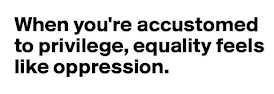
We all know that Faux News is a constant source of propaganda, lies, slanders and fun entertainment in the form of crackpot conspiracies and pushed emotional buttons. The fun entertainment provokes a gamut of fun feelings from self-righteous moral outrage and disgust to irrational terror and hate. One source, Mother Jones, reports on evidence that the recent mass shooting in Buffalo NY arises from terror the faux White Replacement theory inspires in millions of conservatives. They feel terror and horrendous threat from an impending White person apocalypse caused by minority people demanding equality. Apparently, the terrorized White folks see equality as oppression and tyranny, or something like that. 
And don't forget it!

As discussed here a few weeks ago, research data indicates that fear of White Replacement by minorities was and is the most important factor in public support for the ex-president and his racism and hate. 

The Buffalo Shooter’s Manifesto Relied on the Same White Supremacist Conspiracy Pushed by Tucker Carlson

The mass shooting inside a crowded, Buffalo, New York, supermarket on Saturday, which killed 10 people and injured three more, is renewing fierce condemnation of the racist conspiracy known as the “great replacement theory,” after a racist manifesto believed to have been written by the gunman was uncovered online.

The theory is popular among white supremacists and is predicated on the racist falsehood that white people are purposely being replaced by people of color. It’s reportedly all over the 180-page manifesto written by the alleged gunman, a white 18-year-old who drove hours from his home to perpetrate the attack, in which he outlined detailed plans to carry out Saturday’s massacre. Those plans revealed that the alleged gunman specifically targeted the supermarket because its neighborhood had a high percentage of Black residents. “Zip code 14208 in Buffalo has the highest black percentage that is close enough to where I live,” a line from the manifesto reads.

Also reportedly referenced in the manifesto is the gunman who killed 49 people at two mosques in Christchurch, New Zealand, in 2019. At the time, a similarly racist document was found online, in which the gunman cited “invaders” and millions of people coming across the border “invited by the state and corporate entities to replace the White people who have failed to reproduce.”  
Beyond the massacre in Christchurch, fears of a “great replacement” have fueled numerous mass shootings and other acts of violence against immigrant communities in the US in recent years, including the 2019 El Paso mass shooting inside a Walmart store. .... The theory became especially popular during the Trump administration when right-wing media, the president, and some Republican members of Congress openly promoted the same viciously racist views and warned of a violent “invasion” of immigrants.  
But the most prominent espouser of the theory has arguably been Tucker Carlson. In a damning three-part series examining Carlson’s outsized role in stoking white supremacist fears, the New York Times recently found that Carlson has long pushed the false conspiracy theory that Democrats were carrying out an elaborate mission to bring “more obedient voters from the third world” in order to replace the current electorate and win elections. Carlson has even defended the theory’s role in motivating the January 6 attack on the US Capitol building.
There’s the threat White people. Unless Whites start shelling out boatloads of White babies, they will be replaced by hoards of rapist, drug dealing, pedophilic, illegal immigrant socialist tyrants. Those horrible illegal minority people breed like rabbits compared to God-fearing, moral White folks. 


Tucker: Us innocent, moral White folk will be replaced by 
force by those guilty, immoral not White folk

Stay tuned to Faux for more entertaining 
crackpottery, terror and moral outrage by Tucker, 
coming up right after these messages about pillows
stuffed with shredded polyurethane foam


Hello fellow Faux crackpots and deranged conspiracy theory freaks
My pillows arent very toxic and I will prove soon 
that the 2020 election was stolen

And as a bonus, the plastic foam in my pillows is guaranteed to 
never biodegrade so our legacy will be landfills loaded with my 
patent pending Forever Foam!

The pillows’ filling is made from 100% polyurethane foam which makes them shapeable, fluffable, and easy to fold. The polyfoam is shredded which is intended to enhance the breathability of the pillow, and make it easier to manipulate under the cover fabric. Polyfoam has a fluffy, cushy feel often found in mattress toppers or couch cushions.

What more could anyone ask for fun entertainment and 
sources of fill for landfill?
Go Faux News!

 Now, back to more moral outrage and deranged crackpottery from Tucker, the 

Sunday, May 15, 2022

The Republican radical right is fighting for full control of the GOP

Context
Wikipedia: In United States politics, the radical right is a political preference that leans towards extreme conservatism, white supremacism, and other right-wing to far-right ideologies in a hierarchical structure paired with conspiratorial rhetoric alongside traditionalist and reactionary aspirations. The term was first used by social scientists in the 1950s regarding small groups such as the John Birch Society in the United States, and since then it has been applied to similar groups worldwide. The term “radical” was applied to the groups because they sought to make fundamental (hence “radical”) changes within institutions and remove persons and institutions that threatened their values or economic interests from political life.

Wikipedia: Far-right politics, also referred to as the extreme right or right-wing extremism, are politics further on the right of the left–right political spectrum than the standard political right, particularly in terms of being authoritarian, ultranationalist, and having nativist ideologies and tendencies. Historically used to describe the experiences of fascism and Nazism, far-right politics now include neo-fascism, neo-Nazism, the Third Position, the alt-right, racial supremacism, and other ideologies or organizations that feature aspects of ultranationalist, chauvinist, xenophobic, theocratic, racist, homophobic, transphobic, or reactionary views. Far-right politics have led to oppression, political violence, forced assimilation, ethnic cleansing, and genocide against groups of people based on their supposed inferiority or their perceived threat to the native ethnic group, nation, state, national religion, dominant culture, or conservative social institutions.

Wikipedia: The John Birch Society (JBS) is an American right-wing political advocacy group. Founded in 1958, it is anti-communist, supports social conservatism, and is associated with ultraconservative, radical right, or far-right politics. .... The society rose quickly in membership and influence, and was controversial for its promotion of conspiracy theories. In the 1960s the conservative William F. Buckley Jr. and National Review pushed for the JBS to be exiled to the fringes of the American right. More recently Jeet Heer has argued in The New Republic that while the organization's influence peaked in the 1970s, Bircherism and its legacy of conspiracy theories have become the dominant strain in the conservative movement.


The radical right rising
The new York Times writes:
A Fracture in Idaho’s G.O.P. as the Far Right Seeks Control

Ahead of a primary vote, traditional Republicans are raising alarm about the future of the party, warning about the growing strength of militia members, racists and the John Birch Society.

At a school gymnasium in northern Idaho, Lt. Gov. Janice McGeachin regaled a crowd with stories of her feuds with the current governor, a fellow Republican, including the time when he briefly left the state and she issued a mutinous but short-lived ban on coronavirus mask mandates.

Gov. Brad Little had worked in recent years to slash taxes and ban abortion, but for Ms. McGeachin and the hundreds gathered at a candidates’ forum sponsored by the John Birch Society in late March, the governor was at cross purposes with their view of just how conservative Idaho could and should be.

They clapped as one candidate advocated “machine guns for everyone” and another called for the state to take control of federal lands. A militia activist, who was once prosecuted for his role in an infamous 2014 standoff with federal agents in Nevada, promised to be a true representative of the people. A local pastor began the meeting with an invocation, asking for God to bless the American Redoubt — a movement to create a refuge anchored in northern Idaho for conservative Christians who are ready to abandon the rest of the country.

“We’re losing our state,” said Ms. McGeachin, who is now seeking to take over the governor’s job permanently. “We’re losing our freedoms.”

The bitter intraparty contest between Ms. McGeachin and Mr. Little, set to be settled in the state’s primary election on Tuesday, reflects the intensifying split that is pitting Idaho’s conventional pro-gun, anti-abortion, tax-cut conservatives against a growing group of far-right radicals who are agitating to seize control of what is already one of the most conservative corners of the Republican Party in the country.

Fearing the growth of the party’s extremist wing, some Republicans are waging a “Take Back Idaho” campaign. In northern Idaho’s Kootenai County, the disputes have led to a formal rift, with two Republican Party factions separately battling to convince voters that they represent the true nature of the party.

Similar debates are playing out across the country, as more moderate Republicans confront challenges from an increasingly powerful segment energized by the continuing influence of former President Donald J. Trump. In Idaho, where Mr. Trump won 64 percent of the vote in 2020, carrying 41 of the state’s 44 counties, many longtime Republicans fear the party’s name, identity and deep conservative values are being commandeered by the state’s fringe elements. 
One of the growing powers in the region is the John Birch Society, which dominated the far right in the 1960s and 1970s by opposing the civil rights movement and equal rights for women while embracing conspiratorial notions about communist infiltration of the federal government. The group was purged from the conservative movement decades ago but has found a renewed foothold in places like the Idaho panhandle.
How should a person takes this? Some people will dismiss this as an unimportant intraparty dispute where rationality will prevail, the JBS will be pushed back, and whatever it is we are witnessing in the Republican Party will subside. Some will be confused and not know what to think. Others won't care very much because they are busy, not interested, etc. 

How can one do a neutral and rational analysis? Look at what appear to be most of the major factors. 
  • T**** and the continuing radicalizing influence he exerts on the GOP is important. Most of the rank and file still believe the 2020 election was stolen and that Democrats are lying, corrupt socialist tyrants. Rank and file loyalty to T**** is blind and at the level of a personality cult, not just a political party or even tribe.
  • GOP elites do not have the courage to openly oppose T**** or push back on his lies and neo-fascist politics and policies. Either openly or by their silence, GOP politicians constitute a major source of support for T**** and his power.
  • The radical right’s propaganda Leviathan, e.g., Faux News, is increasingly neo-fascist, aggressive and detached from reality and sound reasoning. That is a powerful source of influence on the rank and file and apparently many independents. The power of dark free speech is greater than that of honest speech. This is an important factor.
  • The Democrats are divided and incapable of effective messaging via already weak honest speech. Poor messaging is not generating enthusiasm or winning converts among voters.
  • The business community has quietly returned to supporting the GOP after a brief moment of social conscience the 1/6 coup attempt shocked it into. Despite public relations propaganda to the contrary, laissez-faire capitalism is not on the side of democracy or the public interest or common good. It is on it’s own side. 
  • Christian nationalism has risen in influence along with radical right political and social ideology and laissez-faire capitalism in the GOP. Those forces are control the party, not the traditional conservatives that are starting to see the threat in their own party. It too is anti-democratic and neo-fascist with tendency toward bigotry at best and racism at worst. 
  • And, exactly what do those awakening traditional conservative Republicans actually stand for? Nearly all are some combination of maybe softer laissez-faire capitalist, maybe softer Christian nationalist and maybe softer hard core radical right. Maybe most of those people are something short of radical right or far right. Something fairly close, not something far away. Decades of RINO hunts have ideologically cleansed the GOP quite a lot. For most traditional conservatives, the pull of radical right ideology and politics is probably almost as appealing as the appeal of whatever traditional conservatism is. In other words, those troubled conservatives arguably do not look all that comforting with regard to defense of democracy, the rule of law, civil liberties, the public interest, or the truth. 
At this point, the best indicator of how the close to radical traditionalists against the hard core radical right power fight will play out is unclear. The results of the 2022 general elections ought to shed significant light on which path the GOP will take.

Question: The NYT article calls the traditional conservatives “moderate Republicans” but does that ring true in view of how far to the right that decades of radical right propaganda, RINO hunts and T****’s anti-democratic influences have had the GOP?